Phone:
+254 719 428 550
Physical address:
Information House, Hakati Road,
Nairobi, Kenya.

Phone:
+254 719 428 550
Physical address:
Information House, Hakati Road,
Nairobi, Kenya.
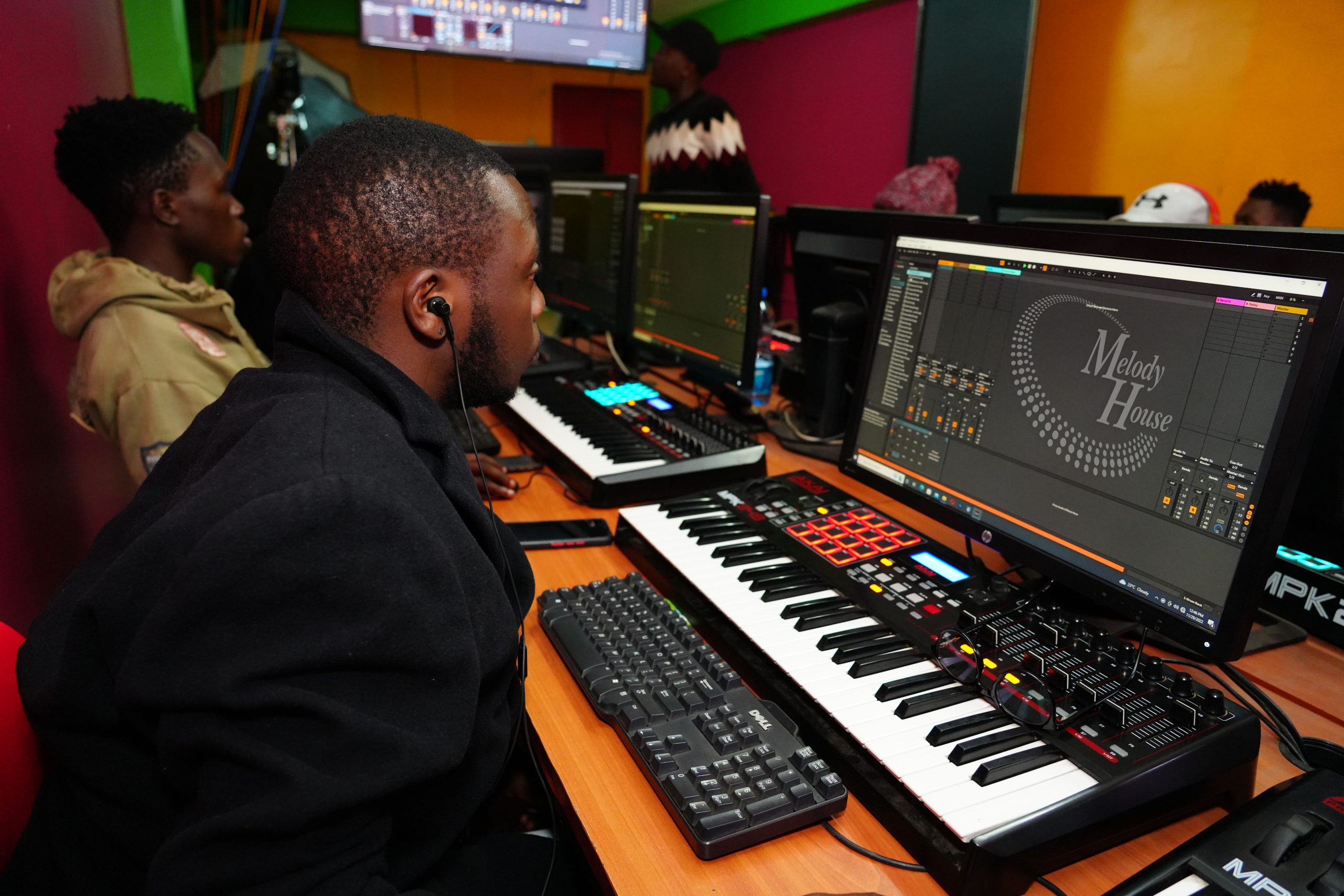
Nairobi has fast become the heartbeat of African music production. From the Gengetone explosion to the sophisticated layers of Kenyan House and Afro-Pop, the “Nairobi Sound” is globally recognized. But if you are a fan who wants to get behind the desk and create the next big hit, you are likely wondering how to start making beats in Nairobi while navigating a competitive and rapidly evolving industry.
If you’re sitting in Kilimani, Westlands, or the CBD and looking for the right path to break into the music scene, this guide is your professional roadmap to success.
Your DAW is your virtual studio—the primary tool you will use every single day. When you begin learning how to start making beats in Nairobi, you’ll notice that top local studios typically gravitate toward one of the “Big Three”:
Pro Tip: Don’t get stuck in “software wars.” Pick one that feels intuitive to you, learn its shortcuts, and master it until the technology disappears and only the music remains.
You don’t need a multi-million shilling studio on Ngong Road to start your career. Most global hits today are birthed in “bedroom studios.” Here is a realistic budget for a beginner in Nairobi:
| Essential Gear | Recommended Specs / Model | Estimated Cost (KES) |
| Laptop | i5/i7 Processor, 16GB RAM (Recommended) | 55,000 – 85,000 |
| MIDI Controller | Akai MPK Mini or Novation Launchkey | 18,000 – 32,000 |
| Studio Headphones | Audio-Technica M40x or Beyerdynamic | 12,000 – 22,000 |
| Audio Interface | Focusrite Scarlett 2i2 or Audient iD4 | 22,000 – 35,000 |
Where to buy? Reliable gear can be found at specialized dealers in Westlands or electronics hubs along Tom Mboya Street. Always test gear in-store to ensure it works with your specific laptop’s ports (USB-C vs USB-A).
A common mistake beginners make is thinking they don’t need music theory because they have AI tools and MIDI packs. However, understanding Diatonic Theory (scales, keys, and chords) is what separates a “loop-player” from a true “producer.”
In the Nairobi scene, mastering the I-IV-V and I-V-vi-IV progressions is essential. These form the backbone of almost every local hit, from Gospel and Benga to Afro-fusion. Knowing how to start making beats in Nairobi with a foundation in theory allows you to communicate with session guitarists and vocalists effectively, ensuring your tracks sound “musical” rather than robotic.

Topical authority in Kenyan music comes from understanding local rhythms and how to modernize them.
A beat isn’t finished until it sounds good on everything from a Boda Boda’s speakers to a high-end club system in Westlands.
Being a producer at the Music And Film Academy involves more than just software.
Music production is a social game. Nairobi is a city where “who you know” often opens the door to “who hears you.”
While YouTube is a great resource, it is often a “fragmented” way to learn. You might learn a trick, but you won’t learn the system.
If you are serious about your career, enrolling in professional Music Production Courses is the fastest way to turn a hobby into a paycheck. Formal training at an institution like Music And Film Academy provides:
Do I need a soundproof room to start?
No. You need “Acoustic Treatment,” not soundproofing. Heavy blankets, curtains, or foam panels from the CBD can help reduce echoes and make your room “flatter” for mixing.
How long does it take to learn how to start making beats in Nairobi?
With our 3-to-6 month Music Production Course, you can move from “zero” to producing radio-ready instrumentals with confidence.
Ready to join the next wave of creative professionals at the Music And Film Academy? Don’t leave your career to chance. Explore our industry-standard Music Production Courses in Kenya and start your journey today.