Phone:
+254 719 428 550
Physical address:
Information House, Hakati Road,
Nairobi, Kenya.
Phone:
+254 719 428 550
Physical address:
Information House, Hakati Road,
Nairobi, Kenya.
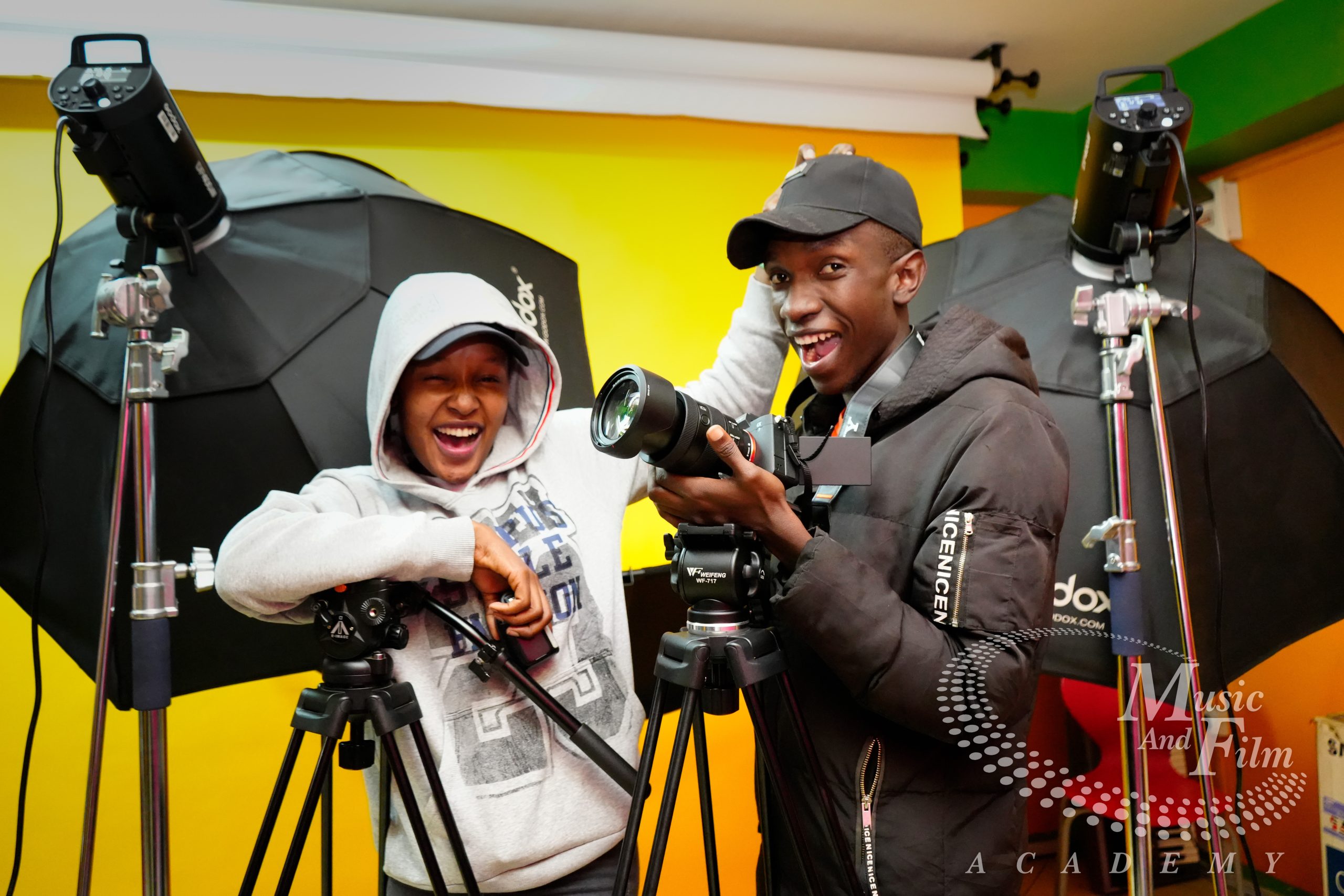
In the world of digital storytelling, the difference between an amateur “webcam” look and a professional production often comes down to one thing: how you control light. As we move through 2026, the Nairobi creative scene is seeing a surge in high-quality remote interviews, podcasts, and corporate brand stories produced right from home offices. To stand out, mastering 3-point lighting for interviews is no longer a luxury—it is the industry standard for creating depth, dimension, and professional authority.
For students at the Music and Film Academy, lighting is taught as the “language of emotion.” While a high-end camera like a Canon EOS R7 is important, even the best sensor in the world will struggle to produce a clean image in poor lighting. By understanding the classic 3-point system, you can turn any spare room in your house into a professional-grade set that rivals the studios found in the Nairobi CBD.
The goal of 3-point lighting for interviews is to model the subject. Our eyes perceive the world in three dimensions, but a camera sensor records in two. Without strategic lighting, a person’s face will appear “flat” against the background. The 3-point system uses three distinct light sources—Key, Fill, and Backlight—to sculpt the subject, creating highlights and shadows that add a sense of depth and 3D realism to the frame.
The Key Light is the strongest and most important source in your setup. It is the light that defines the overall “mood” of your interview.
Typically, the Key Light is placed at a 45-degree angle from the camera and slightly above the subject’s eye level, pointing downward. This angle creates “short lighting,” where the side of the face closest to the camera is slightly shadowed, which is incredibly flattering and helps to slim the subject’s face.
For interviews, we almost always recommend “soft light.” You achieve this by using modifiers like a Nanlite FS-300B with a large softbox. Soft light wraps around the subject’s features, hiding skin imperfections and creating a natural, approachable glow. In our Videography Courses in Kenya, we teach you how to use “diffusion” to ensure your Key Light never looks harsh or artificial.
If you only used a Key Light, one side of your subject’s face would be in total darkness. The Fill Light exists to “fill in” those shadows, but not eliminate them entirely.
The Fill Light is placed on the opposite side of the camera from the Key Light. It should be less intense—usually around 50% to 75% of the Key Light’s brightness.
If you are on a budget in your home studio, you don’t always need a second lamp. You can use a “Reflector” or even a large piece of white foam board to bounce the spill from your Key Light back onto the shadow side of the face. This is a common “hack” we share with students at Information House to help them produce high-quality results with minimal gear.
The third and often overlooked component of 3-point lighting for interviews is the Backlight. Without this, your subject might “blend” into the background, especially if they have dark hair or are wearing dark clothing.
The Backlight is positioned behind the subject, usually higher up and opposite the Key Light. It shines on the back of the subject’s head and shoulders, creating a thin “rim” or “halo” of light. This rim creates a physical separation between the subject and the backdrop, giving the image a sense of professional polish and spatial depth.
While the 3-point system is the foundation, modern technology has introduced new ways to enhance your School of Visual Arts assignments.
“Practicals” are lights that are actually in the shot—like a desk lamp or a neon sign in the background. In a home studio, adding a practical light can add “texture” to your background and make the space feel more lived-in and professional.
A common struggle for Kenyan creators is glare on eyeglasses. To fix this, we teach our students to raise their Key and Fill lights higher and move them further to the sides. This ensures the light hits the glasses at an angle that reflects away from the camera lens.
In 2026, LED technology has made professional lighting affordable and portable. For a solid home setup, we recommend:
You can watch a hundred tutorials, but lighting is a tactile skill. You need to see how a shadow moves across a real human face to truly understand it. At the Music and Film Academy, we provide a “Lab Environment” where you can experiment with professional Arri and Nanlite kits.
Our Videography Courses in Kenya cover:
Mastering 3-point lighting for interviews is the fastest way to increase your production value. It signals to your audience—and your clients—that you are a professional who understands the technical nuances of the craft. By taking control of your shadows and highlights, you turn a simple conversation into a cinematic experience.
Are you ready to stop “guessing” with your lights and start “designing” them? Whether you are building a home studio or aiming for a career on a film set, the Music and Film Academy is here to guide you. Join the next intake of our Videography Courses in Kenya and visit us at Information House to see our studio setups in action. Let’s light up your future together.