Phone:
+254 719 428 550
Physical address:
Information House, Hakati Road,
Nairobi, Kenya.

Phone:
+254 719 428 550
Physical address:
Information House, Hakati Road,
Nairobi, Kenya.
The visual arts industry Kenya is booming, and this hub is your guide to navigating it successfully. We provide high-level insights into digital art, film, and photography. This category serves as a knowledge bridge for students and professionals looking to understand the latest trends in the creative sector, from our headquarters at Information House in the CBD to the global market.

If you are asking, “Which course is best in graphic design in Kenya?” the answer depends entirely on your current skill level, career goals, and the depth of mastery you wish to achieve. In 2026, the modern digital economy demands…
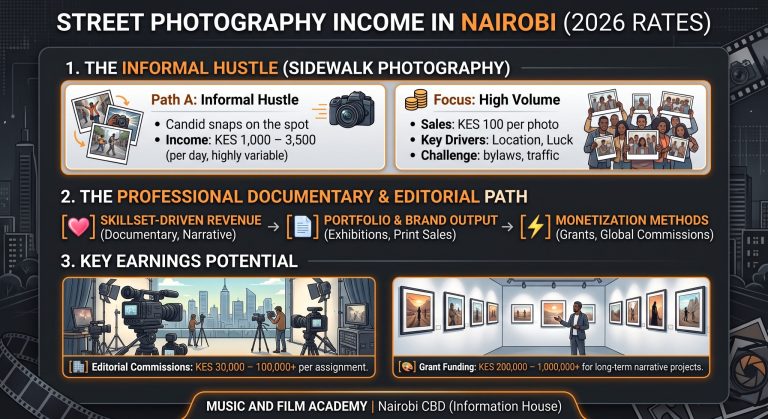
A common question among aspiring creatives in Kenya is, “How much do street photographers make in Nairobi?” The answer reveals a stark contrast between two very different business models. Informal street photographers selling candid sidewalk snaps typically earn between KES…
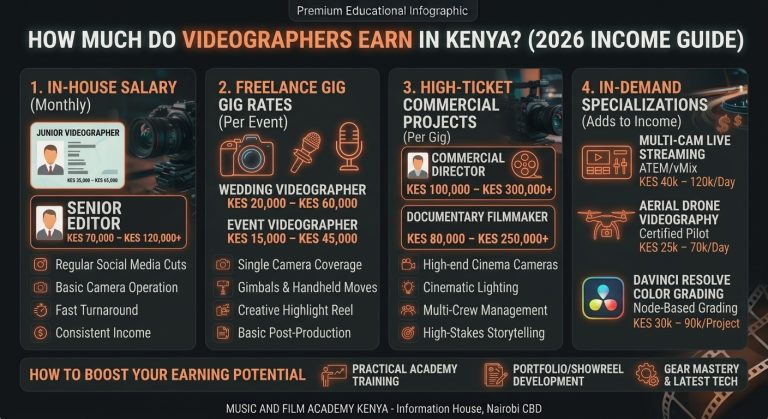
In Kenya, freelance videographers earn between KES 15,000 and KES 50,000 per event gig, while entry-level full-time videographers earn a monthly salary ranging from KES 35,000 to KES 65,000. High-end commercial videographers operating in corporate media, multi-camera live streaming, and…
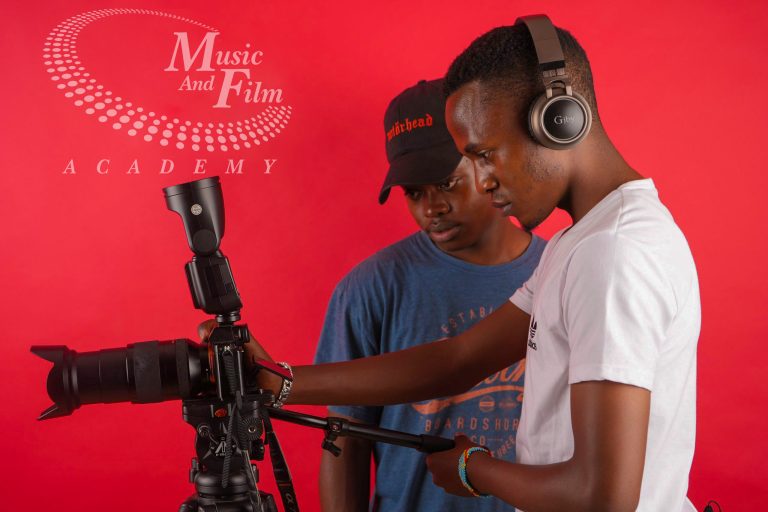
The Advanced Photography and Videography Certificate Course at Music And Film Academy is an intensive, TVETA-accredited commercial masterclass designed for experienced photographers, videographers, directors of photography (DoPs), and agency creatives. Situated on the 5th Floor of Information House on Hakati…
The Basic Photography and Videography Certificate Course at Music And Film Academy is a TVETA-accredited, 2 to 3-month foundational program designed to turn absolute beginners into confident, technical media creators. Situated at Information House on Hakati Road in the heart…
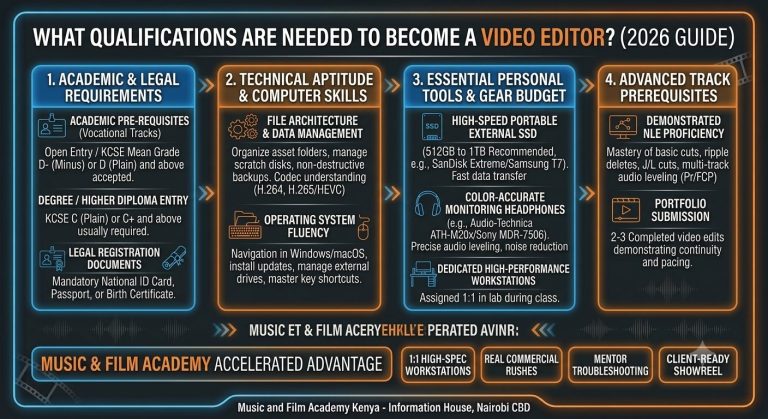
To become a professional video editor in Kenya, you need basic computer literacy, a national ID card or passport, and hands-on proficiency in industry-standard editing software (Adobe Premiere Pro, CapCut Pro, and DaVinci Resolve). Unlike traditional academic fields, practical vocational…
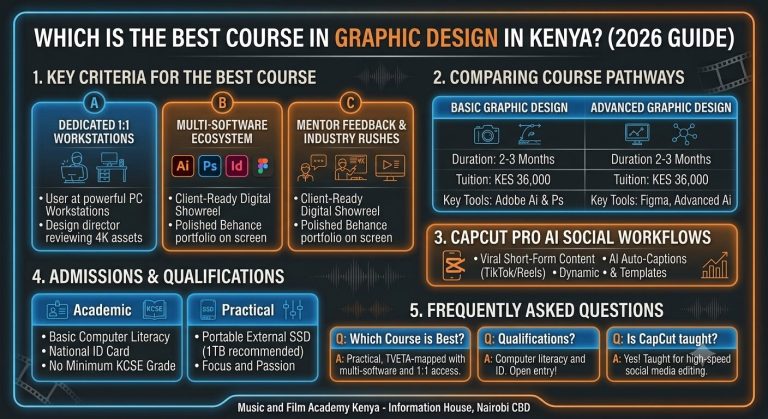
The best course in graphic design in Kenya is one that provides dedicated 1:1 access to high-performance workstations, covers a comprehensive multi-software ecosystem (Adobe Illustrator, Photoshop, InDesign, and Figma), and teaches brand strategy, packaging design, and UI/UX wireframing alongside software…
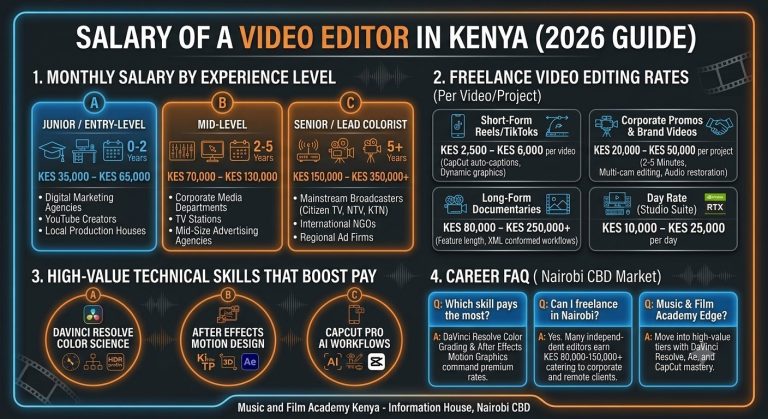
In Kenya, a full-time employed video editor earns an average base salary of KES 40,000 to KES 80,000 per month for entry-level roles, while experienced mid-level and senior post-production specialists in broadcast media or corporate advertising earn between KES 120,000…
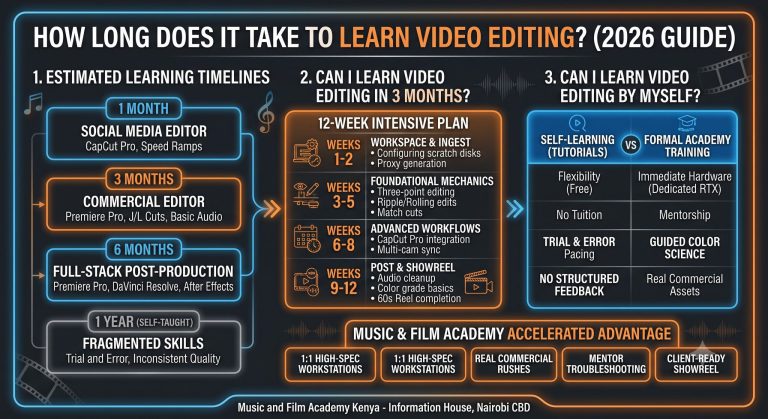
It takes between 2 to 3 months of focused, practical training to learn foundational video editing mechanics, software interfaces, and timeline assembly for commercial projects. To master advanced post-production—including node-based color grading in DaVinci Resolve, After Effects motion graphics, and…
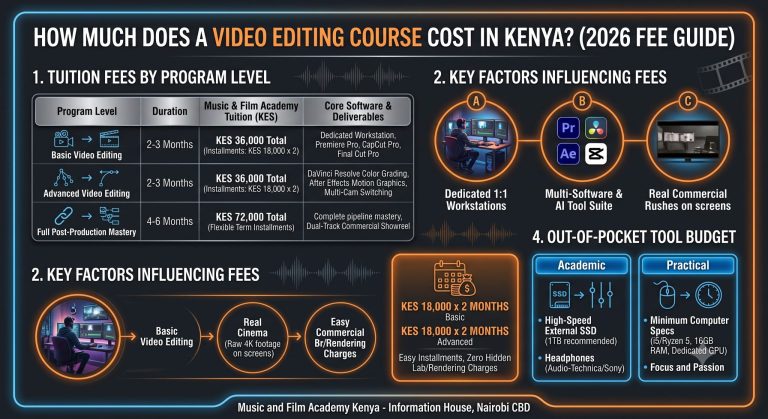
A video editing course in Kenya costs between KES 30,000 and KES 85,000 for a 2-to-3-month practical certificate module at specialized vocational academies. At broader hybrid private institutes, tuition for multi-semester media programs ranges from KES 75,000 to KES 100,000+…