Phone:
+254 719 428 550
Physical address:
Information House, Hakati Road,
Nairobi, Kenya.

Phone:
+254 719 428 550
Physical address:
Information House, Hakati Road,
Nairobi, Kenya.

The Kenyan DJ industry has officially entered a new era of regulation. As of January 2026, the Kenya Copyright Board (KECOBO) has implemented the Consolidated Music and Audio-Visual Works Tariffs, which directly affects every mobile DJ, club resident, and bedroom producer in the country. The most talked-about figure in this new framework is the KSh 20,000 annual DJ license in Kenya specifically targeting DJ academies and professional training programs, while mobile DJs face a KSh 30,000 annual fee. In a landscape where street sets and event gigs are the backbone of the creative economy, understanding these “Survival” tactics is no longer optional—it is a requirement for anyone who wants to turn pro.
At the Music And Film Academy, we believe that being a top-tier DJ requires more than just mastering a transition from Arbantone to 3-Step Amapiano. It requires a professional understanding of the law. As an institution that pays its own DJ license in Kenya to ensure our students train in a 100% compliant environment, we have seen firsthand how licensing protects the very artists whose music we play. If you are looking to start your journey correctly, our DJ courses in Kenya provide not only the technical skills but also the legal certification needed to stand out in a crowded market.
The new 2026–2028 tariff structure was designed to simplify what was once a confusing mess of multiple payments to different societies. Under the new “Joint License” system, your payment is distributed among the authors (MCSK), producers (KAMP), and performers (PAVRISK).
According to the latest gazetted figures, the DJ license in Kenya is broken down by the nature of your operations:
For years, many DJs operated in a “grey area,” arguing that they were promoting artists by playing their music. However, the Kenya Copyright Board (KECOBO) has clarified that a DJ performance constitutes a “Public Performance” for commercial gain. Because DJs are paid for their sets, they are technically “users” of intellectual property.
The enforcement in 2026 is stricter than ever because the revenue is now being collected through a consolidated eCitizen-linked system. This means that if you are caught at a high-end wedding in Karen or a corporate gig in Westlands without your DJ license in Kenya, you face a compounded penalty of 5% per month on late payments and potential fines of up to KSh 400,000 under the Copyright Act.
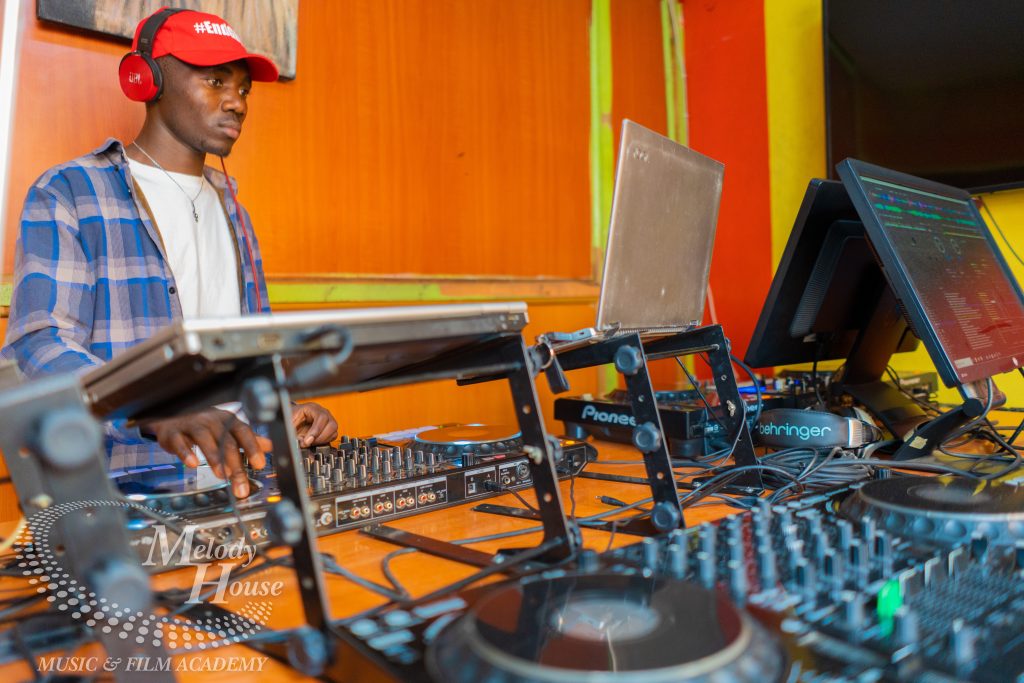
The process has been modernized to reduce the “Information House” queues and make it easier for DJs across the country to comply.
While KSh 20,000 or KSh 30,000 feels like a significant “tax,” being a licensed professional opens doors that remain closed to “underground” DJs.
At MFA, we don’t just teach you how to beatmatch; we prepare you for the reality of the 2026 music economy. Our Music Technology department stays ahead of the curve by inviting guest lecturers from KECOBO and legal experts to explain how to navigate these tariffs.
Our students learn:
Whether you are aiming for a residency at the hottest clubs or looking to dominate the corporate event space, starting with a foundation of professional compliance is what separates a “hobbyist” from a “mogul.”
The creative economy in Kenya is maturing. The DJ license in Kenya is a sign that our industry is being taken seriously on a governmental level. By securing your license, you aren’t just paying a fee—you are investing in the legitimacy of your career. Visit us at Information House to learn more about how we can help you turn your passion into a legally protected, high-earning profession.
Institution: Music And Film Academy
Location: 2nd Flr, Rm s2, Information House, Hakati Rd, Nairobi.
Contact: +254 719 428 550
Website: musicandfilmacademy.ac.ke