How to Register with MCSK & PRISK: A Step-by-Step Guide for New Producers
In the fast-paced Kenyan music scene of 2026, creating a hit song is only half the battle. For producers, the true mark of professionalism is ensuring that your work is protected and that you are positioned to receive every cent of your hard-earned royalties. Understanding how to register with MCSK and PRISK is the most critical administrative step you will take after leaving the studio. Without proper registration with Collective Management Organizations (CMOs), your music can be played on radio, in clubs, and in public spaces across Nairobi without a single shilling ever reaching your pocket.
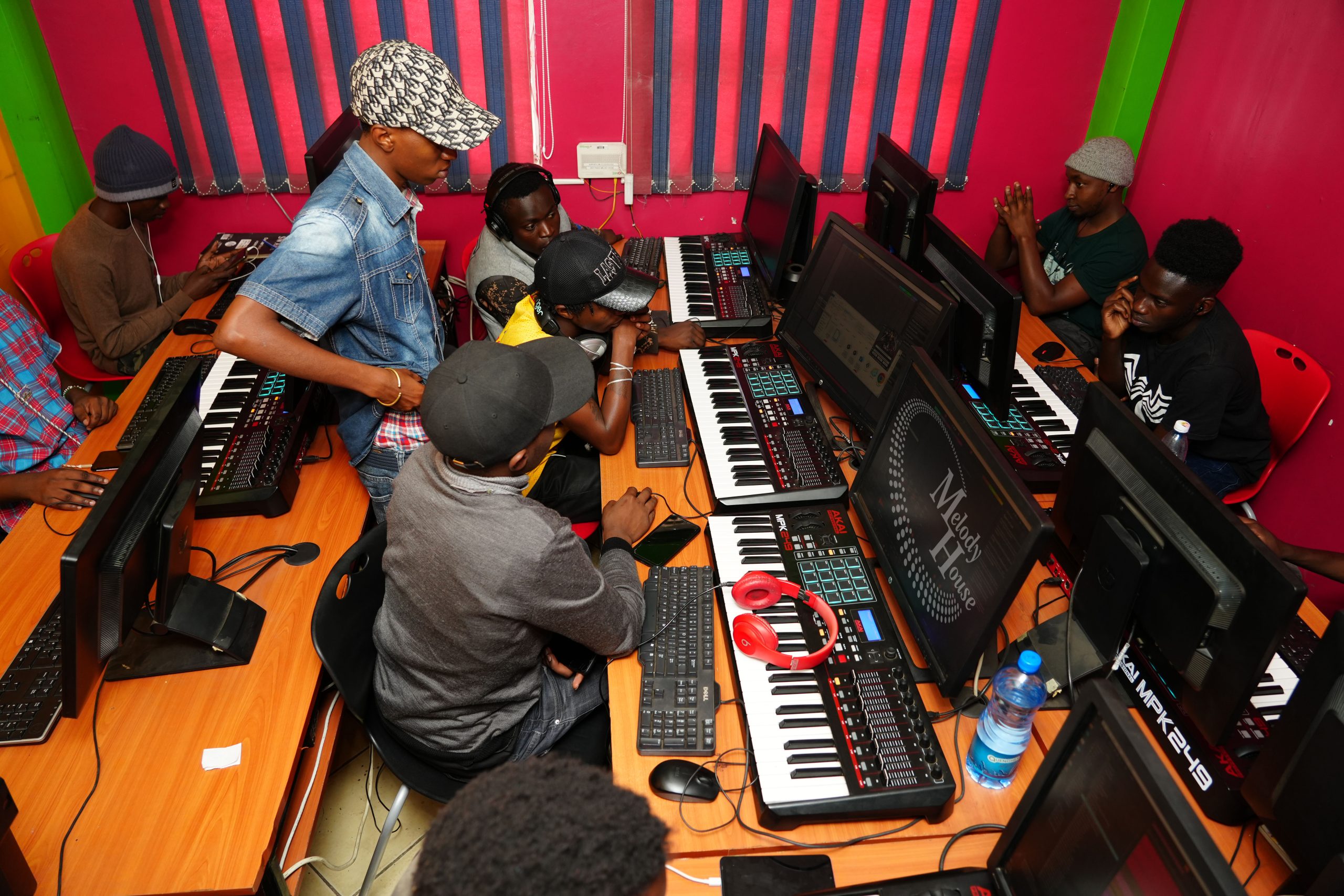
At the Music And Film Academy, we don’t just teach you how to mix a track; we teach you how to manage your career. Our Music Production Courses include specialized modules on the business of entertainment because we know that technical skill must be paired with legal protection. Whether you are an independent producer or a studio owner at Information House, this guide will walk you through the essential steps to secure your musical legacy through the National Rights Registry (NRR) and the various CMOs in Kenya.
Protecting your craft starts in the classroom. At MFA, we ensure every producer understands the legal requirements for MCSK and PRISK before they launch their professional careers.
Before you begin the process to register with MCSK and PRISK, you must understand the “Big Three” CMOs and what specific rights they manage. In Kenya, royalties are divided based on your role in the creation of a song.
MCSK (Music Copyright Society of Kenya): Represents authors, composers, and publishers. If you wrote the melody or the lyrics, this is your primary society.
PRISK (Performers Rights Society of Kenya): Represents the performers—musicians, singers, and actors. If you played an instrument or sang on the track, you belong here.
KAMP (Kenya Association of Music Producers): Represents the owners of the sound recordings (the master rights). As a producer who financed or owns the recording, this is often your most important registration.
Step 1: Secure Your Copyright via the National Rights Registry (NRR)
Before you can effectively register with MCSK and PRISK, your work must be officially recognized by the Kenya Copyright Board (KECOBO). In 2026, this is done through the National Rights Registry (NRR) portal.
Create an Account: Visit the NRR portal at nrr.copyright.go.ke. You will need a valid mobile number to receive a validation code via eCitizen.
Upload Your Works: You must upload a tangible version of your music (digital MP3 or WAV). Remember, copyright protects the expression of an idea, not the idea itself.
Generate a Certificate: Once verified, you will receive a Certificate of Registration. This acts as your “Proof of Ownership” and is a mandatory requirement for most CMO applications.
Step 2: Preparing Your Documentation for CMO Registration
To successfully register with MCSK and PRISK, you must have your paperwork in order. The societies require specific evidence to prove you are a legitimate stakeholder in the Kenyan music industry.
Identification: A copy of your National ID or Passport.
KRA PIN: A copy of your KRA PIN certificate, updated on iTax.
Passport Photos: Usually two recent color passport-size photographs.
Letters of Administration: (Only if you are registering works on behalf of a deceased person).
Next of Kin Details: Essential for ensuring your royalties can be inherited in the future.
Step 3: The Registration Process for MCSK
If you are a composer or songwriter, you will apply to MCSK.
Application Form: Download the MCSK membership form from their official portal.
Work Declaration: You must fill out a “Work Declaration Form” for every song you have written. This includes the title, the date of release, and your percentage of ownership.
Submission: Submit the forms along with your NRR certificate. While fees vary, the investment is small compared to the potential lifetime of royalty collections.
Step 4: The Registration Process for PRISK and KAMP
For producers at the Music And Film Academy, the related rights managed by PRISK and KAMP are often where the bulk of the “Producer Royalties” reside.
KAMP Application: As a producer, you must provide proof of financing your productions (such as studio receipts) and proof that your songs are commercially active (YouTube or media statements).
PRISK Application: If you also performed on the track (e.g., played the bass line or provided backing vocals), you should also register as a performer.
Joint Licensing: Note that since 2019, KAMP, PRISK, and MCSK often operate under a Joint Copyright License for public performances, but you still need to be a registered member of each relevant society to receive your share.
Why Registration is Mandatory for Professional Producers
Many new creators ask if they can skip this step. At the Music And Film Academy, our music production courses in Nairobi emphasize that registration is not just about money; it’s about “Business Logic.”
Evidential Weight: A registration certificate is your primary weapon in a court of law if someone steals your beat or uses your song in a commercial without permission.
Collateral for Loans: In 2026, recognized copyright certificates can sometimes be used as collateral in financial institutions for those looking to expand their studios.
Monitoring and Distribution: CMOs use sophisticated monitoring systems to track what is being played on radio and TV. If you aren’t registered, your money sits in a “log” and is eventually redistributed to other members.
Navigating the Music Business as a Graduate
Graduating from our Music Technology program means you are entering the industry with an elite level of technical skill. However, the most successful producers in Nairobi—those working with the biggest names in Afropop—are those who treat their music like a business.
We encourage all our students to:
Keep Accurate Records: Document every session, every collaborator, and every split sheet.
Understand Synchronization: Learn how to license your music for film and TV, a major growth area in the Kenyan market.
Network at Information House: Use our campus as a hub to meet other registered creators and build a collective voice.
Final Thoughts: Secure Your Future Today
Don’t let your hard work benefit everyone but you. The process to register with MCSK and PRISK might seem technical, but it is the final link in the chain of professional music production. Take the time to register your works today and ensure that your creative legacy at the Music And Film Academy continues to pay dividends for years to come.
Institution: Music And Film Academy
Location: 2nd Flr, Rm s2, Information House, Hakati Rd, Nairobi.