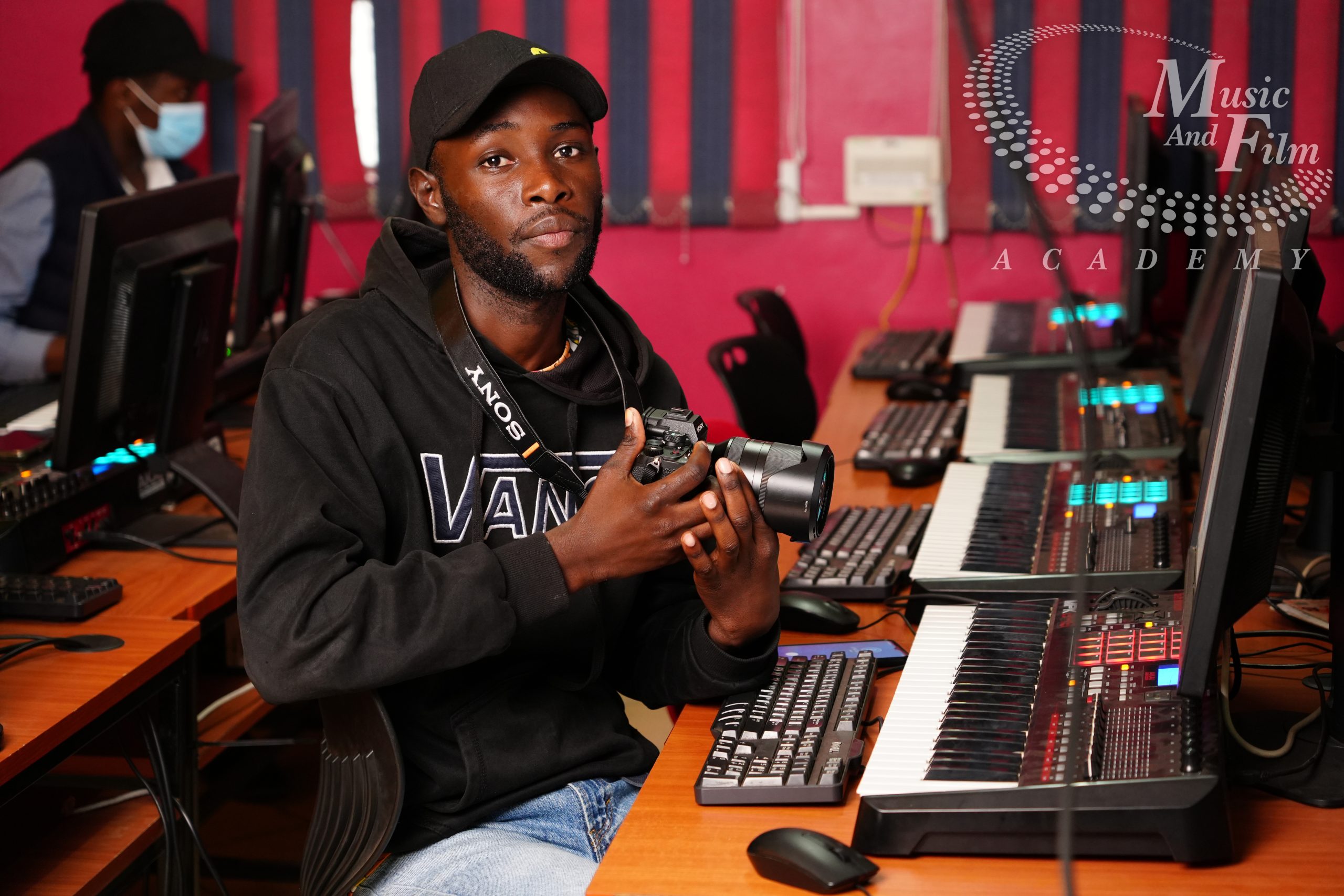
Hands-on asset management and multi-software timeline training at the Music and Film Academy, Nairobi campus.
Best Video Editing Courses in Kenya | School of Visual Arts – Nairobi
Welcome to the ultimate training ground for digital shape-shifters, montage artists, and cinematic storytellers. The School of Visual Arts at the Music and Film Academy offers the most industry-aligned, hands-on video editing courses in Nairobi, Kenya. In modern media, raw footage is just raw material—the true magic of storytelling happens directly on the timeline. Whether you are a content creator looking to dominate social media algorithms, an aspiring filmmaker preparing to cut independent feature-length films, or a corporate media professional upgrading your post-production skills, our specialized training tracks are engineered to deliver immediate professional confidence.
With flexible intakes throughout the year, our TVETA-mapped, portfolio-first video editing courses in Kenya ensure you do not just study theory. You sit behind high-spec dedicated editing terminals, processing high-end commercial rushes, configuring advanced proxy workflows, and mastering complex color panels from day one. Located at Information House in the heart of the Nairobi CBD, our campus puts you in immediate proximity to East Africa’s leading production houses, advertising agencies, and digital media networks.
Why Choose Video Editing Courses at Music And Film Academy?
The modern digital landscape demands far more than a basic understanding of cut-and-paste software. To be hirable by local broadcasters, corporate brands, or international streaming platforms, an editor must understand narrative pacing, psychological tension, sound architecture, dynamic asset management, and professional color science.
Here is why our academy stands out as the definitive destination and premier video editing school in East Africa:
Dedicated 1:1 High-Performance Workstations: We don’t share screens or rotate lab hours. Every single student is allocated their own high-spec rendering workstation during class, optimized with fast NVMe storage, dedicated graphics cards, and color-accurate displays capable of handling raw 4K footage and multi-layered timelines smoothly without crashing.
Comprehensive Multi-Software Ecosystem: Instead of limiting your career opportunities to a single tool, our video editing courses span the industry’s big three powerhouses: Adobe Premiere Pro, DaVinci Resolve, and Final Cut Pro. You leave our halls highly versatile, adaptive, and ready for any studio production pipeline.
Real-World Rushes & Raw Hollywood/Local Assets: You don’t practice on low-quality web rips or compressed footage. You train using actual, multi-camera raw logs, commercial project files, music videos, and documentaries shot by our active production partners and sister agency.
Active Industry Editors as Mentors: Learn directly from seasoned post-production engineers, broadcast editors, and visual effects artists currently cutting commercial media across East Africa. You will absorb their keyboard shortcut layouts, real-world troubleshooting habits, and rigorous data redundancy/backup workflows.
Showreel-Driven Exit Strategy: A certificate without proof is meaningless in the creative economy. Our students graduate with an elite, professionally polished editing showreel showcasing multi-cam synchronization, color grading, visual effects integration, and precise audio design.
Networking and Job Placement Integration: Being located in the center of the Nairobi CBD bridges the gap between training and employment. Our studio holds active relationships with major TV networks, corporate brands, and production agencies, giving our students direct access to internships and paid freelancing gigs.
Program Pathways
To accommodate varying career aspirations, timelines, and skill depths, our post-production department provides two distinct, modular pathways in video editing courses:
The Basic Video Editing Course (The Technical Foundation)
The Advanced Video Editing Course (The Masterclass & Color Science Track)
1. Basic Video Editing Course: Curriculum Modules
Duration: 2 – 3 Months
Tuition Fees: KES 36,000
This entry-level path establishes an ironclad technical foundation. It strips away technical intimidation by systematically walking you through interface design, keyboard layout logic, file ingest protocols, and the mechanical philosophy behind clean, invisible cuts.
Temporal Cuts: Executing invisible cuts, smash cuts, jump cuts, and matches on form/graphic relationships.
Audio-Driven Trimming: Structuring J-cuts and L-cuts to allow audio to lead video transitions (or vice-versa) for natural dialogue flow.
Dynamic Modifiers: The psychological application of dip-to-black, cross-dissolves, and constant-gain audio crossfades.
Module 6: Audio Sculpting & Leveling Foundations
Timeline Audio Separation: Organizing audio channels neatly into independent tracks for Dialogue, Sound Effects (SFX), and Background Music.
Gain vs. Volume: Mastering gain staging to prevent digital clipping before adjusting faders on the master track.
Restoration Diagnostics: Using the Essential Sound panel to quickly clear out low-end environmental hums, air conditioning hiss, and room reverb.
Module 7: Typography & Safe-Area Vector Design
The Essential Graphics Engine: Building lower-thirds, rolling credits, and dynamic, stylized text elements for social media optimization.
Geometric Layouts: Utilizing text alignment tools, managing tracking/kerning, and choosing clean, readable fonts.
Broadcast Legalities: Adhering strictly to Action-Safe and Title-Safe boundaries to ensure text isn’t cropped on older television screens or phone screens.
The Physics of Compression: Understanding bitrates (VBR vs. CBR), frame rates, and the structural differences between containers (.MP4, .MOV) and codecs (H.264, ProRes).
Platform Target Optimization: Customizing render queues for YouTube, TikTok, Instagram Reels, and local Kenyan broadcast stations.
Archiving Project Packages: Consolidating project files and transcoding assets for long-term data storage and future re-edits.
Hands-on asset management and multi-software timeline training at the Music and Film Academy, Nairobi campus.
2. Advanced Video Editing Course: Curriculum Modules
Duration: 2 – 3 Months
Tuition Fees: KES 36,000
The Advanced track transitions you from a standard technician to an elite post-production asset. This course is heavily centered on advanced performance psychology, complex multi-cam structures, motion design, and absolute color fidelity utilizing DaVinci Resolve software.
Module 1: Multi-Camera System Engineering
Advanced Audio/Video Sync: Conforming multi-cam sequences via source timecode, audio waveforms, or manual flash/slate markers.
Real-Time Live Switching: Configuring the multi-cam viewer to cut live television setups, concerts, or studio interviews on the fly.
Multi-Cam Track Management: Modifying and replacing individual camera angles inside an active multi-cam clip without destroying the sync matrix.
Module 2: The Offline/Online Conform Pipeline
High-Resolution Linking: Mastering the transition between the creative offline edit (working with lightweight proxies) and the online finishing stage.
XML/EDL Database Interoperability: Exporting timeline data packages from Adobe Premiere Pro or Final Cut Pro into DaVinci Resolve for professional processing.
Relinking Troubleshooting: Resolving missing timecode data, sensor mismatches, and scale/position errors during timeline rebuilding.
Chroma Key Processing: Executing multi-layered green screen keying, cleaning edge garbage mattes, and using light wraps for realistic plate integration.
Planar and Camera Tracking: Operating 2D point trackers and 3D camera trackers to lock motion graphic elements perfectly onto moving objects.
Rotoscoping Masterclass: Using brush automation and manual vector masking to separate foreground elements from their backgrounds frame-by-frame.
Module 7: DaVinci Resolve Color Science & Scope Diagnosis
Objective Visual Data: Reading waveform monitors, vectorscopes, RGB parades, and histograms to identify technical exposure and color balance anomalies.
Color Spaces & Managed Workflows: Calibrating timelines to match target environments like Rec.709, DCI-P3, or HDR profiles.
Node-Based Pipeline Architecture: Designing efficient serial node, parallel node, and layer node trees to control grading workflows cleanly.
Precision Isolation: Isolating and tracking skin tones with HSL qualifiers and Power Windows to maintain natural facial textures.
Creative Look Development: Matching distinct camera sensors, building custom print film emulations (LUTs), and styling high-end brand aesthetics.
The Showreel Portfolio Finish: Compiling your best technical assets into an active, client-ready director’s showreel, optimized and formatted for immediate commercial market deployment.
Dynamic Career Paths
Completing our specialized video editing courses in Kenya prepares you to step directly into distinct, high-paying roles across the expanding global creative ecosystem.
Lead Film & Documentary Editor: Crafting long-form feature narratives, structural television series, and high-impact documentary feature pieces for broadcast and streaming platforms.
Commercial Post-Production Specialist: Delivering fast-paced, high-end promotional media, social ads, and commercial content for corporate entities and marketing agencies.
Digital Colorist: Specializing strictly in the premium field of color correction, sensor matching, exposure balancing, and creative cinematic look generation for film productions.
VFX & Motion Graphics Artist: Engineering digital visual elements, title sequences, 2D/3D tracking integration, and composite animations.
Independent Content Architect: Operating a premium freelance post-production business catering to international YouTube creators, remote corporate clients, and social platforms.
Admissions, Tuition, and Enrollment Criteria
To protect our strict 1:1 computer access framework, class capacities are strictly limited per intake cycle. Seats are secured on a definitive rolling, first-come, first-served enrollment basis.
Clear Fee Structure
Our fee model is all-inclusive, encompassing full workstation access, raw media licensing, and advanced software allocations with zero hidden charges.
Course Level
Duration
Total Tuition Cost
Flexible Installment Plan
Basic Video Editing Course
2 – 3 Months
KES 36,000
KES 18,000 x 2 Months
Advanced Video Editing Course
2 – 3 Months
KES 36,000
KES 18,000 x 2 Months
Video Editing Courses Frequently Asked Questions (FAQ)
What specifications should my laptop have if I want to practice video editing at home?
While our video editing school supplies fully loaded, high-performance workstations for all on-campus sessions, home practice requires a capable system. We suggest a laptop with at least an Intel i5 or AMD Ryzen 5 processor, 16GB of RAM, a dedicated graphics card (NVIDIA GTX/RTX or Apple Silicon), and a solid-state drive (SSD) for smooth timeline playback.
Can I skip the Basic track and jump directly into the Advanced video editing course?
Yes. If you are already working in the media space or have a firm grasp of software interfaces, cutting mechanics, and basic timeline assembly, you can request an entry review. You will simply present an editing portfolio or pass a quick practical test to demonstrate your readiness for advanced color science and multi-cam tracking layouts.
Are these video editing courses in Kenya recognized by employers?
Yes. The Music and Film Academy is an accredited training provider under the TVET Authority of Kenya. More importantly, the industry values functional portfolios. The professional showreel you build during your coursework serves as an immediate technical asset that demonstrates your competencies to production houses globally.
Contact Us & Apply Today
Are you ready to take control of the timeline and polish your creative stories? Visit our Nairobi campus for a personalized tour of our post-production suites and software labs.