Phone:
+254 719 428 550
Physical address:
Information House, Hakati Road,
Nairobi, Kenya.

Phone:
+254 719 428 550
Physical address:
Information House, Hakati Road,
Nairobi, Kenya.
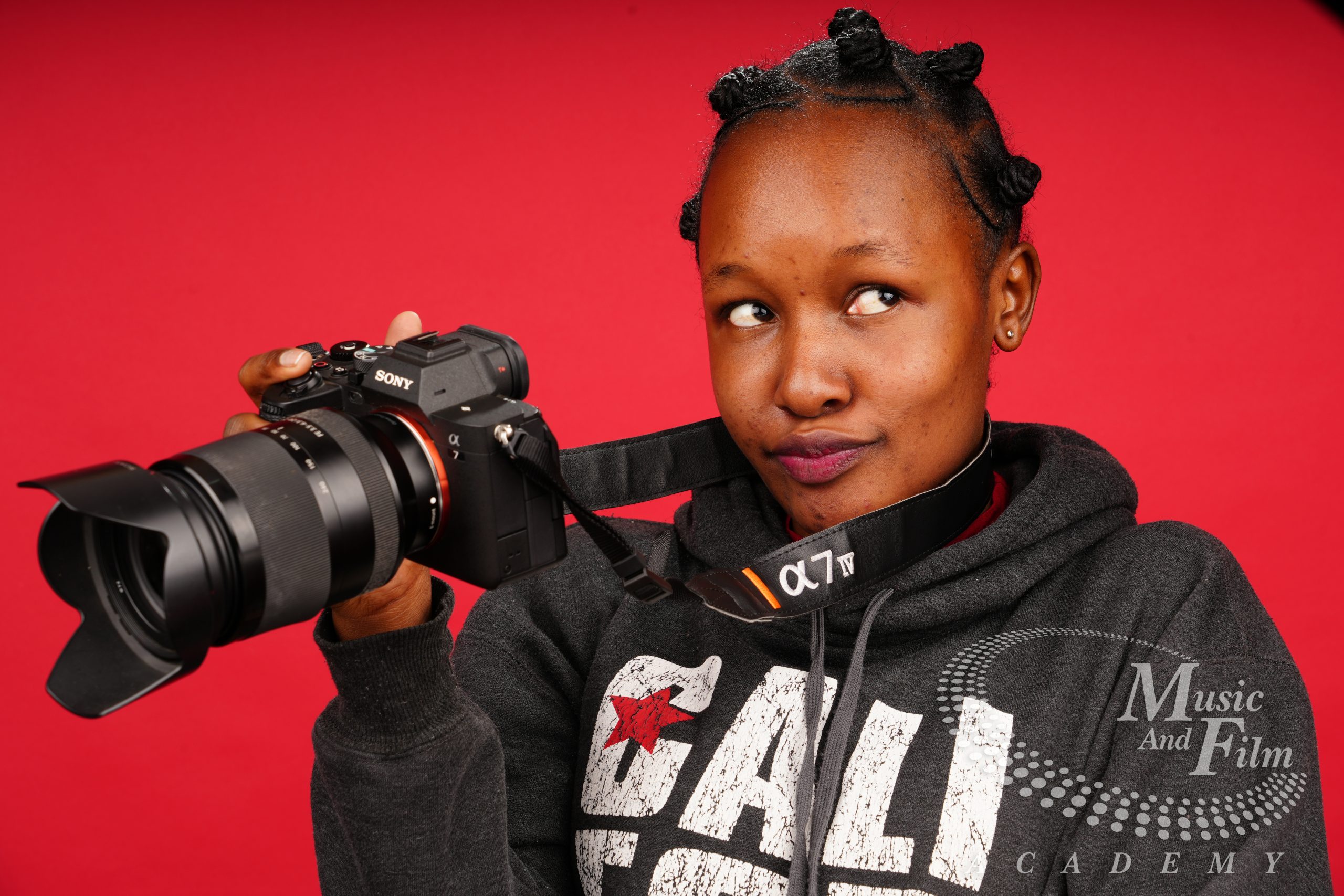
For decades, mainstream photography tutorials and camera sensor algorithms have been calibrated primarily around lighter complexions. This historical bias leaves a massive gap in generic global education, often forcing African creators to figure out exposure metrics through frustrating trial and error. Relying on automated camera brain logic frequently results in muddy shadows, ash-colored skin textures, or completely blown-out backgrounds. To truly honor the depth, warmth, and beauty of deep complexions, you must take manual control of your equipment. Mastering specific camera settings for dark skin tones is not just a technical requirement—it is a vital artistic skill that separates amateur snapshots from high-end, professional portraiture.
Capturing beautiful portraits within the local environment introduces distinct environmental challenges. Managing a high-contrast lighting setup under the harsh Nairobi mid-day sun requires an intimate understanding of how your camera reads reflectivity. Darker skin tones absorb light differently than lighter skin tones, reflecting specular highlights that showcase the underlying bone structure and skin health. Instead of flattening these highlights or hiding the rich undertones in deep shadows, your optimization goal should be to reveal the natural luminescence and complex color gradients of your subject with absolute precision.
When you leave your DSLR or mirrorless camera in Matrix, Evaluative, or Multi-segment metering modes, the internal computer measures the overall light striking the sensor and attempts to average the scene out to a standard 18% neutral gray. If your subject has a rich, deep complexion and is wearing light-colored clothing or standing against a bright Nairobi sky, the camera’s meter misinterprets the dark skin as an underexposed area. The system will aggressively attempt to overcompensate by brightening the overall frame.
This algorithmic miscalculation causes two disastrous results in portraiture: it over-exposes the scene, shifting rich brown skin into an unnatural, washed-out ash tone, while completely destroying the highlight details in the background. To overcome this systemic limitation, you must bypass automated assistance entirely. Stepping into the manual operating space allows you to expose specifically for the skin’s unique reflective properties, ensuring that the sensor preserves both the subtle gold undertones and the deep, deep structural shadows without introducing digital degradation.
One of the most critical adjustments for protecting the natural warmth of deep skin complexions is manual color temperature control. Leaving your camera on Auto White Balance (AWB) is a primary cause of cold, grayish skin tones. Camera systems often mistake the rich, dark textures of the skin for a cool shadow and attempt to compensate by throwing an aggressive blue or magenta tint over the entire frame.
To capture the true radiance of your subject, switch your camera from AWB to a manual Kelvin designation or select explicit environmental presets:
When working under intense daylight or strong directional studio strobes, your metering methodology dictates your final image quality. Instead of using evaluative metering, switch your camera configuration to Spot Metering. This instructs the sensor to calculate exposure based on a tiny, specific cross-section of the frame (typically 2% to 3.5% of the center viewfinder) rather than averaging the entire environment. Place that metering spot directly on the cheekbone or forehead of your subject where the light naturally catches the face.
A common instinct among novice creators is to overexpose the frame to ensure they “see” the face clearly. However, with rich dark skin, the secret to high-end imagery lies in protecting your specular highlights from clipping. If you push your exposure too far, the natural oils on the skin surface will transform into pure, unrecoverable white patches on your digital histogram, erasing all natural pore texture.
Aim to expose for the midtones of the face, keeping your highlight peaks safely below the absolute right edge of your camera’s histogram. By capturing your images in an uncompressed RAW format, you preserve the underlying data structures within the shadow files. This allows you to smoothly lift the darker values during post-production without losing the underlying facial structures to pure black pixel clipping.
Every camera manufacturer includes built-in profile interpretations—such as Standard, Portrait, Landscape, or Neutral—that dictate how JPEG previews and RAW contrast lines are rendered. Surprisingly, the standard “Portrait” profile on many legacy bodies is optimized heavily for lighter skin tones, often adding an aggressive pink or reddish contrast curve that muddies the appearance of darker skin.
To get the cleanest starting point for color grading, adjust your internal picture controls:
Reading about sensor calibrations, light reflectivity, and white balance settings provides a baseline theory, but photography is inherently an experimental, physical discipline. You cannot truly master the subtle adjustments required to capture the beautiful glow of diverse skin variations by reading generic text or watching automated global videos. True professional growth requires stepping into an actual studio environment, configuring physical modifiers, and studying how different light directions wrap around human features.
Enrolling in structured, deeply practical photography courses provides the ultimate environment to turn this complex technical knowledge into instinctive muscle memory. High-performance educational programs move students past standard theory and place them directly into advanced, fully equipped production bays. By working alongside experienced industry mentors on real-world portrait assignments, you gain hands-on experience setting up continuous LED panels, feathering large softboxes, and learning how to properly bounce ambient light to accentuate the rich, natural undertones of your subjects without creating flat, uninteresting exposures.
Furthermore, a truly comprehensive visual education forces you to understand the entire creative pipeline from initial concept to final professional grade. Learning how to accurately capture raw file data is only half the battle; you must also master the digital darkroom, using advanced software platforms to isolate specific color masks, balance skin uniformity, and apply professional grading palettes that make your work stand out to global agencies. Whether your ultimate career goal is to document stunning fashion editorials, launch a luxury commercial studio, or direct global documentary features, localized hands-on training provides the elite portfolio assets and accredited validation required to confidently command premium industry rates.
As the creative economy across East Africa continues to professionalize, the demand for visual artists who understand cultural nuance and accurate representation is at an all-time high. Brands, corporate agencies, and international media houses are actively seeking creators who can showcase the diverse beauty of regional complexions without relying on outdated, poorly calibrated lighting formulas.
By mastering the specialized camera settings for dark skin tones, you instantly separate your brand from the sea of amateur content creators who rely entirely on basic automated smartphone logic. Invest your time in understanding how light behaves, protect your highlights, and commit to continuous technical growth. When you back your unique creative voice with rigorous, accredited instruction at the Music and Film Academy, you build a highly competitive portfolio that commands absolute respect across the modern media ecosystem.
For those eager to go beyond basic tutorials and master the complete spectrum of visual arts inside a collaborative environment, expanding your training across interconnected disciplines is the ultimate path forward. Explore our industry-vetted photography and videography courses in kenya to gain direct access to professional equipment cages, live model workshops, and expert portfolio mentorship designed to launch your commercial media career with absolute confidence.