Phone:
+254 719 428 550
Physical address:
Information House, Hakati Road,
Nairobi, Kenya.
Phone:
+254 719 428 550
Physical address:
Information House, Hakati Road,
Nairobi, Kenya.
The modern creative economy is experiencing an unprecedented boom. From the explosive global rise of African rhythms like Afrobeats and Gengetone to the massive demand for high-quality audio in podcasting, film streaming platforms, and corporate media, sound has become a dominant cultural and commercial currency. At the center of this sonic revolution are two distinct creative professionals: the Music Producer and the Sound Engineer.
For anyone standing at the crossroads of a potential career in the audio industry, choosing between these two paths can feel incredibly confusing. Walk into any world-class recording studio in Nairobi, and you will see people twisting knobs on massive mixing consoles, others programming intricate drum patterns on MIDI controllers, and someone else directing a vocal artist behind a soundproof glass partition.
Are they all doing the same job? Not at all.
While both roles operate within the exact same studio walls and share an intense passion for great sound, they require completely different mindsets, technical skill sets, and artistic approaches. Confusing music production with sound engineering is one of the most common mistakes aspiring audio professionals make—and picking the wrong path can lead to years of frustration.
Whether you are looking to enroll in comprehensive Music production courses in kenya to master the art of beat-making, or seeking specialized sound engineering courses to control the mixing board, understanding the core division of labor is your first step. This comprehensive, definitive guide breaks down the core differences, daily realities, equipment demands, and career trajectories of music production and sound engineering to help you discover exactly where your talents truly belong.
To understand the fundamental divide between these two professions, it helps to use an architectural analogy. Think of a stunning, modern skyscraper in the heart of the Nairobi CBD.
The Music Producer is the architect. They envision the overall design, the aesthetic vibe, the emotional impact, and how the spaces should feel. They decide where the melody goes, how the rhythm should move the listener, and what the ultimate artistic statement will be.
The Sound Engineer is the structural engineer. They ensure the skyscraper stands perfectly straight, handles stress, and functions flawlessly. They manage the physics of the building—or in this case, the physics of sound. They make sure the frequencies don’t clash, the signals don’t distort, the microphones are perfectly aligned, and the final sonic product translates beautifully across everything from a pair of cheap smartphone earbuds to a massive club sound system.
At the Music And Film Academy, we treat both of these paths as separate but deeply connected artistic disciplines, ensuring that students train with the precise mindset required for their specific career choice.
A producer is primarily an artist, a project manager, and a creative director rolled into one. Your main responsibility is the song itself—its structure, its emotional arc, its commercial viability, and its identity.
Producers spend their days manipulating musical data, creating hooks, arranging instrumentation, and guiding the overall creative direction of a project. They are masters of the psychological landscape of a studio, knowing exactly how to coach a nervous vocalist or an erratic instrumentalist to deliver a career-defining performance. According to music distribution analyses on TorrentFreak, the rise of independent digital releases makes structural song positioning more vital than ever for catching playlist algorithms.
An engineer is a technical purist, an acoustic expert, and a guardian of sonic fidelity. Your main responsibility is the audio signal itself—its cleanliness, its balance, its depth, and its spatial accuracy.
Engineers do not focus on whether a song is written in a minor or major key; they focus on whether the frequency spectrum is balanced across the audio field. They are masters of signal flow, acoustics, compression dynamics, and spatial imaging.
If you choose the path of production, your world revolves around creation, arrangement, and transformation. The modern music producer wears many hats, and depending on the genre, the role can vary wildly.
A modern producer lives inside the Digital Audio Workstation (DAW), utilizing tools built for rapid creative workflow.
Producers master virtual instruments (VSTs) like Serum, Omnisphere, or Kontakt, allowing them to summon a full symphonic orchestra or a futuristic synthesizer sound with a single click. Their hands are constantly on MIDI keyboards and pad controllers, translating physical rhythm into digital data that can be chopped, quantized, and arranged. For creators looking to master these physical setups, structured Music Production Courses provide the direct studio access needed to build a professional portfolio. Leading international journals such as the Journal of the Audio Engineering Society (JAES) track how artificial intelligence is changing these workstation plugins, making early hands-on familiarity an absolute career necessity.
If you choose the path of sound engineering, your world expands far beyond songwriting. Sound engineering is an incredibly diverse field with multiple distinct specializations, each requiring its own technical training.
The recording engineer is the direct gatekeeper of sound. They are responsible for capturing live audio in a physical space and transforming it into a flawless digital format. They must have a deep understanding of microphone design—knowing when to use a sensitive large-diaphragm condenser microphone for an intimate vocal session, or a rugged dynamic microphone to handle the intense sound pressure of a live drum kit. They understand the acoustics of a room, knowing exactly where to place an instrument to minimize bad reflections and harness natural resonance.
Once a song is recorded and produced, the mixing engineer takes the raw multitrack files (which can range from 20 to well over 100 individual tracks of vocals, drums, guitars, and synths) and blends them into a cohesive, balanced stereo track. They use advanced tools like parametric equalizers to clear out conflicting frequencies, dynamic compressors to control erratic volumes, and spatial effects like reverb and delay to create three-dimensional depth.
The final, highly specialized step in the audio lifecycle. A mastering engineer takes the completed stereo mix and optimizes it for commercial release. They use precise, high-end hardware and software to ensure the track meets the strict loudness standards of global streaming platforms like Spotify, Apple Music, and YouTube, while making sure the track sounds identical whether it is played on a high-end studio system or a cheap Bluetooth speaker.
Not all sound happens in a controlled studio environment. Live sound engineers manage acoustics in real-time at major concert venues, political rallies, corporate events, and houses of worship. They handle massive Front of House (FOH) mixing consoles, complex stage monitor routing, and intricate wireless microphone frequencies, solving acoustic emergencies on the fly in front of thousands of audience members. This intense environmental control is exactly what practical sound engineering courses in kenya prepare you for by matching you 1:1 with industry gear.

To give you a crystal-clear look at how these professions stack up against each other, let’s look at this structural comparison across key operational metrics:
| Operational Metric | Music Production | Sound Engineering |
| Primary Goal | Creating an emotionally engaging, commercially viable piece of music. | Capturing, balancing, and polishing audio with absolute technical perfection. |
| Core Skill Set | Music theory, beat-making, arrangement, creative direction, talent coaching. | Physics of sound, signal flow, acoustic management, advanced mixing/mastering. |
| Primary Tools | DAWs (FL Studio, Logic Pro, Ableton Live), MIDI controllers, VST instruments. | DAWs (Pro Tools, Cubase), mixing desks, outboard hardware compressors, microphones. |
| Work Environment | Recording studios, home setups, songwriting camps, creative suites. | Commercial studios, live concert stages, broadcast stations, post-production houses. |
| Measurement of Success | Is the song catchy? Does it connect with the audience? Does it top the charts? | Is the audio clean? Is it free of distortion? Does it meet global broadcast and streaming standards? |
One of the defining factors of your training and career path is the physical gear you will interact with daily. The creative audio world is heavily dependent on professional hardware, and understanding the tools of each trade is vital.
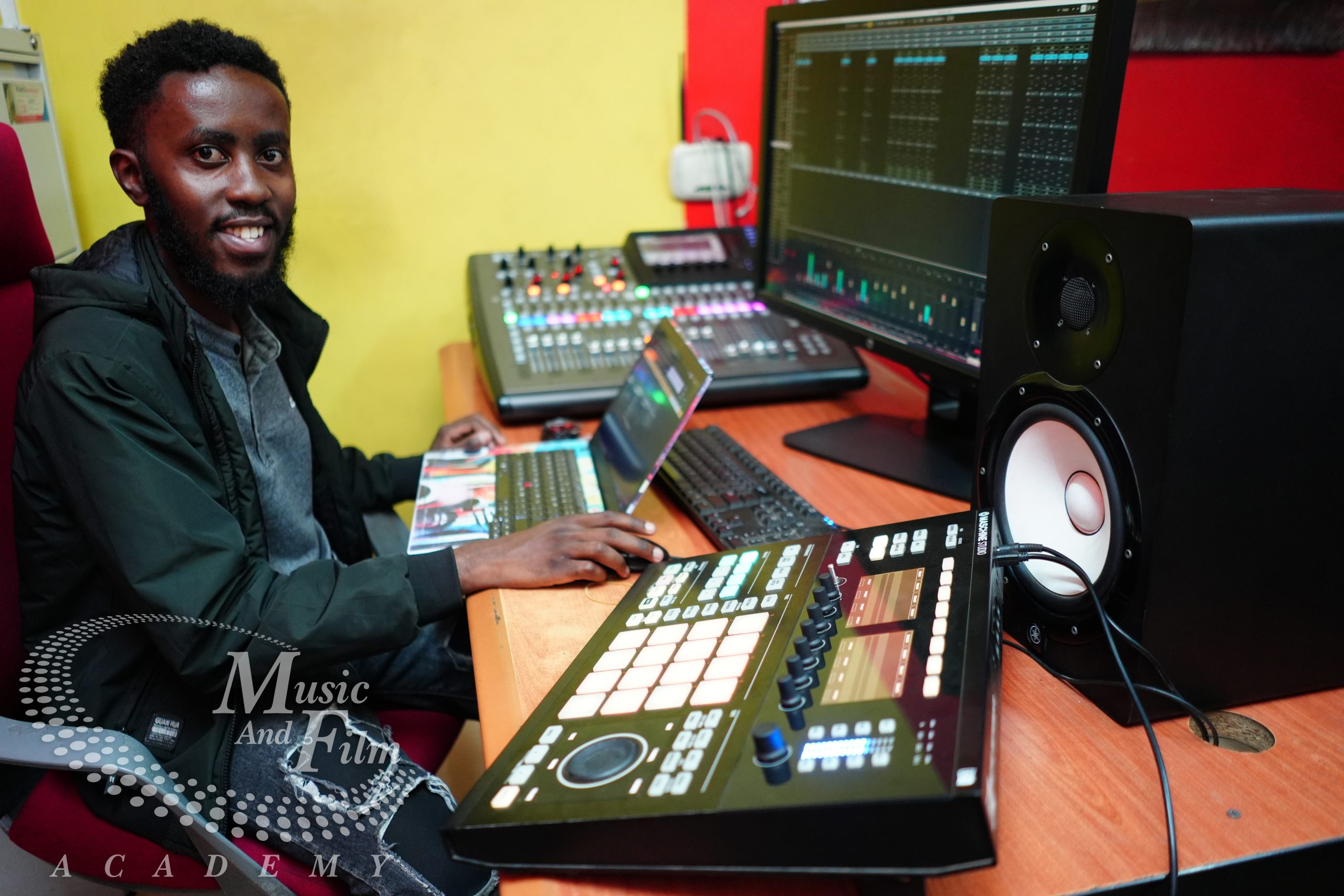
At the Music And Film Academy campus located at Information House in Nairobi, we eliminate the old textbook-driven methods of teaching audio. We believe that a student’s confidence is directly tied to their familiarity with high-end, industry-standard gear.
Both paths offer highly lucrative careers in the modern media landscape, but how you generate income differs significantly based on the route you choose.
Producers often operate within an entrepreneurial, high-reward model. Their income streams include:
Engineers typically operate within a highly stable, service-oriented or corporate-backed model. Because their technical skills are universally required wherever audio exists, their career options are incredibly broad:
While it is crucial to understand the differences between these two roles, we must also acknowledge a major trend in the modern audio landscape: the lines are blurring. With the democratization of music technology, the industry has seen the emergence of the hybrid professional: the Producer-Engineer.
Many modern independent creators handle a project from the absolute initial spark of inspiration all the way to the final polished master file. They program a drum loop, lay down a bassline, record an artist’s vocals, mix the tracks, and apply the final mastering adjustments themselves.
While being a jack-of-all-trades is highly valuable for an independent creator running a lean operation, trying to master both fields simultaneously from day one can be overwhelming. Each discipline requires hundreds of hours of focused, deliberate practice.
The curriculum at the Music And Film Academy is specifically built to address this. We focus on establishing a rock-solid, expert foundation in one core path first, while naturally introducing the vital crossing skills of the other. This method ensures you graduate as a sharp specialist who can still communicate flawlessly across the entire studio floor.
If you are still unsure which direction to take your training and career, ask yourself these diagnostic questions:
No matter which path sets your soul on fire, one absolute truth remains unchallenged across the entire global audio industry: practical, hands-on skills triumph over a traditional theoretical degree every single time.
You cannot learn the complex art of music production by simply reading a textbook about music theory. You cannot master the immense responsibility of managing a live mixing console or setting up a multi-microphone studio array by watching online video tutorials from a smartphone. The creative arts demand a physical connection to the tools of the trade.
To truly build a career that gets you noticed by top recording artists, media houses, and international agencies, you need to spend hours inside treated acoustic environments. You need to physically twist the knobs of industry-standard mixing consoles, manipulate professional MIDI hardware controllers, and test various high-end studio microphones in real-time.
If you are ready to stop dreaming about a career in audio and start building the practical portfolio that will define your future, it is time to take the next step. Investigate world-class, industry-first Music Production Courses that place you directly behind professional software and production gear from day one at the Music And Film Academy. If your heart is drawn to the technical mastery of signal routing, acoustics, and commercial mixing, explore specialized, intensive sound engineering courses in Kenya designed to get you market-ready and employable in under a year.
The studios are open, the gear is waiting, and the creative economy is searching for its next great audio innovator. Which path will you choose?