Phone:
+254 719 428 550
Physical address:
Information House, Hakati Road,
Nairobi, Kenya.
Phone:
+254 719 428 550
Physical address:
Information House, Hakati Road,
Nairobi, Kenya.
The global music landscape has transformed completely. Walk into any major nightclub, international festival, or high-profile corporate event in Nairobi, and the person controlling the crowd is no longer just playing other people’s records. They are dropping custom edits, testing unreleased beats, and manipulating sound in real-time. The traditional line separating the disc jockey from the studio creator has vanished.
For young creatives entering the entertainment space, deciding how to direct their energy can feel like an impossible choice. You might find yourself caught in the debate of DJing vs music production, wondering which skill set will give you a lasting career, secure consistent gigs, and establish your unique brand.
Should you focus entirely on the physical performance of reading a crowd and blending tracks? Or should you lock yourself inside a treated recording studio, studying song structures and programming complex drum patterns?
The short answer is: you can absolutely do both—and in the modern industry, mastering both is the ultimate competitive advantage.
This detailed, comprehensive guide breaks down the core realities, contrasting demands, overlapping toolkits, and monetization strategies of both disciplines to show you how to build a unified career that dominates both the stage and the studio.
To understand why combining these paths is so powerful, we must first break down the fundamental difference in execution. The primary divide between DJing vs music production comes down to real-time performance vs. deep structural creation.
+-----------------------------------------------------------------------+
|                    THE SONIC ARCHITECTURE PARADOX                     |
+-----------------------------------------------------------------------+
|                                                                       |
|   [ THE DJ ]   ====================================================>  |
|   - Real-time manipulation                                            |
|   - Reads the crowd's energy                                          |
|   - Focuses on curation & continuous flow                             |
|                                                                       |
|   [ THE PRODUCER ]   ==============================================>  |
|   - Deep structural design                                            |
|   - invents raw musical blocks from scratch                           |
|   - Focuses on composition & technical synthesis                      |
|                                                                       |
+-----------------------------------------------------------------------+
A disc jockey is a live curator, a psychological investigator, and an energy director. Your canvas is the immediate room, and your primary instrument is a layout of media players and a multi-channel mixer. A DJ does not spend hours deciding what key an acoustic bassline should be recorded in; instead, they analyze how a track moving at 124 beats per minute (BPM) will transition harmonically into a track running at 128 BPM.
The success of a live set depends on your track selection, phrase matching, equalization smooth cuts, and the ability to pivot your direction when a crowd loses interest. It is highly social, instantaneous, and intensely physical.
A music producer operates in an environment of total control. Your canvas is a blank timeline inside a computer, and your primary instrument is software paired with hardware controllers. A producer is a composer, arranger, and sound designer. You look at sound under a microscope—sculpting kick drum transients, automating synth filters, and directing how a vocal lead interacts with a background harmony.
Production requires intense focus, patience, and a willingness to sit in a chair for ten hours adjusting a single four-bar loop until the groove feels undeniable. It is a long-form creative discipline.
If your immediate goal is to master the performance deck, your training must center on physical coordination, music library management, and real-time technical agility. Professional performance involves much more than hitting a sync button.
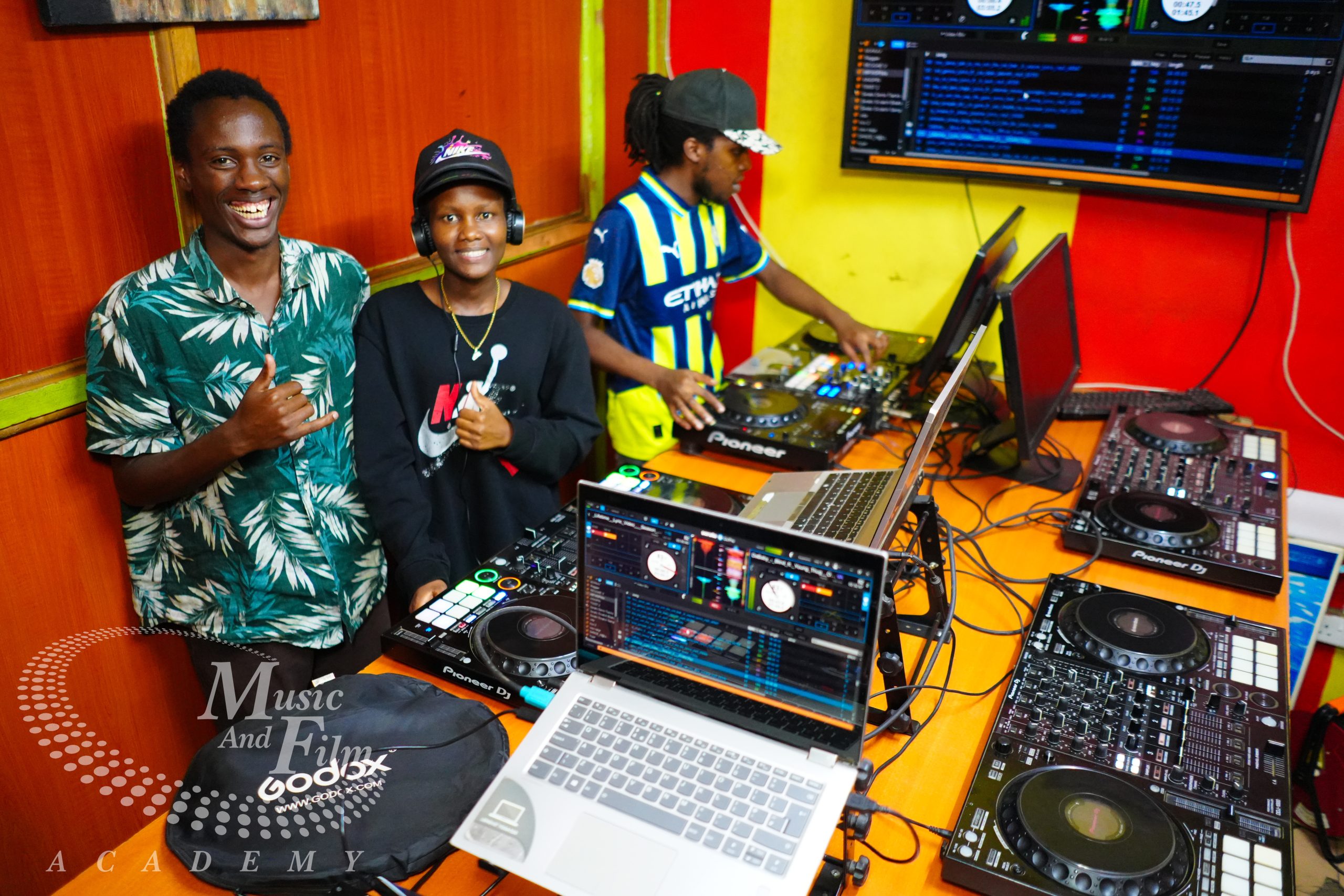
The industry standard for live setups relies heavily on physical media players, such as the Pioneer CDJ-3000 ecosystem, paired with professional performance mixers. Performers manipulate tactile jog wheels, configure hot cues, manage multi-deck loops, and apply hardware effects like echo, reverb, and noise sweeps to create unique transitions on the fly.
If you choose to step behind the production desk, your world expands from curation to absolute creation. You are no longer navigating an existing landscape of records; you are building the landscape from scratch.
Production happens entirely within the Digital Audio Workstation (DAW) environment. Creators utilize advanced software platforms like FL Studio, Logic Pro, and Ableton Live to arrange their projects. They interact with virtual instrument plugins (VSTs) and map out their musical ideas using specialized hardware controllers.
If you look closely at the highest-paid, most influential names in the modern music scene—both locally and internationally—they almost always command both skills. They are not just booking gigs as selectors; they are touring the world performing their own hit records.
Here is exactly why these two paths form an incredible creative feedback loop.
When you are a producer who performs live, you possess a secret weapon that no other selector in the city can access: unreleased music.
This exclusivity turns your live sets into must-see events because the audience knows they cannot hear your music anywhere else.
The biggest mistake independent producers make is creating music in a vacuum. They build tracks that sound incredible on tiny studio monitors but fail completely on a real dancefloor.
This live experience reshapes how you produce, making your studio arrangements significantly tighter and more impactful.
Relying solely on one path can limit your earning potential. If you are only a performer, you are tied entirely to night hours and physical venue bookings. If you are only a creator, you are dependent on unpredictable track sales or streaming pennies. By merging them, your business transforms:
| Income Category | Performer Skills Only | Combined Producer-Performer Assets |
| Gig Bookings | Standard local venue rates based on curation. | Premium headline performance rates because you draw fans of your original tracks. |
| Intellectual Property | Zero ownership over the records played during the set. | Lifetime performance royalties, streaming revenue, and sync licensing fees from your catalog. |
| Brand Equity | Local market recognition dependent on physical residency. | Global streaming footprint via digital stores like Apple Music and Spotify. |
While the benefits are clear, managing both disciplines simultaneously requires a strategic approach. If you try to practice complex scratch routines for four hours and then spend another six hours programming synthesizer envelopes every single day, you will quickly hit a wall of creative burnout.
Instead of splitting your days down the middle, organize your workflow into distinct seasonal cycles.
Ensure your studio configuration supports a fluid workflow. Your MIDI controllers, keyboard setups, and digital workstations should be ready to capture inspiration the moment it hits. According to architectural acoustic guidelines on Sound on Sound, keeping your performance setup physically close to your creation desk makes it easy to export a draft track from your DAW and immediately drop it into your performance players to check the blend.
If you are ready to stop analyzing from the sidelines and start building these practical skills, you need to understand that the old academic model of long-form theoretical training does not work for the fast-paced creative economy. The entertainment industry does not review traditional paper degrees; it evaluates your live coordination and your digital portfolio.
To get noticed, you must train inside environments that mimic real-world high-pressure conditions. You need direct access to premium equipment arrays where you don’t have to wait in line to touch a dial or adjust a slider.
To bring your creative ideas to life, look for comprehensive, immersive Music Production Courses that pair you directly with professional software DAWs and physical controllers. At the Music And Film Academy, we emphasize a hands-on method where students master the architecture of track arrangement and audio synthesis on a strict 1:1 student-to-gear ratio, ensuring you spend your hours creating music rather than just reading about it.
If your immediate goal is to command the dancefloor and master live transitions, explore specialized dj schools in nairobi that emphasize real hardware manipulation. Training at a dedicated dj academy gives you the technical environment needed to master advanced beatmatching, harmonic mixing, and creative transition effects.
One of the most important aspects of your training journey at the Music And Film Academy campus at Information House is learning how to navigate professional hardware configurations. You cannot build real confidence by practicing on a smartphone screen; you need to feel the tactile response of industry-standard tools.
When exploring professional dj schools in Kenya, your primary focus should be mastering commercial performance setups. At our dj academy in nairobi, we bypass basic entry-level controllers and train students directly on standalone media decks and industry-grade club mixers. You learn how to read high-resolution waveform displays, manage physical crossfaders, and configure performance loops so that stepping into a professional radio station or festival stage feels completely natural.
On the studio side, your workflow centers on tactile precision. You will work on professional studio monitors, input musical data via responsive MIDI keyboards, and manipulate drum samples using professional production pads. This balance of physical control surfaces ensures that your technical muscle memory translates perfectly into rapid, professional creative output.
The old debate of choosing between one side or the other is officially over. The modern creative ecosystem demands multi-dimensional artists who can write a hit record in the studio by day and drop it into a high-energy live set by night.
By mastering both performance curation and track creation, you build a sustainable career that protects you from industry shifts, expands your monetization opportunities, and sets your personal brand apart in a crowded market.
Stop limiting your potential to just one side of the glass. If your goal is to master track creation from the ground up, look for industry-first Music production courses in kenya that place you behind professional production tools from day one. If you want to command the crowd, learn harmonic selection, and master live deck transitions, check out the intensive training paths offered by premium dj schools in nairobi to launch your career with real technical confidence.
The industry is searching for its next great hybrid artist. Step into the studio, step behind the decks at the Music And Film Academy, and take absolute control of your sound.