Phone:
+254 719 428 550
Physical address:
Information House, Hakati Road,
Nairobi, Kenya.

Phone:
+254 719 428 550
Physical address:
Information House, Hakati Road,
Nairobi, Kenya.
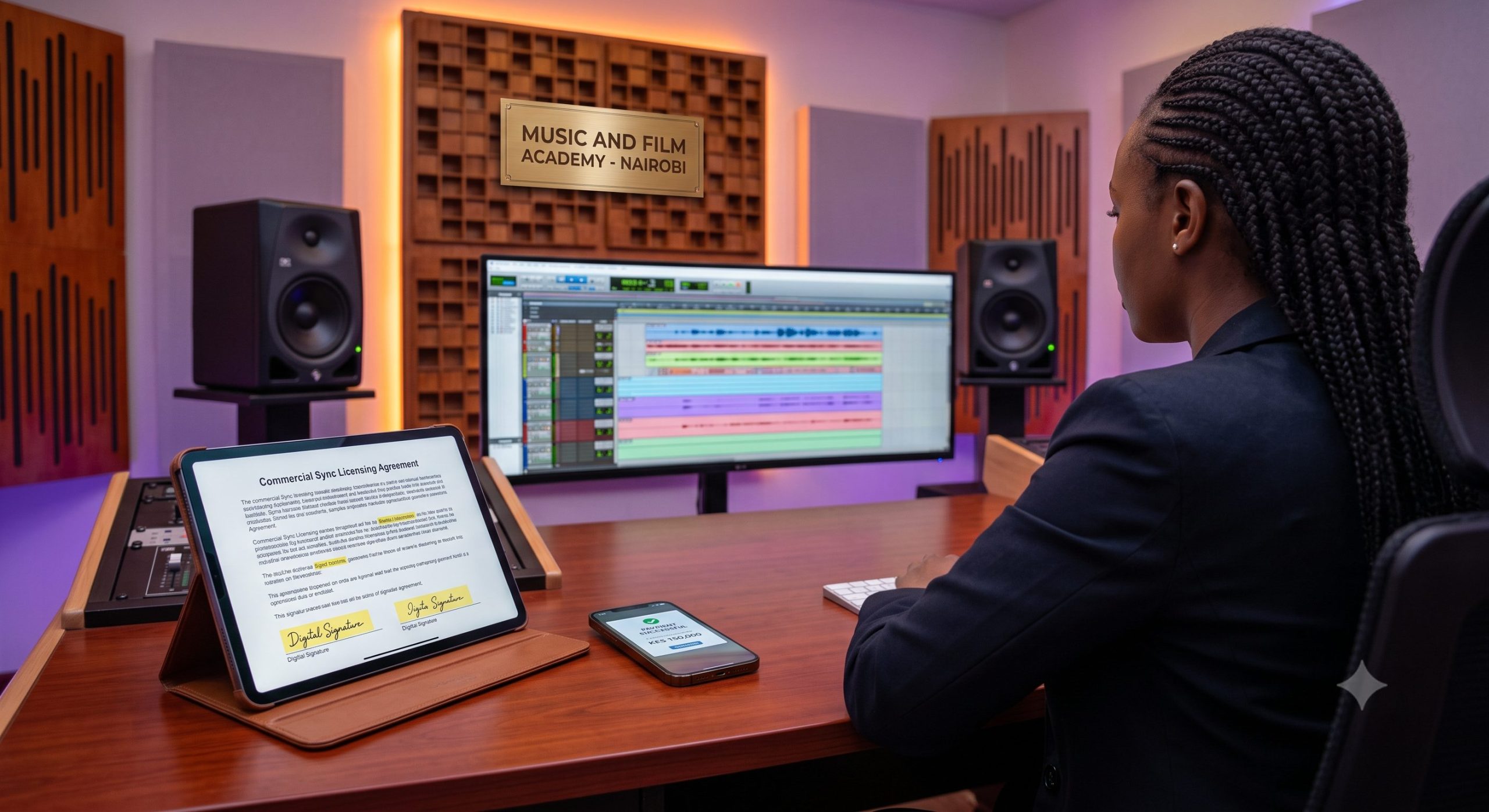
The digital transformation of the East African media ecosystem has created an incredibly lucrative avenue for independent music producers. While leasing hip-hop instrumentals or tracking street club tracks online provides an excellent foundation for secondary residual income, the highest visual liquidity in the modern creative market exists within the corporate business-to-business (B2B) marketplace. Every week, major consumer brands, multi-national conglomerates, and telecommunications giants based in commercial hubs like Upper Hill, Westlands, and Kilimani launch multi-platform marketing campaigns. These projects require short, memorable audio assets—commonly known as commercial jingles, sonic brands, or promotional audio tags. For an ambitious producer, monetizing beats in Kenya through corporate licensing is the fastest route to high-ticket revenue.
Many talented bedroom producers struggle to crack this market because they approach advertising agencies with the same mindset they use when selling an instrumental track to a local recording artist. Sending an unvetted link with an informal price quote over social media will lead to immediate rejection by corporate gatekeepers. The advertising world operates within a highly disciplined framework of production briefs, strict brand safety guidelines, clear copyright clearances, and rigid delivery deadlines. To secure these corporate contracts, you must transition your workflow from a casual beatmaker to a certified commercial audio supplier. This guide provides a comprehensive business roadmap detailing how to format your portfolios for agency review, negotiate upfront creation fees alongside mechanical sync splits, deliver clean broadcast-ready stems, and draft corporate licensing contracts.
1. Decoding the Corporate Landscape: How Nairobi Advertising Agencies Source Audio
To pitch your creative services successfully, you must understand the internal architecture of your target clients. Major local brands do not handle their media productions directly; instead, they hire full-service creative agencies like Ogilvy Africa, Scanad, or Redhouse Group to manage their campaign strategy.
[Corporate Brand Client] ──► Sets Budget ──► [Advertising Agency (Creative Director)]
│ (Issues Audio Brief)
▼
[Certified Commercial Audio Producer]
The Role of the Creative Director and Audio Brief
Inside the agency, the person responsible for selecting the music or jingle for a television or digital campaign is the Creative Director or the Senior Video Producer. When a campaign enters production, the agency drafts a document known as an Audio Brief.
2. Structuring Commercial Contracts: Production Fees vs. Synchronization Splits
A major mistake local producers make when dealing with corporate entities is selling their work as a flat-rate cash buyout without protecting their long-term backend rights. When writing corporate audio assets, your incoming revenue should be split into two independent legal layers:
[COMMERCIAL AUDIO REVENUE STREAM]
│
┌──────────────────────────────┴──────────────────────────────┐
▼ ▼
[Upfront Production Fee] [Backend Synchronization Royalty]
│ │
Covers your time, studio tracking labs, Paid out when the ad is broadcast on TV/Radio.
and initially creating the asset stems. Collected via KAMP/PAVRISK logging registries.
A. Calibrating Your Upfront Production Fee
The upfront fee is the flat rate you charge the agency to cover your active studio labor, sound design processing, session musician fees, and the physical creation of the master audio file.
B. Retaining Your Backend Synchronization (Sync) Rights
The upfront fee only grants the brand the right to use the audio for the specific campaign outlined in your contract. You must specify that you retain your performance and mechanical publishing percentages under the Kenyan Copyright Act.
3. Step-by-Step Blueprint: Formatting and Delivering Vetted Corporate Stems
Corporate video editors work on complex, multi-layered timelines inside editing platforms like Adobe Premiere Pro or DaVinci Resolve. To ensure your audio assets integrate into their pipeline without causing delays, your final delivery packages must follow strict professional engineering standards.
[Master Mix File] ──► [60s TV Pass] ──► [30s Digital Ad Cut] ──► [15s Radio Tag] ──► [Clean M&E Stem Set]
The Delivery Sequence and Formatting Standard
When a jingle gets final approval, do not just send a single stereo WAV file. Export and deliver a fully structured Stem Package organized exactly like this:
4. Legal Compliance: National Rights Registrations and Invoicing Infrastructure
Operating successfully in the B2B corporate market requires maintaining an absolute level of legal compliance and professional business infrastructure. Corporate accounting departments cannot process informal payments; they require vetted financial compliance.
1. Setting Up a Compliant Invoicing Infrastructure
To receive payments from large corporate advertising agencies, you must move past personal mobile transactions and operate through a registered corporate entity.
2. Securing Your Catalog via KECOBO NRR Registration
Before you submit an original jingle portfolio or concept track to an advertising agency for review, you must document your authorship with the state to protect your intellectual property from unauthorized usage.
| Commercial Production Phase | Required Compliance Document | Primary Operational Role | Target Financial Metric |
| Project Mobilization | Signed Sync Licensing Contract | Sets the legal boundaries for territory, usage term, and master ownership splits. | 50% Mobilization Deposit due before tracking. |
| Final Asset Delivery | Compliant eTIMS Electronic Invoice | Provides the mandatory tax documentation required by corporate accounting teams to release funds. | Remaining 50% balance settled upon stem approval. |
| Royalty Preservation | KECOBO NRR Registration Certificate | Establishes absolute state-vetted proof of authorship before the asset enters public broadcast rotation. | Protects backend performance revenues for life. |
5. Calibrating Your Audio Workspace for True Broadcast Translation
To deliver commercial jingles that translate cleanly across everything from tiny smartphone speakers to heavy club sound systems, you must configure your acoustic monitoring environment with strict technical precision.
1. Eliminating Studio Monitoring Bottlenecks
Untreated rooms naturally suffer from low-frequency acoustic energy build-ups, creating phase cancellation dead zones or exaggerated boomy frequencies that can deceive your ears during a mix.
2. Safeguarding Hardware Against Local Grid Instability
Electrical fluctuations are an ongoing consideration for production spaces in Nairobi. A sudden voltage spike or sudden power cut can damage your studio monitors’ internal amplifiers or corrupt your active project files mid-session.
[STUDIO POWER SECURITY TIMELINE]
│
┌─────────────────────────┴─────────────────────────┐
▼ ▼
[AVR Voltage Line Filter] [UPS Battery Backup Bridge]
│ │
Filters dangerous electrical fluctuations Grants critical minutes to save complex
and spikes from the local grid infrastructure multitrack stems during unexpected power cuts
💡 The Academy Edge: Understanding how to systematically prepare your audio projects for executive B2B compliance is a core focus at the Music And Film Academy. Discover our structural curriculum tracks through our central Music Production Courses in Kenya comparison page to discover how we prepare you to build corporate media pathways.
6. Mastering Final Loudness Criteria for Broadcast Demands
Once your commercial jingle stems are mixed and balanced, the final step in your pipeline is mastering—preparing the final audio file to meet modern broadcast and digital streaming volume targets.
Managing Perceived Volume (LUFS Metrics)
The international media industry measures loudness using LUFS (Loudness Units Full Scale), a metric that calculates perceived human hearing volume rather than simple digital peaks.
[COMMERCIAL MASTER CODE REQUISITES]
│
┌──────────────────────────┴──────────────────────────┐
▼ ▼
[Loudness Profile: -8 LUFS] [Peak Ceiling: -1.0 dBTP]
│ │
Ensures a competitive volume signature Eliminates inter-sample clipping
for national radio and TV ad blocks distortion across digital streams
💡 The Academy Edge: Navigating the corporate ecosystem as a commercial creator requires a robust blend of advanced mixing skills, legal contract expertise, and entrepreneurial vision. Our elite, TVETA-approved Music Production Diploma Course is specifically built to serve as the ultimate career launchpad for business-minded creators, completely integrating advanced legal asset protection and corporate B2B pitching mechanics into your practical studio tracking framework.
7. Conclusion: Turn Your Creative Output into Corporate Success
Succeeding as a high-level commercial music producer requires moving past informal workflows and treating your creative output as a valuable business asset. By formatting your portfolios to align with agency briefs, negotiating upfront fees alongside backend sync rights, delivering structured WAV stem packages, and maintaining complete tax and copyright compliance, you can confidently build a profitable business monetizing beats in Kenya.
True industry success is built through extensive practice inside professional recording environments using top-tier tools under the guidance of active industry mentors. At the Music And Film Academy (MFA), we provide the perfect foundation for your commercial ambition. Our modern campus labs at Information House along Hakati Road in the Nairobi CBD grant you unlimited access to high-spec acoustic suites, advanced production software, and comprehensive music business training designed to help you navigate contracts and client briefs with confidence. Stop guessing with uncalibrated setups alone. Take control of your career path, upgrade your commercial production skills, and enroll with us today.