Phone:
+254 719 428 550
Physical address:
Information House, Hakati Road,
Nairobi, Kenya.

Phone:
+254 719 428 550
Physical address:
Information House, Hakati Road,
Nairobi, Kenya.
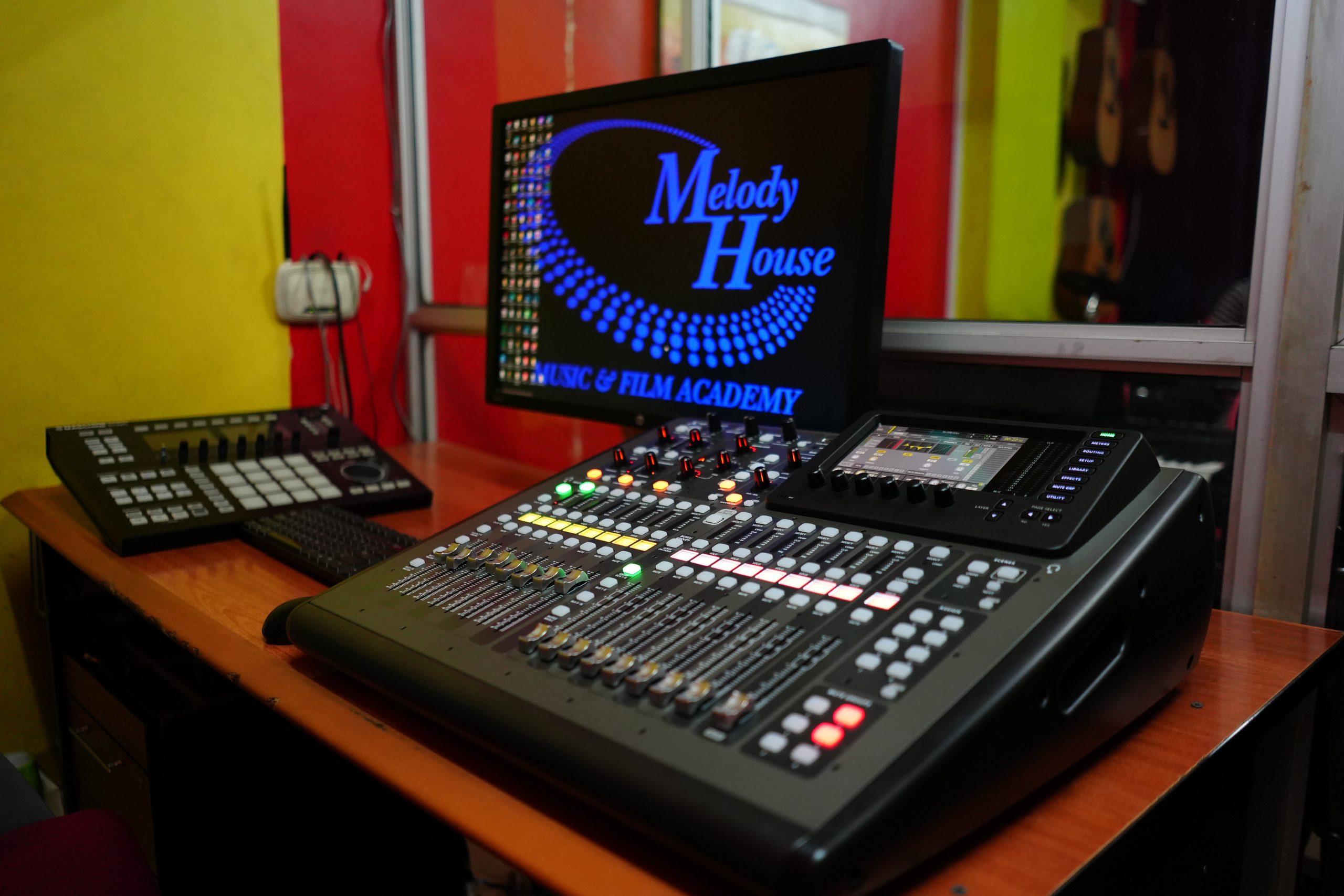
In the world of live sound and professional studio recording, your choice of mixing console defines your workflow, your sonic clarity, and your professional adaptability. In the Kenyan market today—especially within the growing church and event production sectors—the debate often centers on the Behringer Wing vs X32. While the X32 has been the undisputed “king” of affordable digital mixing for over a decade, the Behringer Wing represents a new era of “Source-focused” mixing and significantly expanded DSP power.
At the Music And Film Academy, we provide our students with hands-on training on both of these consoles. We believe that a versatile engineer shouldn’t just know how to push faders; they must understand the architecture of the tools they use. Whether you are managing a Sunday service at a large Nairobi church or mixing a multi-track live recording at Information House, understanding the strengths of the Behringer Wing vs X32 is essential. If you are looking to master these professional workflows, our sound engineering courses in Nairobi offer the direct mentorship needed to handle these massive consoles with confidence.
The Behringer X32 is arguably the most successful digital mixer in history. Its success lies in its traditional architecture. For students joining our Sound Engineering Courses, the X32 is often the perfect starting point because its layout mirrors the logic of classic analog consoles but with the power of digital recall.
When comparing the Behringer Wing vs X32, the Wing is not a replacement; it is an evolution. While the X32 uses a “Channel-First” approach, the Wing uses a “Source-First” philosophy. This means that instead of thinking about “Channel 1,” you think about the “Source” (e.g., the Vocalist’s Mic). You can then route that source to any channel or even multiple destinations without re-patching.
The Behringer Wing offers roughly 5 times the processing power of the X32. Every one of its 48 channels is inherently stereo, meaning you don’t have to “waste” two channels to link a keyboard or a stereo playback track. At the Music And Film Academy, we teach our students how to utilize the Wing’s 16 internal FX engines—which include world-class emulations of hardware from Neve, SSL, and Pultec—allowing for a “studio-quality” mix in a live environment.
Speed is everything in live sound. The Wing’s capacitive 10-inch touchscreen allows for a smartphone-like workflow. Pinching to zoom on EQs or swiping through fader banks makes the Behringer Wing vs X32 comparison a matter of modern ergonomics versus traditional tactile control.
For large-scale setups at churches or festivals, routing is where the Behringer Wing vs X32 battle is won. Both consoles utilize the Klark Teknik AES50 protocol, which allows for 48 channels of bidirectional audio over a single Shielded Cat5e cable. This means you can use the same digital stageboxes (like the S16 or DL32) for either console.
However, the Wing introduces StageConnect, an industry-standard interface that can transmit 32 channels of low-latency audio over a standard XLR cable. For our sound engineering students, learning these digital networking protocols is mandatory, as it is the foundation of modern system design.
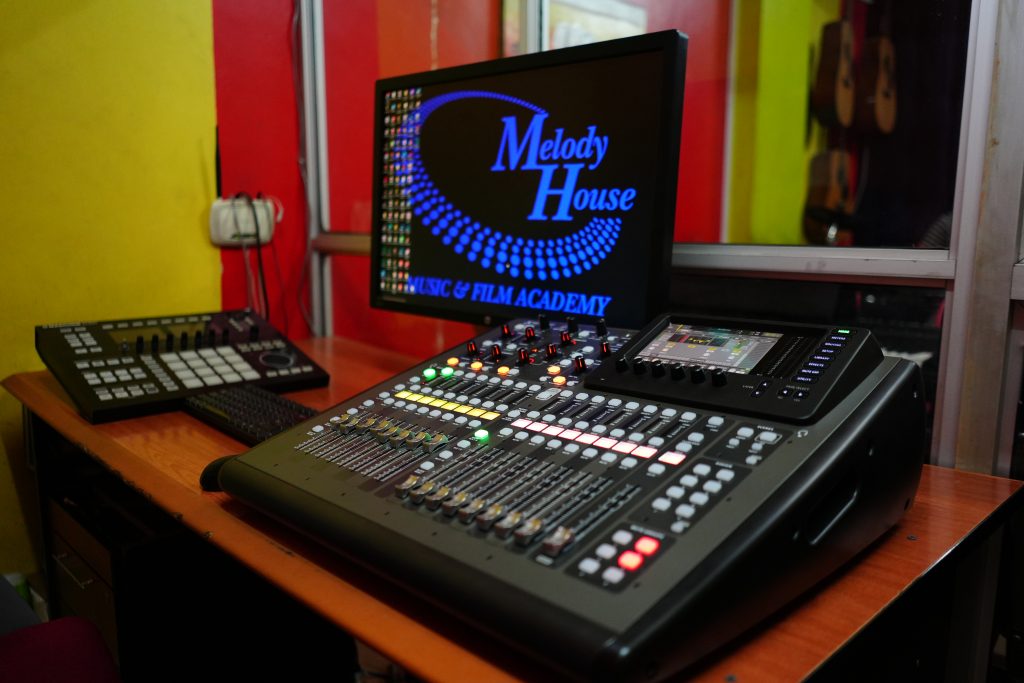
Choosing between the Behringer Wing vs X32 often comes down to the specific needs of the venue and the budget of the institution.
A mixer is only as good as the person operating it. Many venues in Nairobi spend hundreds of thousands of shillings on a Behringer Wing but continue to get a “thin” or “distorted” sound because the staff hasn’t mastered gain staging or compression.
Our curriculum at the Music And Film Academy focuses on the “Why” behind the “How.”
Whether you prefer the tactile reliability of the X32 or the limitless flexibility of the Wing, the goal is the same: providing an immersive, high-fidelity experience for the audience. The Behringer Wing vs X32 debate highlights how far music production and sound engineering have come. At the Music And Film Academy, we are proud to be the bridge that connects talented Kenyans to this world-class technology.
Institution: Music And Film Academy
Visit Us: 2nd Flr, Rm s2, Information House, Hakati Rd, Nairobi.
Call/WhatsApp: +254 719 428 550
Official Website: musicandfilmacademy.ac.ke