Phone:
+254 719 428 550
Physical address:
Information House, Hakati Road,
Nairobi, Kenya.

Phone:
+254 719 428 550
Physical address:
Information House, Hakati Road,
Nairobi, Kenya.
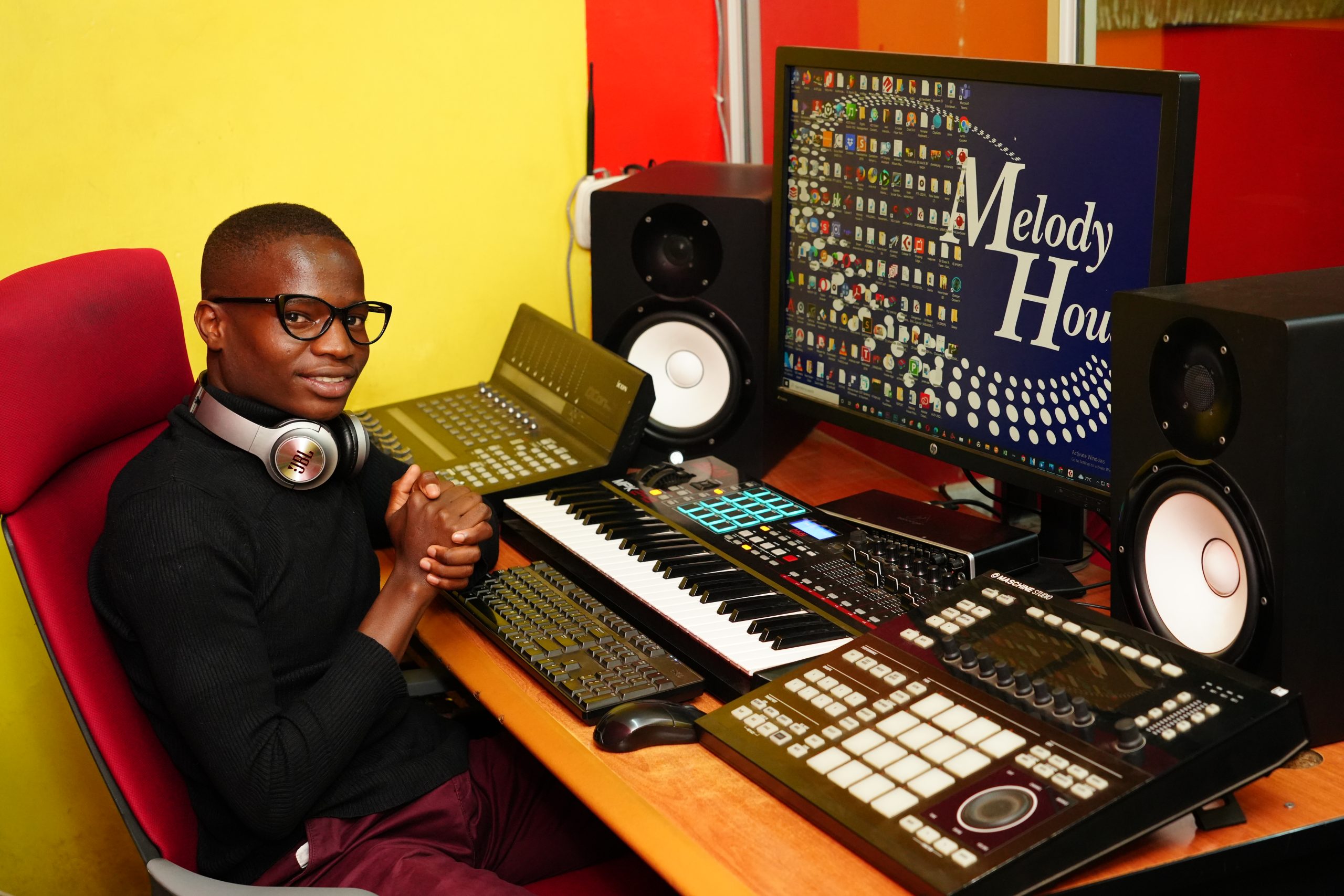
Every single song that soundtracks your life—whether it is a heavy Afrobeats track blasting from a matatu on Tom Mboya Street, an emotional acoustic ballad on your Spotify playlist, or a cinematic score driving a Hollywood trailer—is the result of a deliberate, highly technical, and deeply creative journey. But for those on the outside looking in, the actual day-to-day process remains a mystery.
If you are an aspiring artist or a curious creative, you have likely asked yourself: what is music production, and what does a producer actually do?
In the simplest terms, music production is the complete process of conceptualizing, creating, recording, arranging, and refining a piece of audio until it is ready for public distribution. It is the bridge between a raw, unformed musical idea in someone’s head and a polished master recording that can be played seamlessly across millions of consumer devices worldwide.
Historically, this required multi-million dollar recording studios packed with giant mixing consoles, heavy tape machines, and an army of specialized engineers. Today, while high-end hardware remains critically important for top-tier results, the core software tools have been democratized. With the right training, a modern creative can guide a record through the entire lifecycle using a laptop, an audio interface, and a professional workspace.
This definitive beginner’s guide breaks down the multi-layered world of modern music creation, revealing the technical stages, essential equipment configurations, and career pathways available in today’s fast-moving entertainment economy.
To answer what is music production accurately, we have to clear up a common piece of industry misinformation. A music producer is not just “the person who makes beats.” While beat-making is a massive part of genres like hip-hop, trap, and reggaeton, the role of a true producer is much broader.
A music producer is essentially the director of a sonic project, operating much like a film director does on a movie set. They are responsible for the creative direction, technical execution, and final emotional impact of the entire track. Depending on the project, a producer might take on several distinct identities:
In this role, the producer helps an existing band or singer shape their sound. They sit outside the arrangement, helping select the best songs, critiquing vocal performances, coaching musicians, and making high-level decisions about which instruments should be featured to ensure the track connects with its target audience.
Common in modern electronic music, Afropop, and hip-hop, this type of producer creates the entire instrumental track from scratch. They sit directly at the computer, programming drum patterns, playing synthesizer lines, sculpting bass tracks, and assembling the musical canvas before a vocalist ever steps into the recording booth.
Many modern producers handle their own tracking and basic technical setups. They understand microphone placement, room acoustics, gain staging (managing volume levels to avoid distortion), and software workflows, allowing them to capture clean, high-fidelity sound right at the source.
A professional piece of audio is not thrown together all at once; it is constructed in highly organized, sequential phases. Skipping or rushing any of these steps creates a domino effect that can ruin the final quality of a record.
Every track starts with a spark. This phase focuses entirely on raw composition. It involves choosing the tempo (measured in beats per minute, or BPM), establishing the musical key, and writing the underlying chord progressions. At this early stage, the goal is simply to establish a strong melodic foundation and a memorable lyrical structure.
Tracking is the physical act of capturing audio signals and saving them into your software timeline. This is where vocalists record their leads, guitarists plug into amplifiers, and hardware instruments are captured. The primary technical goal during tracking is signal purity—ensuring the audio is free from background noise, room reflections, or digital clipping.
Once the raw parts are recorded, the producer acts as an architect to design the song’s structural layout. A standard commercial arrangement follows a familiar blueprint designed to manage consumer attention spans:
+---------------------------------------------------------------------------------------------------------+
|                                  STANDARD ARRANGEMENT TIMELINE FLOW                                     |
+---------------------------------------------------------------------------------------------------------+
|                                                                                                         |
|  [ INTRO ] ---> [ VERSE 1 ] ---> [ PRE-CHORUS ] ---> [ CHORUS ] ---> [ VERSE 2 ] ---> [ OUTRO ]          |
|  (Hooks the     (Establishes     (Builds tension     (The highest    (Advances the    (Brings the       |
|   listener)      the story)       and energy)         energy peak)    narrative)       sonic release)   |
|                                                                                                         |
+---------------------------------------------------------------------------------------------------------+
During the editing phase, the producer cleans up the audio files. They cut out unwanted breathing sounds, align loose drum hits perfectly to the project grid, and apply subtle pitch correction to vocal tracks to ensure every element fits together like a puzzle piece.
Mixing is where the individual multi-tracks are blended into a cohesive whole. Think of a mixer as a chef balancing distinct ingredients. If there is too much salt, the dish is ruined; if the low-end bass is too loud, it will drown out the vocals. A mix engineer balances the track using three core processing families:
Mastering is the absolute final step in the audio pipeline. While mixing is about balancing individual tracks against each other, mastering focuses on the stereo mix file as a single unit. The mastering engineer optimizes the overall playback volume to meet industry streaming standards, ensures the tonal balance translates accurately across everything from cheap smartphone speakers to massive club sound systems, and embeds the metadata required for digital distribution.
To truly grasp what is music production, you must understand the central software environment where all these processes take place: the Digital Audio Workstation (DAW). Your DAW is the command center of your creative space. While every major DAW achieves the same final goal—outputting high-quality audio—different platforms favor different creative workflows.
Extremely popular within the Afrobeats, hip-hop, and electronic scenes due to its highly visual, loop-based step sequencer. It allows beginners to program drum rhythms and complex patterns almost instantly without needing an extensive background in traditional music theory.
The absolute ruler of traditional recording environments and commercial tracking facilities worldwide. Pro Tools is designed for high-speed audio editing, multi-mic live tracking, and advanced large-scale mixing workflows. It is the software you will find in almost every major film scoring stage and commercial broadcast studio.
Engineered from the ground up for both studio creation and real-time live performance. Its unique “Session View” acts as a non-linear musical playground, allowing artists to trigger audio loops, manipulate effects on the fly, and jam out track ideas dynamically.
Exclusive to macOS users, Logic Pro offers an incredibly robust, comprehensive package of built-in virtual instruments, high-end effects processing, and intuitive MIDI editing tools right out of the box, making it a favorite for composers and singer-songwriters alike.
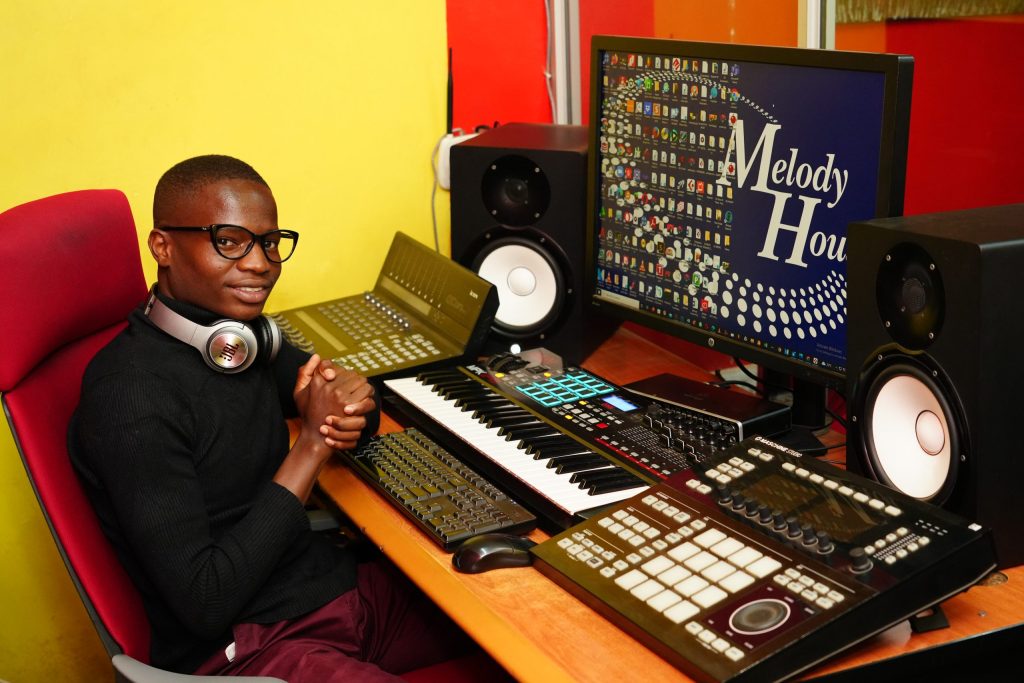
One of the biggest mistakes beginners make when entering the field is falling into the trap of Gear Acquisition Syndrome (GAS)—believing they need to spend thousands of dollars on boutique hardware before they can make a great record. The truth is, some of the biggest global hits over the last decade were produced entirely inside modest home studios.
If you want to build a functional, accurate listening environment without wasting capital, focus heavily on these five foundational pillars.
+---------------------------------------------------------------------------------------------------------+
|                                    HOME STUDIO HARDWARE ECOSYSTEM                                       |
+---------------------------------------------------------------------------------------------------------+
|                                                                                                         |
|       [ Host Computer ] <------------------------------------------> [ MIDI Controller Keyboard ]       |
|              ^                                                                                          |
|              | (USB Link)                                                                               |
|              v                                                                                          |
|     [ Audio Interface ]                                                                                 |
|         /          \                                                                                    |
|  (Outputs)        (Inputs)                                                                              |
|       /              \                                                                                  |
|      v                v                                                                                 |
| [Studio Monitors]  [Condenser Microphone]                                                               |
|                                                                                                         |
+---------------------------------------------------------------------------------------------------------+
Your computer is the engine of your studio setup. Music software relies heavily on multi-threaded processing and RAM. When selecting a machine, prioritize a multi-core processor (such as Apple’s M-series silicone or Intel Core i7/i9 chips), a minimum of 16 gigabytes (GB) of RAM to handle complex virtual instrument libraries, and a solid-state drive (SSD) for lightning-fast project loading times.
A computer soundcard is not built to process professional audio. An audio interface acts as an external translator. It converts the analog electrical voltage from a microphone into digital ones and zeros for your computer, and converts those digital signals back into analog sound waves for your speakers. Look for interfaces with clean preamps and low latency, such as the widely trusted Focusrite Scarlett or Universal Audio Volt series.
Commercial consumer speakers and cheap headphones are intentionally designed to “color” sound—they artificially boost the bass and treble frequencies to make casual listening more exciting. Producers cannot use these because they distort the truth.
You need studio monitors with a flat, neutral frequency response. This ensures you hear your audio exactly as it exists in the software, allowing you to create mixes that translate accurately across all playback systems. If your room lacks acoustic treatment, a pair of professional open-back studio headphones (like the Beyerdynamic DT 990 Pro) is a crucial alternative.
To capture pristine vocals or acoustic instruments, you need a sensitive microphone. Large-diaphragm condenser mics are the studio standard because they excel at capturing subtle details, high-end air, and emotional nuances across vocal performances. Brands like Audio-Technica and Rode offer great entry points that deliver exceptional clarity without breaking the bank.
While you can draw musical notes into your software manually using a mouse, it quickly kills your natural human feel and expressiveness. A Musical Instrument Digital Interface (MIDI) keyboard does not generate any internal sound on its own. Instead, it sends performance data to your computer—telling your DAW exactly which note you pressed, how hard you hit it, and how long you held it down, giving your virtual instruments a human touch.
Now that we have stripped away the mystery surrounding what is music production, the next step is figuring out how to transform this baseline knowledge into a highly functional career. The music business moves far too quickly for traditional, theoretical academic structures. This is a practical industry; labels, agencies, and clients do not care about paper qualifications. They care about your sonic portfolio and technical agility.
To get noticed, your training needs to happen inside environments that replicate real-world industry pressures. You need consistent access to treated acoustic spaces, professional microphone configurations, and advanced control surfaces where you can build hands-on technical familiarity.
If you are looking to fast-track your development, consider joining structured, hands-on Music Production Courses that place you directly behind professional workstations from day one. At the Music And Film Academy campus at Information House in the Nairobi CBD, we throw out the textbook-heavy lectures and focus entirely on competency-based creative education.
Students spend their hours operating actual hardware, managing real recording sessions, and building an industrial-grade portfolio of finished tracks under a 1:1 student-to-gear ratio. This rigorous approach ensures you leave with the practical technical skills required to command a professional studio environment with absolute confidence.
The traditional image of a producer locked away working solely on radio singles is a narrow view of today’s market. Understanding the core principles of audio design opens up a wide array of diverse monetization pathways across the modern creative economy:
The question of what is music production ultimately leads back to you. It is the ultimate creative tool for taking complete control over your artistic vision. It transforms you from a passive consumer of media into an active architect of culture.
Stop sitting on the sidelines watching other creators shape the sound of modern entertainment. The tools are available, the industry is searching for technical innovators, and the gateway is completely open.
If you are ready to stop guessing and start creating, explore the immersive, hands-on music production courses in kenya offered at specialized music production schools to build your signature sound. Step into the studio at the Music And Film Academy, launch your DAW, and bring your musical vision to life.