Basic Photography and Videography Certificate Course
The Basic Photography and Videography Certificate Course at Music And Film Academy is a TVETA-accredited, 2 to 3-month foundational program designed to turn absolute beginners into confident, technical media creators. Situated at Information House on Hakati Road in the heart of Nairobi CBD, our School of Visual Arts provides a guaranteed 1:1 student-to-gear ratio, giving you direct access to mirrorless cameras, speedlights, continuous LED panels, gimbals, and dedicated editing suites.
If you are looking to explore our full curriculum catalog, you can review our main photography and videography courses in Kenya hub page. Whether you aim to jumpstart a career in media production, launch a freelance creative business, or produce high-end content for corporate brands, this course delivers hands-on mastery across manual camera mechanics, field lighting, location audio, and industry-standard post-production software.
Guaranteed 1:1 Student-to-Gear Ratio during practical labs
Entry Requirements
KCSE Grade D (Plain) or equivalent secondary qualification
Detailed Curriculum: Basic Photography and Videography Certificate Course Units
                  ┌──────────────────────────────────────────────────────────┐
                  │    BASIC PHOTOGRAPHY AND VIDEOGRAPHY CERTIFICATE COURSE  │
                  └────────────────────────────┬─────────────────────────────┘
                                               │
     ┌───────────────────┬─────────────────────┼─────────────────────┬───────────────────┐
     ▼                   ▼                     ▼                     ▼                   ▼
  UNIT 1              UNIT 2                UNIT 3                UNIT 4              UNIT 5
Pre-Production &    Camera Physics &      Composition &         Lighting & Audio    Post-Production
Planning            Manual Controls       Visual Storytelling   Mechanics           Workflows
Unit 1: Pre-Production & Visual Concept Planning
Translating Creative Briefs: Deconstructing client briefs into structured shot lists, mood boards, and realistic production schedules.
Location Scouting & Recce: Evaluating natural lighting windows, ambient room acoustics, power availability, and spatial constraints prior to shooting.
Gear Auditing & Equipment Preparation: Camera sensor cleaning, lens inspection, SD card initialization, battery management, and backup power protocols.
Unit 2: Camera Physics & Manual Operation (Photo & Video)
Mastering the Exposure Triangle: Aperture (f-stop scale, depth-of-field control, and light transmission), Shutter Speed vs. Shutter Angle (motion blur control, eliminating light flicker, and the 180° shutter rule for video), and ISO noise thresholds.
Frame Rates & Broadcast Standards: Understanding 24fps cinematic motion, 25fps PAL broadcast standard, 30fps web standards, and high-frame-rate speed ramping (60fps and 120fps slow-motion capture).
Sensor Formats & Focal Lengths: Full Frame vs. APS-C/Super 35 crop factors; optical characteristics of 24mm wide-angle, 35mm environmental, 50mm natural, and 85mm portrait focal lengths.
Focus & Exposure Monitoring Tools: Manual focus pulling, focus peaking indicators, zebra stripes for highlight protection, false color basics, and live histogram balancing.
Unit 3: Composition, Framing & Camera Movements
Rules of Visual Composition: Rule of Thirds, Leading Lines, Golden Ratio, Symmetry, Headroom, and Lead/Look Room.
Posing Mechanics & Decisive Moments: Human anatomy posing for portraiture, natural light direction, and capturing spontaneous moments in event and street photography.
Dynamic Camera Movement: Panning, tilting, tracking, pedestal moves, and hands-on balancing and calibration of 3-axis motorized gimbals.
Unit 4: Fundamental Lighting & Audio Capture
Three-Point Lighting Architecture: Key Light placement, Fill Light ratios, and Backlight/Hair Light separation techniques.
Natural Light & Speedlight Control: Diffusers, 5-in-1 reflectors, bounced flash techniques, and Speedlight flash operation (TTL automation vs. Manual power control).
Continuous LED Lighting: Color temperature management across the Kelvin scale (2700K Warm Tungsten to 6500K Daylight), CRI/TLCI color accuracy values, and power distribution.
On-Camera & Field Audio Capture: Shotgun microphone polar patterns, wireless lavalier placement, gain staging, signal-to-noise ratio optimization, and real-time audio input level calibration.
Unit 5: Foundation Post-Production Workflow
Data Management & Offloading: Ingesting media, file naming conventions, folder structure standardization, proxy generation, and 3-2-1 backup strategies.
Photo Processing in Adobe Lightroom Classic: RAW image development, exposure and white balance correction, global/local adjustments, lens profile corrections, color grading basics, and batch export settings.
Non-Linear Video Editing in Adobe Premiere Pro: Project setup, timeline assembly, rough cuts, J-cuts and L-cuts for seamless audio transitions, lower-third creation, audio leveling, color correction, and H.264 video rendering.
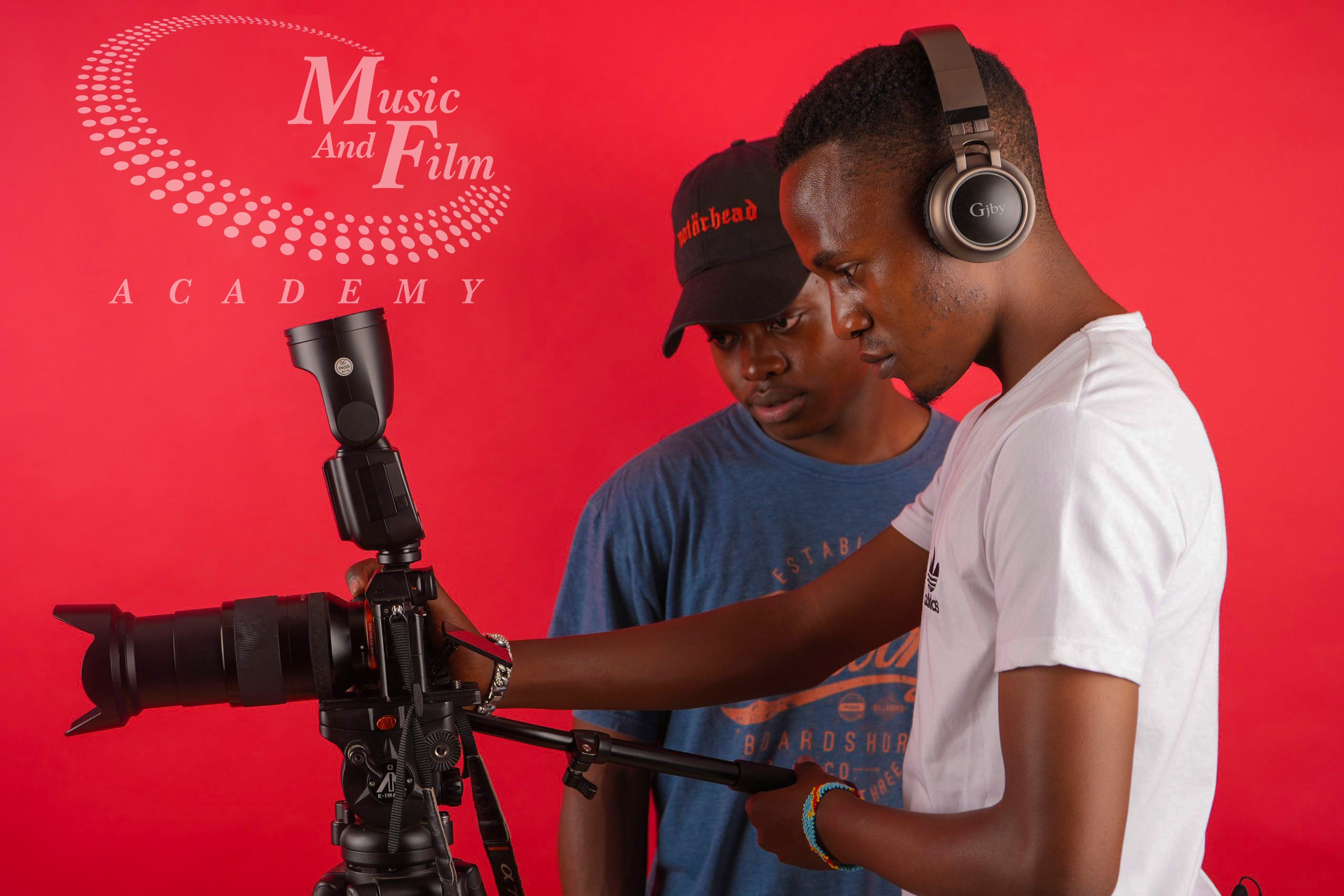
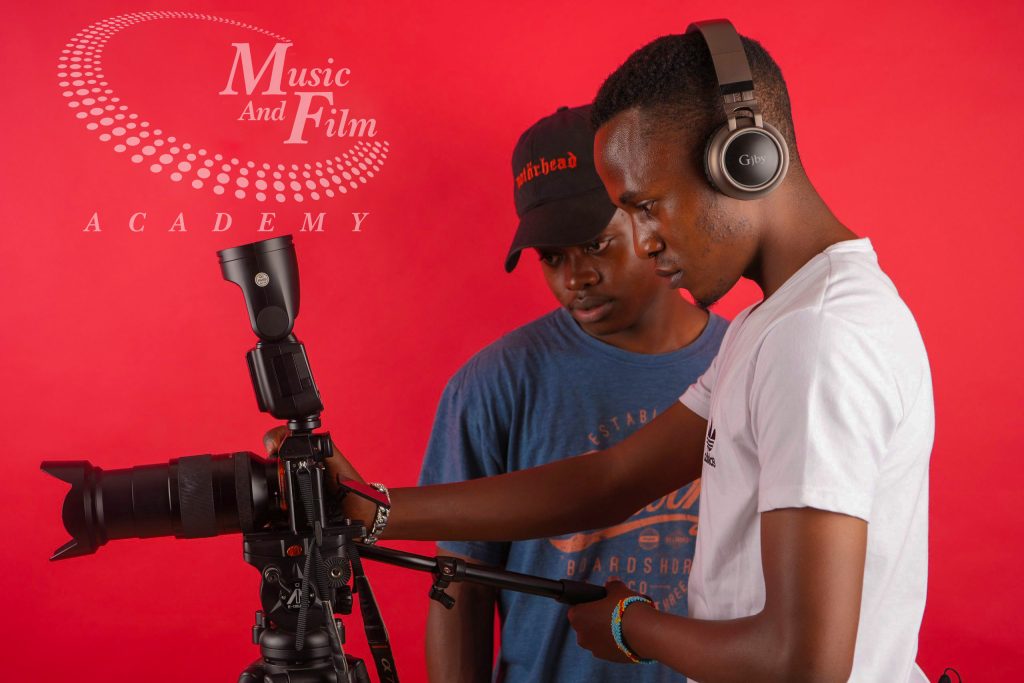
Hands-on practical camera operation and studio lighting session at Music And Film Academy, offering leading photography and videography courses in Kenya.
Why Choose Our Basic Photography and Videography Certificate Course in Kenya?
Guaranteed 1:1 Gear Policy: We eliminate shared gear delays. Every student operates their own dedicated camera, light kit, or editing station during practical sessions.
Central Nairobi CBD Location: Situated on the 5th Floor of Information House (Hakati Road), our campus is easily accessible from all major transit hubs in Nairobi.
Collaborative Visual Arts Lab: Shoot live acoustic sessions, artist interviews, and studio tracking sessions in collaboration with our Sound Engineering and Music Production departments.
Practitioner-Led Instruction: Learn directly from active commercial photographers, directors of photography, and editors working in the East African media space.
Admission Requirements for the Basic Photography and Videography Certificate Course
Academic Requirement: KCSE Grade D (Plain) or equivalent secondary school qualification.
Experience Level: Open to complete beginners; no prior camera or video editing experience is required.
Equipment Requirement: Access to a personal camera or laptop is recommended for home practice, but all equipment is provided during campus practical labs.
Graduate Career Pathways
Completing the Basic Photography and Videography Certificate Course prepares you for immediate entry-level opportunities across Kenya’s growing creative industry:
Junior Content Creator: Producing photography and short-form video assets for brands and social media agencies.
Event & Portrait Photographer: Managing independent photo shoots for social events, corporate portraits, and lifestyle branding.
Corporate Media Assistant: Operating cameras and lighting setups for internal communications, non-profits, and media houses.
Assistant Video Editor: Assembling timelines, cutting interviews, and applying basic audio and color corrections in post-production.
For advanced training, check our comprehensive guide to photography and videography courses in Kenya to explore higher-level masterclasses in cinema rigging, drone operations, and color grading.
Frequently Asked Questions (FAQ)
What is the fee for the Basic Photography and Videography Certificate Course?
Tuition for the 3-month basic certificate program is KES 51,000 Total, which can be cleared in flexible monthly installments at KES 17,000 Per Month for 3 months.
Do I need to own a camera to take this course?
No. Music And Film Academy provides all required camera bodies, optics, lighting kits, and editing software during practical campus sessions.
Can I upgrade to an advanced certificate after completing this course?
Yes. Graduates can seamlessly transition into our Advanced Certificate in Commercial Photography & Videography or review our full photography and videography courses in Kenya catalog to master cinema camera rigs, aerial drones, studio strobes, multi-cam live streaming, and DaVinci Resolve Studio color grading.
How to Enroll
Enrolling in the Basic Photography and Videography Certificate Course is simple. Admissions run on continuous monthly intake schedules.
Campus Location: 5th Floor, Room 516, Information House, Hakati Road, Nairobi CBD, Kenya