Phone:
+254 719 428 550
Physical address:
Information House, Hakati Road,
Nairobi, Kenya.
Phone:
+254 719 428 550
Physical address:
Information House, Hakati Road,
Nairobi, Kenya.
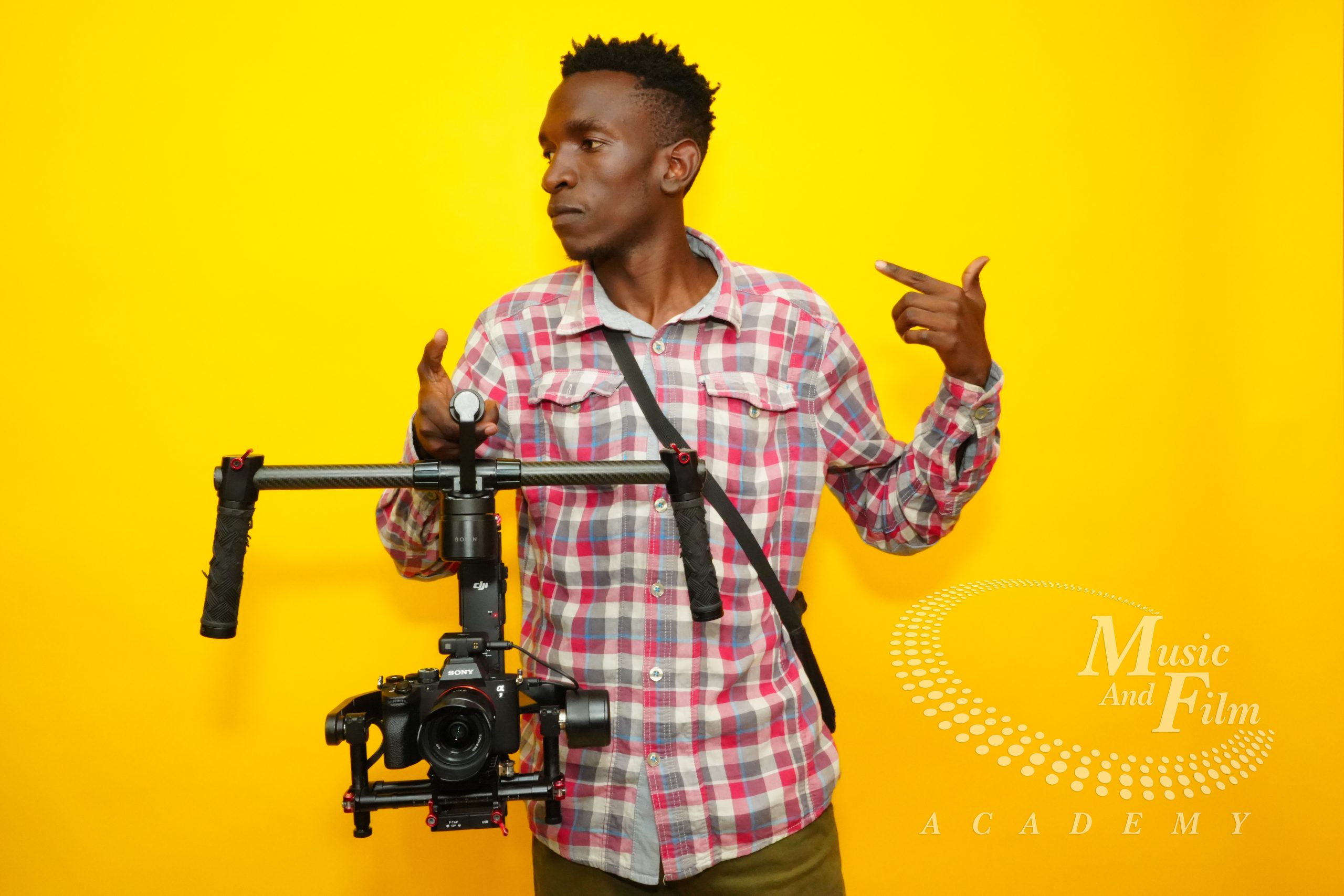
The traditional media landscape loved clear, distinct boundaries. For decades, the creative industry operated in strictly isolated silos. If you stepped onto a commercial advertising set or a high-budget media production in Nairobi, the professional roles were rigidly defined. The person holding the heavy DSLR or medium-format camera body was strictly responsible for capturing still frames, tracking the precise interplay of strobe lights, and delivering high-resolution images for billboards and print media. Conversely, the individual operating the cinema camera system lived entirely in a world of continuous lighting, frame rates, audio acquisition, and fluid camera movement. The two fields rarely cross-pollinated, and professionals in each camp fiercely guarded their respective territories.
However, the rapid democratization of media production technology has fundamentally dismantled these historical barriers. The evolution of modern mirrorless camera systems has created an era where a single camera body can seamlessly capture a high-resolution, uncompressed RAW photograph at one moment, and record pristine, log-profile 4K video at 120 frames per second the next. This technological revolution has given rise to a highly lucrative, fast-growing demographic in the creative economy: the hybrid creator.
As a modern creative stepping into the media landscape, you are likely facing an essential question: Can you genuinely build a successful career handling both mediums simultaneously, or will trying to master both leave you as a jack of all trades and a master of none?
The definitive answer is yes—not only can you do both, but in the current digital landscape, learning how to operate across both mediums is one of the most effective strategies for maximizing your market value. However, achieving sustainable success as a multi-disciplinary visual artist requires far more than simply flipping a switch on your camera from “Manual Photo” to “Video Mode.” It demands an intimate understanding of where these two artistic disciplines intersect, where they violently diverge, and how to strategically structure your workflow to command premium rates in a competitive marketplace.
At their absolute foundation, both still and moving image production draw from the exact same fundamental laws of visual art and physics. Whether your ultimate goal is to capture an evocative, storytelling corporate portrait or direct a high-impact digital commercial, your primary tool is light. Understanding the core principles of exposure, composition, and visual narrative remains completely identical across both mediums.
Every visual creator must master the delicate balancing act of the exposure triangle: aperture, shutter speed, and ISO. Whether you are freezing a high-speed athletic movement in a single frame or managing motion blur across a continuous video sequence, these three pillars dictate the technical quality of your asset. Furthermore, classic compositional guidelines—such as the rule of thirds, leading lines, framing, and managing negative space—apply equally to a standalone photograph and a moving cinema frame. A strong eye for composition ensures that regardless of whether the final delivery is static or dynamic, the viewer’s eye is guided exactly where the creator intends.
Beyond the baseline technical parameters, the ultimate objective of both disciplines is to evoke a specific emotional response and communicate a compelling narrative. A commercial photographer uses lighting style, subject expression, and color grading to tell a comprehensive brand story within a fraction of a second. A videographer relies on pacing, temporal progression, sequential editing, and sound design to achieve the exact same goal over a duration of minutes. The underlying creative muscle—the ability to identify an emotional core and translate it into a compelling visual language—is identical. For an ambitious individual exploring professional photography and videography Courses, recognizing this shared creative foundation is the first critical step toward building a diverse, resilient skill set.
While the foundational principles of light and composition are universal, the technical workflows of execution are vastly different. The most common pitfall for an aspiring multi-disciplinary artist is treating video simply as “moving photographs” or viewing photography as a “frozen video frame.” Failing to respect the distinct technical parameters of each medium inevitably results in amateur production quality.
+-----------------------------------------------------------------------+
|                        THE TECHNICAL DIVIDE                           |
+-----------------------------------------------------------------------+
|                                                                       |
|   PHOTOGRAPHY WORKFLOW                  VIDEOGRAPHY WORKFLOW          |
|   - Shutter Speed: Flexible             - Shutter Speed: 180° Rule    |
|   - Lighting: Instantaneous Strobes     - Lighting: Continuous Arrays |
|   - Audio: None                         - Audio: Multi-Channel Rec    |
|                                                                       |
+-----------------------------------------------------------------------+
In still photography, your shutter speed is a highly flexible creative tool. If you are shooting a portrait in direct, harsh midday sunlight, you can easily raise your shutter speed to 1/4000 or 1/8000 of a second to control your exposure while maintaining a wide, blurry aperture.
In videography, however, your shutter speed is rigidly locked by an essential cinematographic law known as the 180-degree rule. To preserve natural, cinematic motion blur that mimics the human eye, your shutter speed must be the reciprocal of double your frame rate:
Shutter Speed = 1/(2 times Frame Rate)
If you are filming a standard cinematic sequence at 24 frames per second (fps), your shutter speed must remain locked at approximately 1/50 of a second. If you scale up to 60 fps for a slow-motion sequence, your shutter speed moves to 1/120 of a second.
This introduces a massive challenge: when filming video in bright outdoor environments at 1/50 of a second with a wide-open aperture, your sensor will be instantly blinded by light. As a hybrid creator, you cannot simply raise your shutter speed without making your footage look unnaturally choppy and jarring. To solve this, you must master the use of specialized optical tools like Neutral Density (ND) filters—essentially sunglasses for your lens—to control light levels without disrupting your motion cadence.
The approach to lighting spaces represents another massive operational divergence. Still photographers rely heavily on high-powered electronic strobes and speedlights. These units emit an instantaneous, incredibly powerful burst of light that can easily overpower the sun, freeze rapid motion, and illuminate large environments using minimal battery power.
Video cameras, however, capture a continuous stream of information, rendering flash units entirely useless. A videographer must work exclusively with high-output, continuous LED or HMI lighting fixtures. Managing continuous lighting requires an intimate knowledge of power draw, thermal management, and color temperature consistency. Furthermore, continuous lights are inherently less efficient than strobes, meaning modifiers (like softboxes and scrims) must be selected and positioned with extreme precision to achieve the desired look without introducing unwanted ambient spill.
Perhaps the most jarring adjustment for a still photographer transitioning into a video environment is the sudden introduction of audio. In photography, your entire focus is concentrated purely on the visual frame. Video, by contrast, is an audio-visual medium; poor audio will instantly ruin pristine 4K or 8K imagery.
A professional videographer must become proficient in multi-channel audio recording, selecting the appropriate microphone architectures—such as directional shotguns or wireless lavalier systems—managing room tone, and tracking decibel signal-to-noise ratios to prevent clipping. Balancing real-time audio monitoring alongside visual composition dramatically increases the mental bandwidth required on a live set.
Understanding the technical nuances of both mediums allows you to structure a business model that capitalizes on your dual capabilities. Corporate clients, advertising agencies, and event organizers in the contemporary market are constantly looking for ways to streamline their production budgets. Hiring a single, elite hybrid creator who can deliver both high-end commercial stills and a polished promotional video wrap-up is significantly more cost-effective than coordinating two separate production teams.
+-------------------------------------------------------------------+
|               HYBRID VALUE PROPOSITION TO CLIENTS                 |
+-------------------------------------------------------------------+
|                                                                   |
|   [ SINGLE CONTRACT ] ----> Saves Budget & Simplifies Logistics   |
|            │                                                      |
|            ├─> Deliverable A: High-End Commercial Stills          |
|            │                                                      |
|            └─> Deliverable B: Polished Promotional Video          |
|                                                                   |
+-------------------------------------------------------------------+
In the corporate space, businesses frequently require concurrent media assets. When an enterprise launches a new product line or hosts an international summit in Nairobi, they need high-resolution images for their annual reports, press releases, and billboard campaigns, alongside engaging video content for YouTube, TikTok, and television broadcasts.
By positioning yourself as a comprehensive hybrid production solution, you eliminate a massive logistical headache for the client. You become the single point of contact, ensuring absolute visual consistency across both the photography assets and the video campaign. This unique value proposition allows you to command premium package rates that far exceed what a single-discipline artist could charge.
The luxury event and wedding market is another goldmine for the modern hybrid visual artist. Traditionally, clients had to source, contract, and manage separate photography and filmmaking teams, which frequently led to creative friction on set as operators competed for the same angles and lighting setups.
A cohesive hybrid team eliminates this conflict entirely. By mastering both mediums, you can offer integrated, high-end production packages where your team operates under a singular creative direction, seamlessly sharing space, lighting configurations, and timelines to deliver a harmonious final product.
The real test of a hybrid creator’s sanity and profitability doesn’t happen on set—it happens behind the desk in the editing suite. The post-production workflows for photography and videography are entirely distinct animals, requiring vastly different hardware configurations, software ecosystems, and temporal commitments.
A single, uncompressed compressed RAW image file from a high-resolution camera generally ranges between 40MB and 80MB. A photographer can comfortably back up an entire day’s commercial shoot onto a standard external drive and process those files effortlessly on a mid-range laptop.
Video assets, however, demand massive, high-throughput storage infrastructure. Shooting a single hour of 10-bit 4:2:2 All-Intra 4K footage can easily consume hundreds of gigabytes of data within minutes. Processing these immense files requires high-performance solid-state drive (SSD) arrays, high-performance multi-core processors, and dedicated graphics processing units (GPUs) capable of decoding complex video codecs without grinding to a halt.
The temporal investment required for editing represents a massive structural gap between the two crafts. In photography, using industry-standard applications like Adobe Lightroom or Capture One allows you to batch-edit, apply color profiles, and sync exposures across hundreds of images simultaneously. A highly skilled photographer can cull, color-grade, and export a major event gallery within a few hours.
Video editing is a non-linear, multi-layered process that unfolds across several distinct phases:
A three-minute promotional video can easily demand days of meticulous post-production work. As a hybrid creator, you must factor this massive time disparity into your client pricing models. If you charge the same rate for a day of video editing as you do for a day of photo editing, you will quickly find your business model becoming unsustainable.
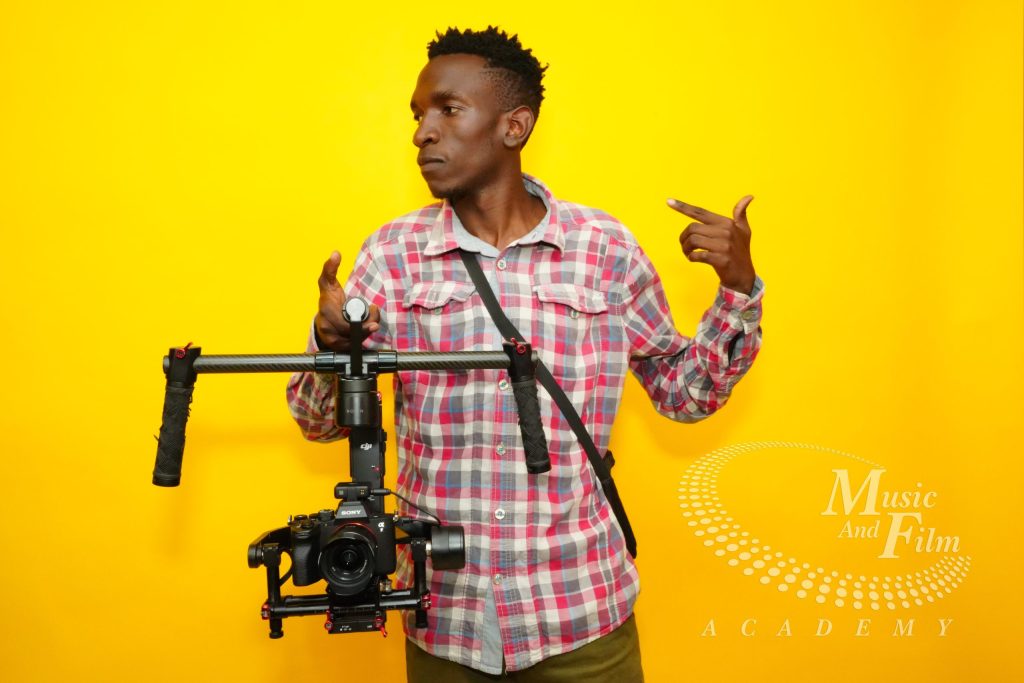
To execute this dual career track successfully without burning out or experiencing gear failure on set, you must be incredibly strategic with your equipment acquisition. Trying to purchase independent, top-tier setups for both disciplines simultaneously is an easy way to drain your capital. Instead, your focus should be on building a lean, highly adaptable hybrid gear eco-system.
The anchor of your toolkit must be a high-performance, hybrid-oriented mirrorless camera body. Look for camera systems that feature dedicated physical switches to instantly change the entire user interface between photo and video configurations. This allows you to jump from shooting high-speed RAW stills to recording high-bitrate video profiles in under two seconds. Key technical features to look for include:
Lenses are a long-term investment that outlive camera bodies. Prioritize high-quality zoom lenses with constant apertures (such as a 24-70mm f/2.8), which offer the flexibility needed to reframe a video shot instantly without forcing you to physically change lenses and recalibrate a stabilization gimbal.
When it comes to camera support, look for versatile fluid-video heads that can handle smooth cinematic pans while still providing the rigidity needed for precise long-exposure landscape or architectural photography. Companies like Manfrotto offer excellent hybrid tripods designed specifically to bridge this gap for moving creators.
The path to truly mastering these dual disciplines requires a structured environment that emphasizes hands-on experience over theoretical lectures. While the internet is flooded with disconnected tutorials, trying to learn the delicate intricacies of high-end commercial production in isolation can easily lead to technical confusion, bad habits, and costly gear mistakes.
+-------------------------------------------------------------------+
|               MUSIC AND FILM ACADEMY WORKFLOW                     |
+-------------------------------------------------------------------+
|                                                                   |
|   [ INDUSTRY STANDARDS ] ──> 1-to-1 Gear Ratio (No Sharing)       |
|            │                                                      |
|            ├─> Practice: Strobe vs Continuous Light Bays          |
|            │                                                      |
|            └─> Mentorship: Pro Workflows at Information House     |
|                                                                   |
+-------------------------------------------------------------------+
Located right in the heart of the capital at Information House, Nairobi CBD, the Music And Film Academy (created by Melody House) offers an immersive environment built specifically for the next generation of visual artists. The institution rejects traditional academic fluff in favor of an “Industry-First” training methodology. Here, practical technical skills always triumph over an abstract piece of paper, ensuring that every student graduates with the confidence and portfolio needed to dominate the marketplace.
The academy’s visual arts department provides specialized, deep-dive training programs tailored to your precise career goals. If your ultimate passion lies in mastering the art of frozen light, high-end studio portraiture, and commercial advertising imagery, the dedicated photography courses in kenya will guide you through advanced lighting patterns, manual exposure control, and expert RAW file manipulation.
If you want to focus entirely on motion, composition, audio acquisition, and advanced post-production grading, the comprehensive videography courses in kenya provide the rigorous technical training needed to excel on modern documentary, commercial, and narrative film sets.
What truly sets the Music And Film Academy apart is its strict commitment to an elite 1-to-1 student-to-gear ratio. You will never find yourself standing around in a crowded classroom watching an instructor play with a camera or sharing equipment with three other students. Every student is equipped with their own dedicated, industry-standard production gear during practical sessions.
Training inside professional studio bays featuring dedicated strobe and continuous lighting configurations allows you to make mistakes, run real-world tests, and master advanced technical workflows under the direct guidance of active industry mentors. You will learn exactly how to configure complex camera rigs, handle multi-channel audio setups, and navigate the post-production bottlenecks that trip up self-taught creators.
Ultimately, becoming a successful hybrid creator is not about perfectly dividing your career exactly 50/50 between photography and videography every single day. Most visual artists naturally lean slightly more toward one medium than the other. You might find that you are primarily a commercial photographer who offers high-quality social media video packages as a premium add-on, or a documentary filmmaker who utilizes high-end still photography to capture compelling promotional posters and behind-the-scenes assets for your films.
The true magic of the hybrid path is that it gives you complete creative and financial freedom. Instead of locking yourself into a rigid, one-dimensional career path, you develop a multifaceted skill set that makes you incredibly resilient to shifting industry trends. When the local commercial photography market slows down, your ability to direct, shoot, and edit high-impact corporate videos keeps your pipeline full. When a client needs an all-in-one content creator to launch a massive digital campaign, you stand out as the obvious, highly qualified professional for the job.
The creative industry is no longer looking for people who live in isolated boxes. It is actively looking for versatile, forward-thinking visual artists who can look at a creative challenge and use whatever tool—still or moving—is best suited to bring that story to life. By mastering the technical differences, respecting the unique post-production demands of both mediums, and refining your practical craft in a professional facility like the Music And Film Academy, you can seamlessly bridge the gap between these two worlds and build a highly profitable, sustainable career as a modern hybrid creator.