Phone:
+254 719 428 550
Physical address:
Information House, Hakati Road,
Nairobi, Kenya.

Phone:
+254 719 428 550
Physical address:
Information House, Hakati Road,
Nairobi, Kenya.
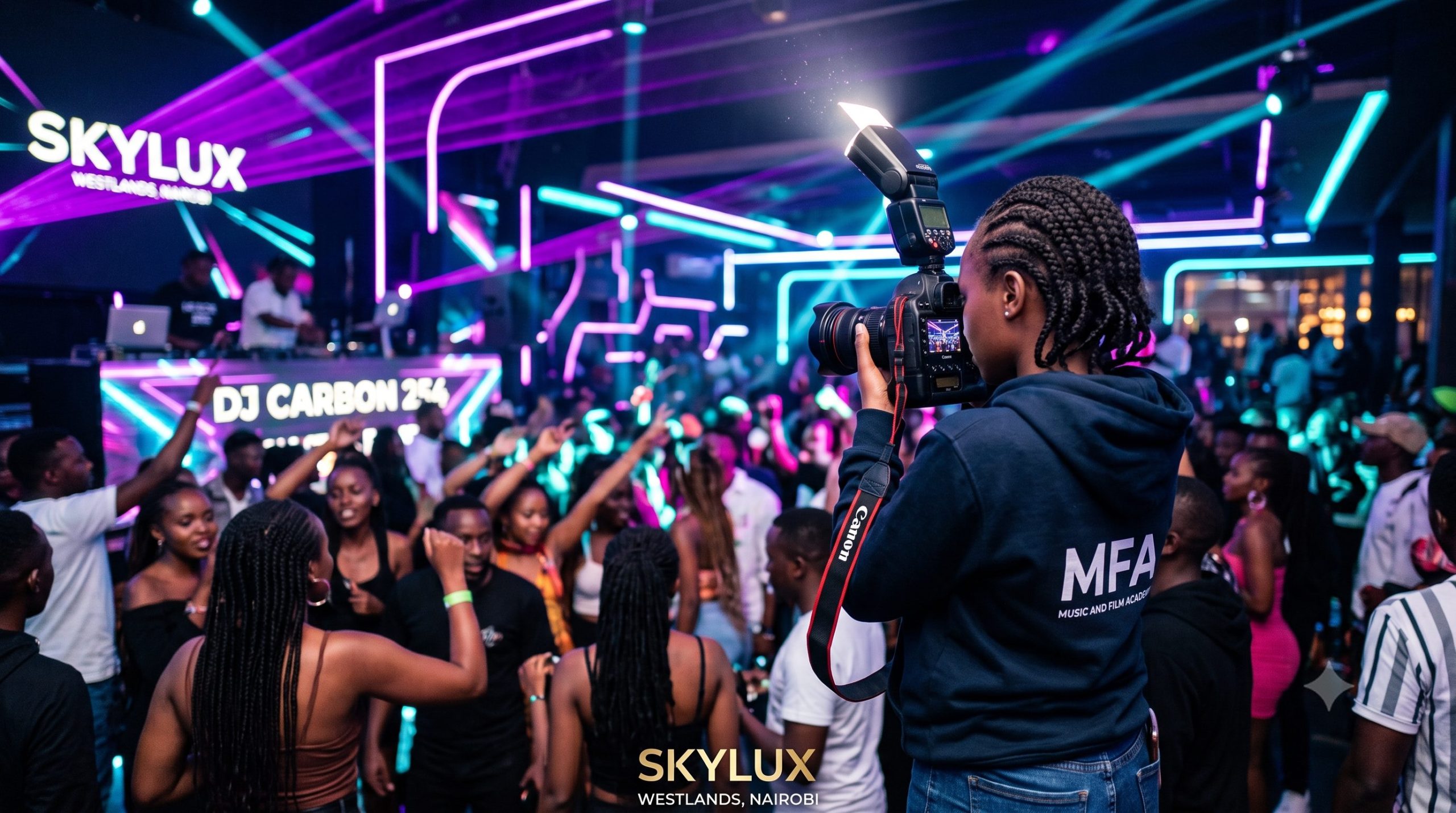
The nightlife scene in Nairobi is legendary, and at the beating heart of this nocturnal energy is Westlands. As new clubs, lounges, and premium high-end experiential bars open up along Electric Avenue, Woodvale Grove, and Mpaka Road, the demand for content creators who know how to shoot nightclub and event photography in Westlands has reached an all-time high. For aspiring photographers, the local entertainment industry presents a massive, highly lucrative gig economy. However, stepping inside a crowded, dark venue with unpredictable strobe lights, lasers, and fast-moving crowds is incredibly intimidating. If you do not understand the physics of light, your images will either suffer from severe, noisy motion blur or be completely ruined by harsh, flat, washed-out direct flash. This definitive guide breaks down the precise creative framework, technical camera configurations, and safety protocols required to excel as a premium nightlife media professional in Nairobi.
The most significant technical bottleneck when learning how to shoot nightclub and event photography in Westlands is balancing the ambient club lighting with your artificial flash. Amateurs make the mistake of setting their cameras to full Auto mode or firing a direct speedlight point-blank at the subject. This results in the “paparazzi effect”—a ghostly white, over-exposed subject slapped against a completely pitch-black background that deletes all the vibrant atmosphere of the lounge.
To capture the authentic, high-energy mood of popular Westlands entertainment spots, you must master an advanced technique known as “shutter dragging.” Shutter dragging allows your camera’s sensor to remain open long enough to soak up the colorful ambient neon, LED, and moving laser lights of the venue, while a split-second pulse of light from your external speedlight freezes the human subject sharply. This creates a beautifully balanced image where the subject stands out crisply, yet the background glows with the warmth of the club environment.
💡 The MFA Factor: Struggling to wrap your head around complicated ambient exposure ratios? Learning flash physics on YouTube is frustrating. Our practical Photography Courses in Kenya include live, low-light studio tracking and immersive field simulations designed to replicate real club environments perfectly.
When configuring your DSLR or mirrorless system for a high-intensity Westlands environment, use these manual baseline settings as your operational starting point:
| Camera Setting | Target Range / Value | Operational Purpose & Impact |
|---|---|---|
| Shooting Mode | Full Manual (M) | Provides total control over ambient exposure without camera confusion. |
| Shutter Speed | 1/10th sec to 1/40th sec | “Drags” the shutter to absorb background laser trails and ambient color. |
| Aperture | f/2.8 to f/4.0 | Allows maximum light entry while keeping a deep enough plane for groups. |
| ISO Sensitivity | ISO 800 to ISO 2500 | Elevates sensor sensitivity to capture background atmospheric textures cleanly. |
| Flash Mode | Manual or TTL with EV Comp | Controls the output of the speedlight to freeze subjects without clipping highlights. |
| Flash Synchronization | Rear-Curtain Sync | Ensures light motion trails appear naturally behind the moving subject. |
When analyzing how to shoot nightclub and event photography in Westlands effectively, your flash orientation is everything. Direct flash—pointing your speedlight head directly forward at the clubgoers—is a cardinal sin. It creates harsh, unflattering facial shadows, causes red-eye, exaggerates oily skin reflections under sweat, and flattens the dimension of the face.
Instead, professionals rely heavily on bounce flash techniques off low ceilings and nearby walls. By tilting your speedlight head upward at a 45-degree or 90-degree angle, or swiveling it slightly backward over your shoulder, you transform the ceiling into a giant, soft light modifier. The light travels from your flash, hits the ceiling, diffuses, and falls gently down upon your subjects like soft studio overhead lighting. This fills in eye sockets beautifully, eliminates harsh neck shadows, and creates gorgeous, smooth skin tones across diverse complexions.
Westlands features diverse architectural designs. Lounges like those on rooftop terraces often have no ceilings at all, or they feature high, matte-black industrial ceilings that completely absorb light rather than reflecting it. If you attempt bounce flash techniques off low ceilings in a room with a black roof, your flash power will be wasted entirely, draining your batteries and leaving your images underexposed.
In these challenging scenarios, you must adapt instantly by deploying a flash modifier. A white bounce card, a small rogue flashbender, or a portable silicone diffusion dome attached to your speedlight becomes your artificial ceiling. It forces a portion of the light to spread forward as a soft, directional fill while still throwing light upward, giving you total control over the light quality regardless of the venue’s architecture.
💡 The MFA Factor: Want to go from basic weekend gig worker to a highly paid, certified corporate event photographer? Take the first step by enrolling in our foundational Basic Photography Certificate Course to master light direction, flash modifiers, and fundamental exposure mechanics.
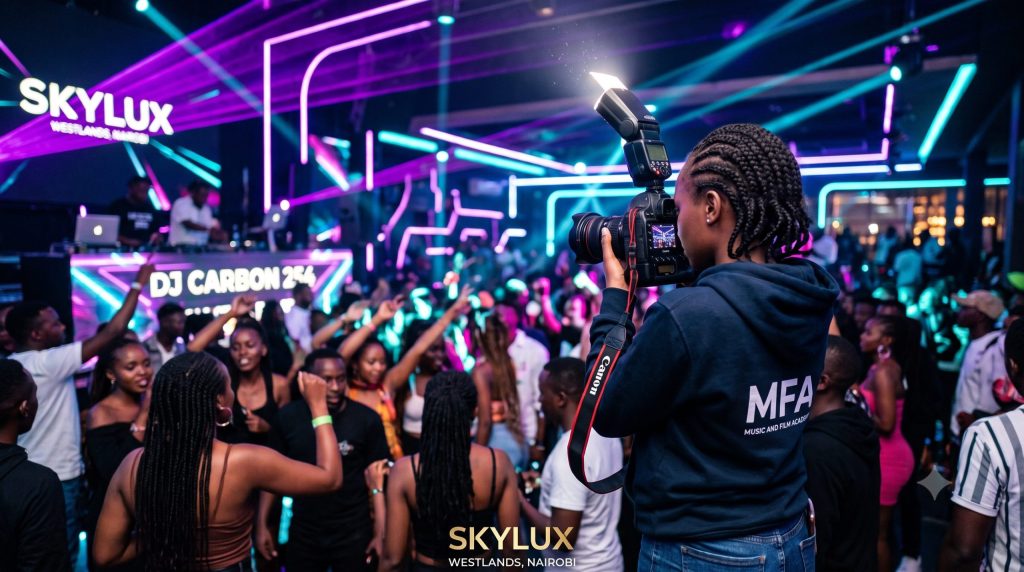
Understanding how to shoot nightclub and event photography in Westlands requires just as much tactical spatial awareness as it does technical photographic skill. Westlands clubs are high-density, fast-paced, fluid environments where premium, expensive gear faces constant threats from spilled drinks, enthusiastic dancers, and crowded paths.
Leave your bulky rolling studio bags at home. When navigating a packed dance floor, you must be light, agile, and compact. A rugged, weather-sealed cross-body sling bag or a secure utility belt system is ideal. Keep your gear locked close to your body. Always keep your camera strap wrapped securely around your wrist or use a heavy-duty dual-harness system to ensure that if someone bumps into your shoulder, your expensive camera body does not crash onto the floor.
Furthermore, fit every lens with a high-quality UV filter and a solid lens hood. The lens hood acts as a mechanical bumper, shielding your delicate front glass element from rogue cocktail glasses, sticky fingers, and accidental impacts on tables. For a deep dive into industry-standard gear protection protocols, refer to the comprehensive equipment safety standards managed by the Professional Photographers of America (PPA).
When working, never walk backward through a nightclub. It is incredibly easy to trip over VIP couch corners, low tables, or steps, resulting in severe physical injury or destroyed equipment. Always move forward with your eyes scanning the room, keeping your camera tucked tightly against your chest when passing through tight bottlenecks.
Respect boundaries and maintain polite communication. Never push past VIP security or crowd into a private booth unannounced. Build a friendly rapport with the bouncers, floor managers, and bartenders from the very beginning of the night. If the security team knows who you are and respects your professionalism, they will proactively keep an eye on you, clear tight pathways for you, and step in immediately if a patron becomes uncomfortably rowdy or aggressive.
A highly critical yet frequently overlooked component of how to shoot nightclub and event photography in Westlands is the legalities surrounding public and semi-private spaces. A nightclub is privately owned property open to the public; therefore, the club management retains absolute authority over who can create media within their walls.
Always ensure you have explicit verbal or written permission from the club’s marketing manager or director before pulling out your camera. If a patron explicitly asks you not to take their picture, or requests that you delete a photo you just took, comply immediately and politely without argument. The nightlife environment requires high psychological safety; maintaining a reputation as a respectful, discreet, and professional photographer will earn you long-term trust and repeat bookings from premium corporate hospitality brands across Nairobi.
For a detailed breakdown of local legal mandates concerning media production, content creation, and imaging permissions within the country, ensure you closely review the statutory updates provided by the official Kenya Film Commission (KFC).
💡 The MFA Factor: Ready to turn commercial event photography into a full-time, high-paying career with international brands and luxury agencies? Advance your creative execution, composition, and high-end post-production workflows with our elite Advanced Certificate in Photography Course.
Your job is not finished when the lights come up at 4:00 AM and the club closes down. The true magic of elite nightlife photography happens inside your digital darkroom during post-production. Nightlife images captured at high ISO settings naturally contain digital luminance noise and color artifacts that require systematic correction.
Learning how to shoot nightclub and event photography in Westlands is one of the fastest, most effective ways to establish a thriving, profitable creative business in Nairobi’s booming entertainment sector. By abandoning Auto mode, mastering the technical balance of shutter dragging, deploying flawless bounce flash techniques off low ceilings, and adhering strictly to localized physical safety and legal frameworks, you position yourself light-years ahead of the amateur competition.
However, true mastery requires structured, hands-on guidance from industry mentors who can critique your work in real-time. Do not spend years struggling through frustrating trial-and-error alone in the dark. Invest in your future, refine your portfolio, and gain access to premium industry gear, state-of-the-art editing suites, and exclusive commercial networks by enrolling at the Music and Film Academy today.