Phone:
+254 719 428 550
Physical address:
Information House, Hakati Road,
Nairobi, Kenya.

Phone:
+254 719 428 550
Physical address:
Information House, Hakati Road,
Nairobi, Kenya.
The digital marketplace in Kenya has experienced a massive shift over the last few years. If you scroll through your feed right now, you will see a booming ecosystem of fashion boutiques, cosmetic brands, organic skincare lines, and sneaker shops operating entirely through social media. However, with thousands of “ig_biz” pages fighting for the attention of local buyers, the competition is fierce. The single most important factor that determines whether a customer scrolls past your page or hits “DM for price” is your visual presentation. Learning how to shoot high-converting product photos for Kenyan Instagram businesses is no longer just a luxury skill—it is an absolute business necessity for survival.
Many small and medium-sized enterprises (SMEs) struggle with flat, unappealing images that fail to communicate the true quality of their merchandise. You do not need an expensive commercial studio in Westlands or a multi-million shilling budget to create striking imagery. By mastering simple, resource-smart techniques right from your living room, you can elevate your brand and build trust with your audience. This comprehensive guide walks you through the step-by-step process of setting up a DIY studio, handling specialized product niches, and editing your images to give them a premium, professional edge.
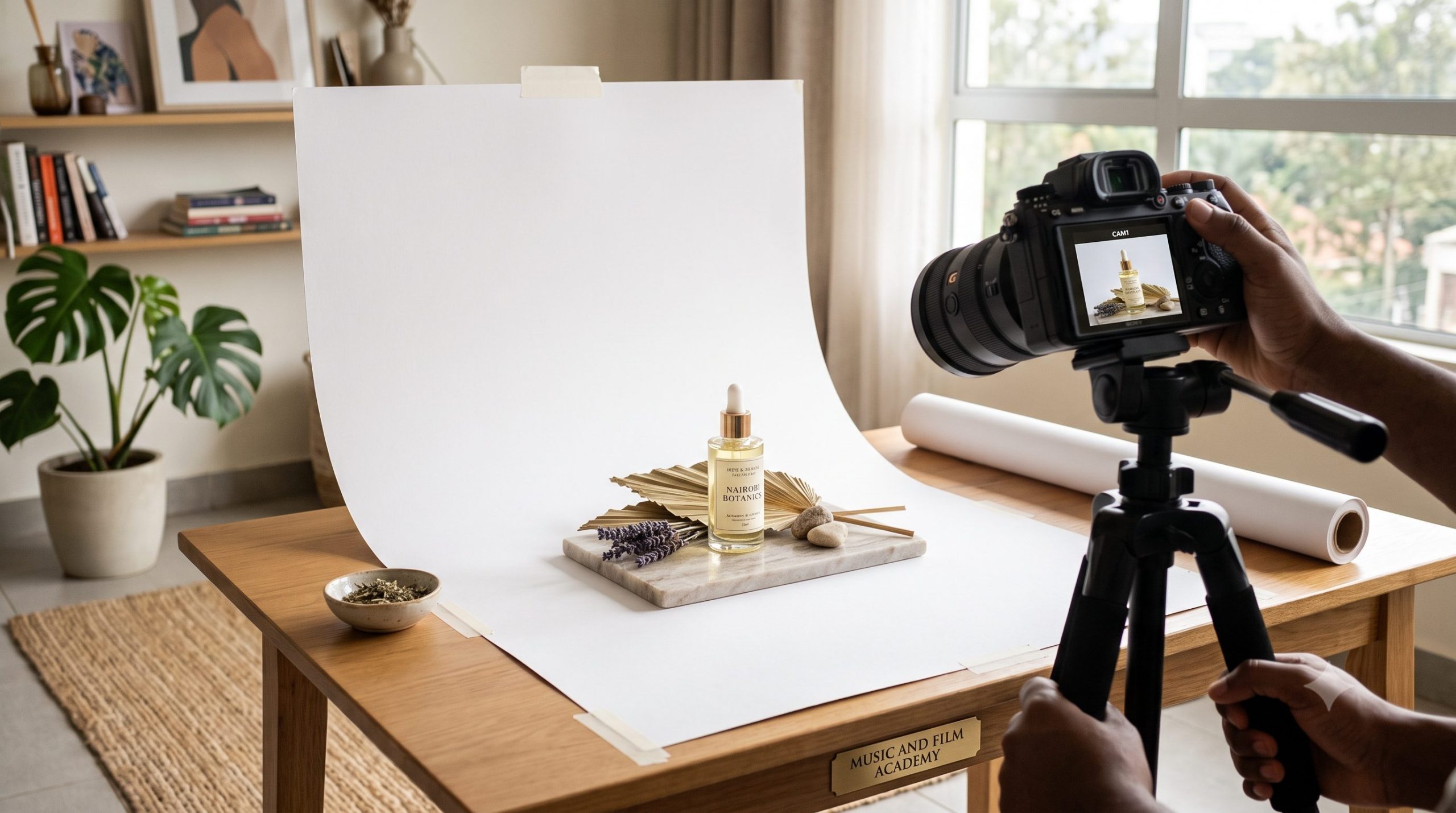
The biggest mistake new e-commerce entrepreneurs make is assuming they need to invest in expensive studio strobes and continuous LED arrays immediately. When you are learning how to shoot high-converting product photos for Kenyan Instagram businesses, your most powerful, cost-effective resource is completely free: natural sunlight. A large window inside a typical Nairobi apartment can serve as a stunning, large softbox if you know how to position your products relative to the incoming light rays.
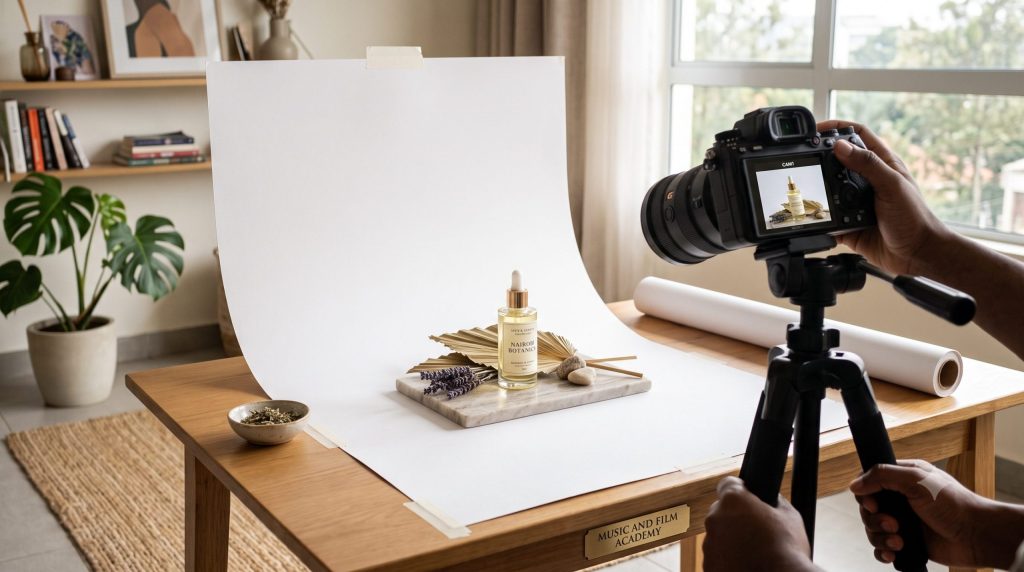
A clean, seamless white background is the global industry standard for online catalogs and marketplaces like Jumia, Kilimall, and Instagram shopping tabs. It eliminates visual clutter, keeps the viewer’s eye focused entirely on the merchandise, and instantly gives your feed a unified, professional structure. To build an inexpensive backdrop sweep at home, follow these steps:
When light streams in from a window, it illuminates one side of your product perfectly while leaving the opposite side cast in shadow. To fix this imbalance without buying a second light source, create a simple reflector panel. Take a scrap piece of cardboard or a small block of styrofoam and wrap it tightly in kitchen aluminum foil, or leave it pure white. Place this reflector directly opposite the window, just outside your camera frame. The light from the window will hit the reflective surface and bounce back onto the dark side of your product, filling in harsh shadows and revealing crucial design textures cleanly.
Different products require unique technical handling and styling frameworks to look appealing on a smartphone screen. Whether you are selling the latest fashion trends or imported skincare sets, tailoring your photography approach to your specific niche is vital for driving conversions.
When local buyers shop for clothes online, they look for reassurance regarding fabric quality, fit, and texture.
Cosmetics and beauty products rely heavily on a sense of luxury, cleanliness, and sensory appeal.
| Product Category | Optimal Background Style | Recommended Camera Angle | Key Visual Highlight |
| Fashion & Apparel | Textured wood, neutral linen, or crisp white sweep | Straight-on (90 degree) or Overhead Flat Lay | Material texture, fit consistency, and stitch quality |
| Cosmetics & Beauty | Natural stone, marble tiles, or pastel cardstock | Eye-level (45 degree angle) | Transparent packaging clarity and product texture swatches |
| Footwear & Accessories | Contrast solid colors or minimalist concrete blocks | Low-angle heroic view | Sole tread crispness, leather grain, and build symmetry |
💡 The MFA Factor: Commercial product photography pays well, but brands look for certified consistency. Elevate your portfolio and master advanced studio lighting techniques by exploring the industry-grade training modules offered within our formal Photography Courses in Kenya.
Capturing the image is only half the battle when executing a strategy on how to shoot high-converting product photos for Kenyan Instagram businesses. True commercial appeal is forged during post-production editing. Even a well-lit photo needs minor contrast, color correction, and blemish removal adjustments to stand out on a crowded social feed.
You do not need an expensive desktop setup to edit clean images; powerful mobile apps like Adobe Lightroom Mobile or Snapseed offer excellent control right on your phone.
Every speck of dust, stray thread, or background scratch becomes obvious under bright light. Use the healing brush tool to meticulously clone out these small distractions. A clean image signals to buyers that you take pride in your business, building trust and confidence in your brand. For further study on international file preparation and image export standards used by global e-commerce agencies, consult the digital workflow resources compiled by the E-commerce Content Creation Association (ECMA).
💡 The MFA Factor: Ready to transform your creative hobby into a steady income stream? Build a rock-solid foundation in digital workflows and image editing by enrolling in our hands-on Basic Photography Certificate Course at the Music And Film Academy.
While styling individual photos beautifully is great, long-term business growth on Instagram relies heavily on visual consistency. When a potential customer clicks on your profile grid, they should instantly recognize your brand’s unique identity through a cohesive look and feel.
[Consistent Lighting Source] ──> [Unified Backdrop Palette] ──> [Standardized Editing Routine]
          │                                 │                                 │
     Balances Mood                     Builds Brand                      Creates Grid
    & Reduces Glare                   Identifiability                    Harmonious Flow
Choose a consistent color palette and style of imagery for your business, and stick to it across your posts:
While it can be tempting to heavily saturate colors or use intense filters to make an item pop, maintaining color accuracy is crucial. Misrepresenting a product’s actual color often leads to customer complaints, return requests, and negative reviews that can damage your business’s reputation. True commercial photography requires balancing creative aesthetics with realistic accuracy. For professional guidance on creative ethics and industry codes of conduct within East Africa, review the operational guidelines published by the Media Council of Kenya (MCK).
💡 The MFA Factor: Want to move beyond simple smartphone setups and master professional studio flash systems, model direction, and high-end agency campaign design? Elevate your creative career by joining our elite Advanced Certificate in Photography Course at the Music And Film Academy.
Learning how to shoot high-converting product photos for Kenyan Instagram businesses is a powerful way to take control of your digital storefront, cut down on external marketing expenses, and boost your overall conversion rates. By utilizing natural window light, mastering niche-specific styling techniques, keeping your background sweeps clean, and polishing your final assets through targeted post-production retouching, you can elevate your social media presence and compete effectively with larger brands.
Building a sustainable, high-growth creative business requires moving past basic trial-and-error. If you are ready to master professional studio lighting, build an exceptional portfolio, and receive direct mentorship from active industry professionals, the Music And Film Academy is here to support your journey. Explore our physical training labs in Nairobi, practice with industry-standard camera systems, and earn professional certifications that open doors to premium commercial opportunities. Take the next step toward your goals and enroll with us today.