Phone:
+254 719 428 550
Physical address:
Information House, Hakati Road,
Nairobi, Kenya.

Phone:
+254 719 428 550
Physical address:
Information House, Hakati Road,
Nairobi, Kenya.
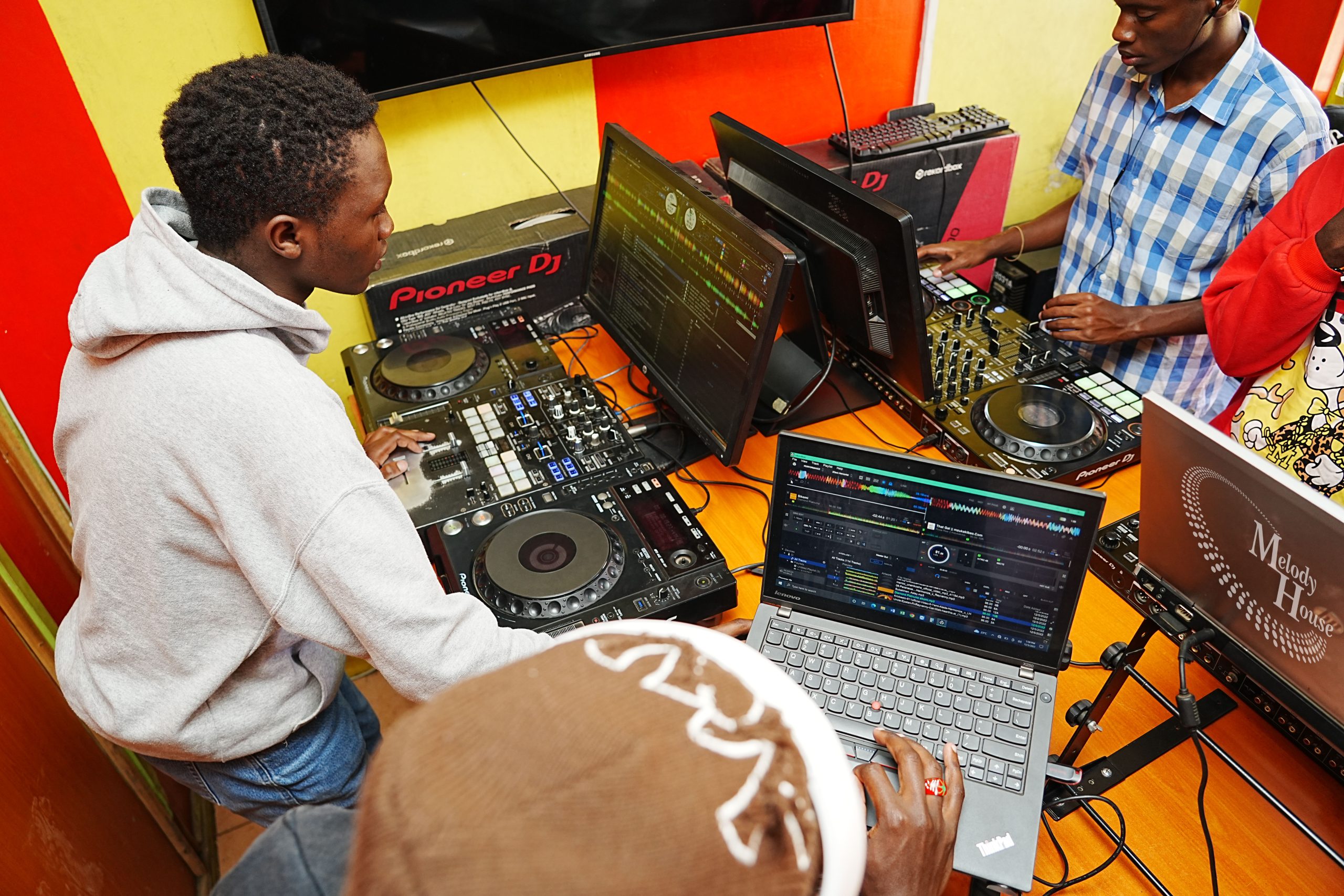
The objective of this foundation level is to fully familiarize the student with the essential hardware, software, and the mathematical “language” of music necessary to mix professionally.
To enroll in the Basic DJ Proficiency Certificate course, students must meet the following prerequisites:

Hardware Breakdown: Understanding the “Signal Flow.” From the player (CDJ/Controller) to the mixer, into the amplifier, and out the speakers. The Mixer: Mastering Gain (Trim), EQ knobs (High, Mid, Low), Channel Faders, and the Crossfader. The Decks: Understanding Jog Wheels, Pitch Sliders, and Play/Cue buttons. Cables & Connectivity: Identifying XLR, RCA, and ¼-inch TRS cables.
BPM (Beats Per Minute): How to count beats and identify the tempo of different genres. Bars and Phrases: Learning the “Rule of 32″—how most electronic music is structured in 4-beat bars and 8-bar phrases. Cueing: Setting the “First Downbeat” cue point to ensure tracks start in time.
Software Essentials: Introduction to Rekordbox, Serato, or Traktor. Analyzing Tracks: Using software to detect BPM and Key. File Hygiene: High-quality audio (WAV/AIFF) vs. low-quality (MP3) and why it matters on big systems.
The Sync Debate: Why learning to beatmatch by ear is essential for “Emergency Situations.” Manual Tempo Matching: Using the pitch slider to align two tracks of different speeds. The “Nudge”: Using the jog wheel to fix drifting beats.
The “End-to-Beginning” Mix: Simply moving from the outro of Track A to the intro of Track B. EQ Blending: Learning how to swap the basslines of two tracks without “clashing” the low-end frequencies.Have A Question About Enrollmenta