Advanced DJ Certificate Course

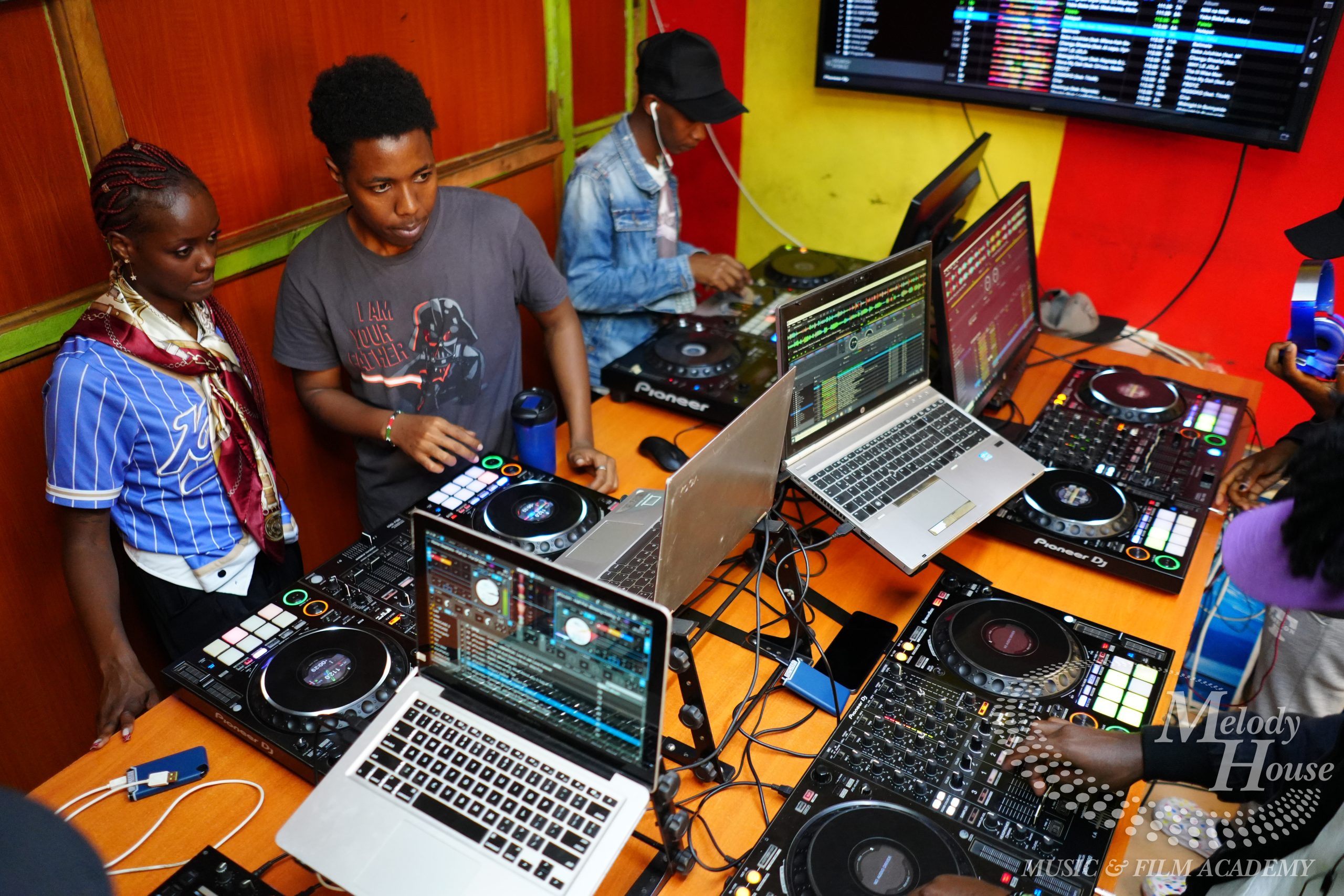
The Advanced DJ Certificate Course at Music and Film Academy DJ Academy in Nairobi CBD is an intensive 3-month program priced at Ksh 30,000. It delivers a complete end-to-end curriculum: starting from booth signal flow, digital library management in Rekordbox, and manual ear-beatmatching, up to advanced Harmonic Mixing (Camelot Wheel), dynamic FX performance (Filters, Echo, Delay), loop rolling, and crowd psychology. Students train on industry-standard Pioneer CDJ-3000s, DJM-A9 mixers, and Rane REV7 controllers to earn their Music And Film Academy Advanced DJ Certificate.

Advanced DJ Certificate Course Overview

This comprehensive program is designed to transform enthusiastic beginners into complete performance artists. It bridges fundamental deck control with high-level creative mixing, enabling you to build seamless sets across diverse genres and venue environments.

  • Ideal For: Ambitious artists and serious talent seeking the benchmark of excellence among DJ schools in Kenya.
  • Duration: 3 Months
  • Price: Ksh 30,000
  • Hardware Track: Pioneer CDJ-3000s, DJM-A9, and Rane REV7.
  • Award: Music And Film Academy Advanced DJ Certificate

Requirements & Prerequisites

Because this track incorporates complete fundamental preparation, entry is flexible:

  1. Direct Entry Option: Open entry for beginners committed to a fast-track 3-month learning curve.
  2. Computer Literacy: Fluency in basic computing (Windows or macOS file navigation, downloading, and external drive management).
  3. Required Gear: Personal over-ear, closed-back DJ monitoring headphones for cueing during lab sessions.
  4. Practice Setup (Recommended): Access to a laptop capable of running Rekordbox or Serato DJ Pro for home library preparation.

Complete Advanced DJ Certificate Syllabus

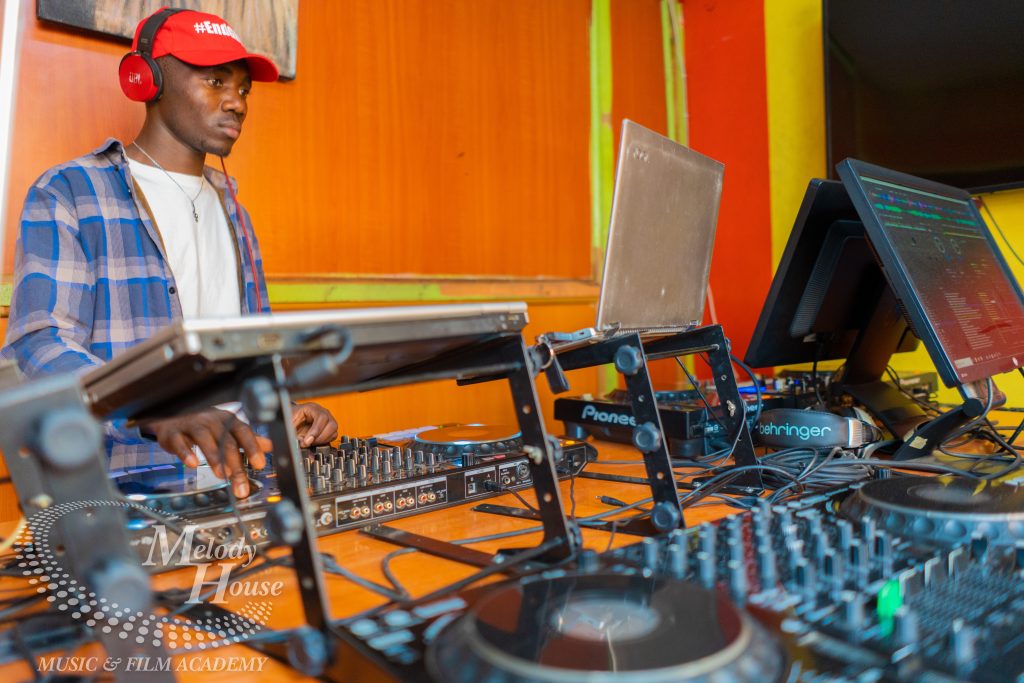
A side-angle shot of a DJ in a red cap using a Pioneer DJ setup at Music And Film Academy Nairobi, demonstrating compliant public performance for the 2026 Kenyan license.
Protect your gear, protect your set. At Information House, we teach you how to master the Pioneer standard while staying compliant with Kenya’s 2026 DJ licensing laws.

Because higher levels encompass all foundational training, this 3-month course spans 10 comprehensive modules—taking you from absolute fundamentals to advanced performance art.

Phase 1: Foundation Mechanics & Core Skill Building (Modules 1–5)

Module 1: Console Anatomy & Audio Signal Flow

Master the technical setup of a professional performance booth.

  • Signal Architecture: Tracing audio paths from media players (CDJs/Controllers) through multi-channel mixers, amplification racks, and venue PA systems.

  • Mixer Mechanics: Mastering Trim/Gain staging, 3-Band EQ isolation (High, Mid, Low), channel faders, and crossfader curves.
  • Deck Controls: Understanding tactile pitch faders, heavy jog wheel response, and instant Play/Cue functionality.
  • Professional Cabling: Identifying and connecting balanced XLR, RCA, and ¼-inch TRS audio lines.

Module 2: Applied Musical Rhythm & Grid Structures

Deconstruct the underlying timing patterns of commercial music.

  • Tempo Mastery (BPM): Accurately counting beats and recognizing tempo structures across various dance genres.
  • The Rule of 32: Understanding musical phrasing—how electronic and urban tracks build in 4-beat bars and 8-bar measures.
  • Tactile Cueing: Establishing precise “First Downbeat” cue points to ensure clean timing during drop-ins.

Module 3: Digital Library Architecture & File Hygiene

Build a rock-solid digital performance collection using professional software.

  • Software Ecosystems: Hands-on setup inside Rekordbox, Serato DJ Pro, or Traktor.
  • Automated & Manual Analysis: Detecting key signatures and tempo grids accurately.
  • Audio Quality Standards: Understanding why uncompressed WAV/AIFF formats outperform low-bitrate MP3s on high-wattage sound systems.

Module 4: The Core Skill – Manual Ear-Beatmatching

Develop natural listening skills without relying on software visual aids.

  • Beyond the Sync Button: Why manual beatmatching by ear is a vital skill for high-pressure club environments and unexpected equipment changes.
  • Tempo Alignment: Adjusting pitch sliders by ear to match tracks running at different speeds.
  • Tactile Corrections: Using the outer jog wheel ring to adjust drifting beats on the fly.

Module 5: Fundamental Transitions & Frequency Blending

Executing smooth track handovers using basic deck controls.

  • Structural Outro-to-Intro Mixes: Transitioning smoothly from the ending phrase of Track A into the opening phrase of Track B.
  • EQ Line Blending: Swapping low-end bass frequencies seamlessly to prevent muddy, distorted bass clashes.

Phase 2: Creative Performance & High-Level Execution (Modules 6–10)

Module 6: Harmonic Mixing & Key Compatibility

Understanding the musical magic behind seamless song blending.

  • The Camelot Wheel: Learning key relations to blend compatible tracks without musical dissonance.
  • Energy Architecture: Structuring sets to elevate room energy using key progressions and arrangement dynamics.

Module 7: Creative FX Dynamics & Rhythmic Transitions

Utilizing internal and external sound manipulators to add dramatic texture to your sets.

  • Filter Sweeps: Executing High-Pass and Low-Pass filter cuts for dramatic build-ups and drops.
  • Temporal FX Execution: Layering Echo, Delay, and Reverb to “wash out” vocals or melodies during tricky transitions.
  • Channel Chopping: Utilizing crossfader cuts and quick channel fader snaps to create rhythmic stutter effects between two decks.

Module 8: Applied Looping, Hot Cues & Performance Pads

Transforming pre-recorded tracks into dynamic live arrangements.

  • Manual & Automatic Looping: Extending 4-bar or 8-bar intros and outros indefinitely while waiting for the perfect transition window.
  • Performance Pad Mapping: Setting strategic Hot Cues to jump instantly to vocal hooks, build-ups, or instrumental drops.
  • Loop Stutters & Rolls: Shortening active loops in real-time to generate high-energy rolls and glitch transitions.

Module 9: Crowd Reading & Live Set Psychology

The art of reading floor energy and controlling the room atmosphere.

  • Warm-Up Protocols: How to build energy thoughtfully during early sets without burning out the room.
  • Genre Navigation: Transitioning smoothly between different musical styles while keeping dancers engaged.
  • Audience Observation: Evaluating body language to decide the exact moment to drop high-impact tracks.

Module 10: Introduction to Digital Scratching & Turntablism

Adding tactile vinyl mechanics to digital performances.

  • The Baby Scratch: Developing clean forward and backward platter control.
  • The Scribble: Executing rapid micro-movements to add texture to vocal cuts.
  • Performance Integration: Knowing precisely when a subtle scratch highlight enhances a live mix

Have A Question About Enrollment?