Phone:
+254 719 428 550
Physical address:
Information House, Hakati Road,
Nairobi, Kenya.
Phone:
+254 719 428 550
Physical address:
Information House, Hakati Road,
Nairobi, Kenya.
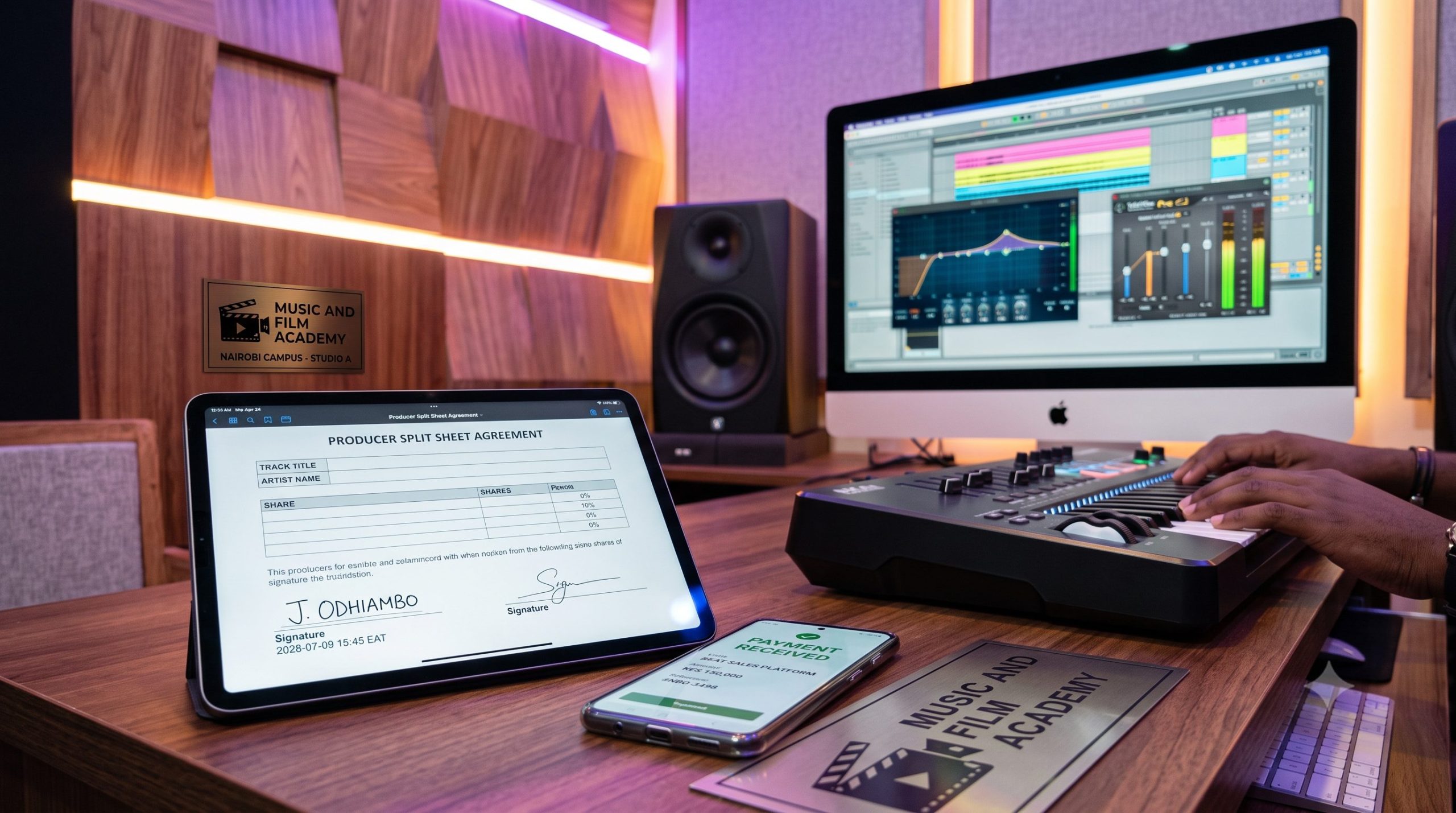
For decades, the path of a music producer in Nairobi was treated as a secondary hustle—a passion project confined to backroom studios in estates like Umoja, Kahawa West, or South B. But as we navigate the digital music economy of 2026, music production has evolved into a highly profitable, structured business. Kenyan beats are driving international charts, sound-tracking local corporate campaigns, and generating millions of streams across global platforms. Yet, a devastating paradox persists within the local ecosystem: thousands of highly talented beatmakers are completely broke. They create the sonic foundations for national radio hits but fail to secure their financial futures. The problem isn’t a lack of creative drive; it is a lack of legal infrastructure. If you want to transform your studio passion into a sustainable career, understanding the operational mechanics of monetizing beats in Kenya is the single most important business upgrade you can make.
The internet has democratized beat sales, allowing local producers to market their instrumentals globally via platforms like BeatStars or Airbit from a simple laptop desk in Nairobi. However, throwing your music online without a clear legal protective shield is a recipe for financial loss. A local artist can download your untagged preview, record a hit song over it, and license it for a major corporate television advertisement without ever paying you a single shilling. To navigate this industry safely, you must step away from casual verbal agreements and master the formal structures of copyright law, split-sheet allocation, synchronization licensing, and Collective Management Organization (CMO) registrations. This guide deconstructs the exact steps needed to protect your music assets and maximize your revenue pipelines.
1. The Legality of the Beat: Deconstructing Split Sheets and Master Ownership
The foundation of successfully monetizing beats in Kenya begins before anyone hits the record button in a studio session. Every time you collaborate with an artist, songwriter, or fellow producer, you create intellectual property that is automatically split into two distinct legal parts under the Kenyan Copyright Act:
[THE DUAL NATURE OF A SONG]
│
┌───────────────────────────────┴───────────────────────────────┐
▼ ▼
[The Composition Right (Musical Work)] [The Master Right (Sound Recording)]
│ │
Covers lyrics, melodies, and chords. Covers the actual physical audio file.
Managed by Songwriters & Producers via MCSK. Owned by the Financer/Studio via KAMP.
The Power of the Split Sheet
A split sheet is a simple, legally binding document that states exactly who owns what percentage of a song’s composition. Many local producers mistakenly believe that because they created the entire instrumental, they automatically own 100% of the track. However, the moment an artist writes lyrics or sings a melody over your beat, they become a co-author of the composition.
Never rely on a casual verbal agreement like “We will split the money later, bro.” Fill out a physical or digital split sheet during the session. The document must contain:
Having this document signed prevents messy legal ownership disputes down the road when a track starts gaining heavy rotation on national radio networks like Kiss FM or Homeboyz Radio.
2. Navigating the Kenyan CMO Landscape: Registering with KECOBO, KAMP, and PRISK
Once your split sheets are locked in, you must register your works with the appropriate regulatory bodies to ensure your performance, mechanical, and neighboring royalties are collected efficiently. The royalty ecosystem in Kenya has undergone significant regulatory shake-ups, and staying compliant requires a precise understanding of the current legal landscape.
Step 1: Secure Your Foundation via the KECOBO National Rights Registry (NRR)
Before you can register with any collecting society, your music must be officially documented by the state. In 2026, this process is managed online through the Kenya Copyright Board’s (KECOBO) National Rights Registry portal:
[Upload Master WAV & Split Sheets to NRR Portal] ──► [Generate KECOBO Certificate] ──► [Submit to CMOs for Royalty Collection]
Step 2: Register with KAMP for Producer Master Rights
As an independent producer who finances your own studio equipment and creations, your most critical relationship is with the Kenya Association of Music Producers (KAMP). KAMP represents the owners of sound recordings (the master rights).
Step 3: Register with PRISK for Performer Royalties
If you do more than just program MIDI drums—such as performing live bass lines, playing keyboards, or recording backing vocal hooks on the track—you are also classified as a performer under the law. You must dual-register with the Performers Rights Society of Kenya (PRISK). PRISK collects neighboring rights royalties whenever a song is performed publicly or broadcast on TV and radio.
Step 4: The 2026 Reality Regarding MCSK and PAVRISK
Historically, the Music Copyright Society of Kenya (MCSK) was the primary body managing publishing and mechanical rights for authors and composers. However, the local landscape has shifted significantly due to ongoing regulatory changes and High Court orders regarding licensing compliance.
For the 2026 operational period, the Performing and Audio-Visual Rights Society of Kenya (PAVRISK) and KAMP are the primary licensed systems authorized by KECOBO to issue consolidated licenses and collect tariffs from public venues and digital platforms across the country. Always verify current licensing mandates directly with the KECOBO portal before routing your composition declarations to ensure your royalty data pipelines remain uninterrupted.
3. The Goldmine of Sync Licensing: Scoring Local TV Advertisements and Film
While streaming fractions of a cent on Spotify or Boomplay provide long-term residual income, the fastest route to massive financial liquidity when monetizing beats in Kenya is Synchronization Licensing (Sync). Sync licensing occurs when a corporate brand, advertising agency, or film production company pays you a flat fee to pair your instrumental track with visual media, such as a television commercial, a feature film, or an online promotional video.
Why Corporate Brands Pay Premium Rates
Corporate marketing teams based in hubs like Upper Hill or Westlands constantly source high-energy, locally relevant sounds to back their brand campaigns. A single 30-second sync placement for a major telecommunications or banking advertisement can command a licensing fee between KES 150,000 and KES 800,000 upfront, depending on the scope of the campaign. Under the gazetted 2026 copyright tariffs, national TV and radio stations face strict compliance penalties if they utilize unlicensed intellectual property, forcing agencies to secure vetted clearances early.
[Advertising Agency] ──► Pays Upfront Sync Fee ──► [Producer Grants Master & Publishing Clearance]
│
└──► Broadcasts on TV/Radio ──► [Generates Secondary Performance Royalties via CMOs]
How to Position Your Beats for Sync Placement
To capture these high-value B2B corporate contracts, your portfolio must be organized to fit professional agency workflows:
4. Selling Beats Online Safely: Global Reach with Local Security
The internet enables you to bypass regional gatekeepers entirely and open up global revenue pipelines. However, running a successful online beat store requires strict digital security and clear licensing terms.
1. Choosing the Right Storefront Infrastructure
Avoid selling beats directly through informal channels like WhatsApp or unsafe file drops. Use a professional, automated storefront infrastructure like BeatStars, Airbit, or a custom-coded WooCommerce platform linked to a secure content delivery network. These platforms automatically display clear licensing contracts to buyers and only release untagged, high-quality audio files after payment has been verified through integrated processors like PayPal, Stripe, or local M-Pesa business wallets.
2. Standardizing Your Digital Lease Agreements
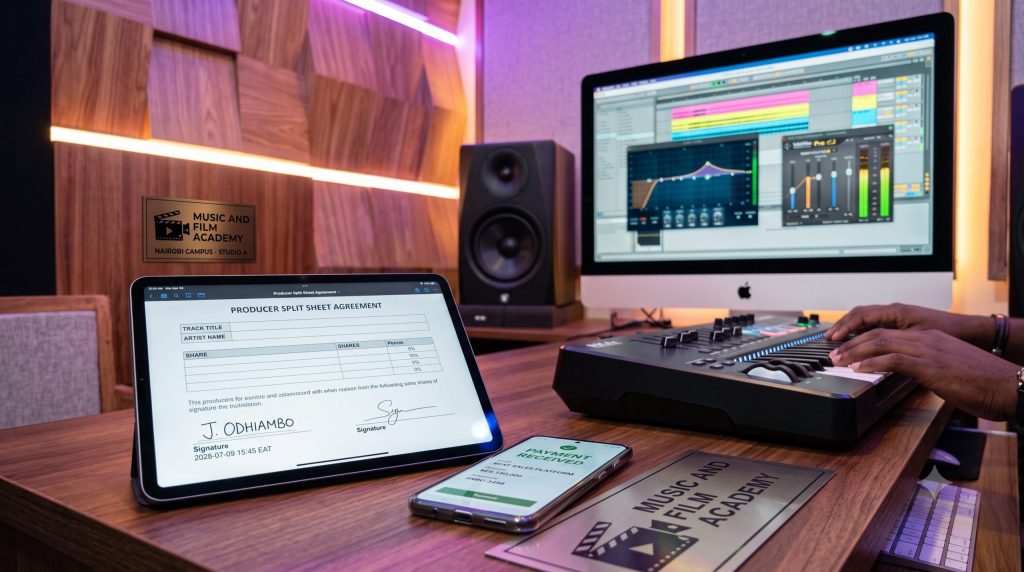
Never sell your music without a written contract. Divide your online storefront offerings into distinct, clear pricing tiers to maximize your monetization options:
| Licensing Tier Options | Typical 2026 Price Range (KES) | File Formats Delivered | Permitted Operational Usage Terms |
| Basic MP3 Lease | KES 2,500 – KES 4,500 | Tagged MP3 audio file | Limited to 10,000 streams; zero radio broadcast rights permitted. |
| Premium WAV Lease | KES 5,000 – KES 9,500 | Un-tagged WAV file | Limited to 50,000 streams; local community radio rotation allowed. |
| Trackout / Stems Lease | KES 12,000 – KES 25,000 | Individual mix stems | Up to 500,000 streams; full independent commercial distribution allowed. |
| Exclusive Purchase | KES 60,000 – KES 250,000+ | All masters + full stems | Transfer of master rights ownership; unlimited commercial streaming and sync rights. |
Clearly stating these operational terms protects your catalog, allowing you to lease the exact same beat to hundreds of independent artists simultaneously while retaining your lucrative background publishing rights.
| Core Monetization Channel | Primary Revenue Type | Payout Distribution Frequency | Essential Verification Document |
| Online Lease Storefronts | Direct B2C Upfront Sales | Instant upon digital checkout | Standardized Digital Contract Agreement |
| Sync Advertising Agencies | Upfront B2B Licensing Fees | Within 30 days of contract signing | Signed Master & Publishing Clearance Form |
| KAMP / Related CMOs | Neighboring Rights Royalties | Annual payouts (General Distributions) | KECOBO NRR Certificate & Declaration Form |
💡 The Academy Edge: Understanding the intersection of music copyright law, split sheets, and automated global distribution can feel overwhelming for a beginner. At the Music And Film Academy, we believe a professional producer must be as sharp in the boardroom as they are behind the mixing console. Our intensive Music Production Courses in Kenya are comprehensive career-launchpad programs where advanced legal asset protection and music business modules are completely integrated right into the practical studio curriculum.
5. Safeguarding Your Digital Studio Infrastructure Against Loss
To build a sustainable digital asset catalog that can generate consistent income for years to come, you must pair your legal safeguards with a robust studio infrastructure protection plan.
1. Hard-Coding Your Backup Redundancy
Your digital beat catalog is your financial portfolio. A sudden computer crash or a corrupt hard drive can erase years of unreleased material, instantly erasing your creative equity.
2. Protecting Equipment from Local Power Instability
Electrical fluctuations are an ongoing concern for studio spaces across Nairobi. A sudden voltage surge or power cut can corrupt your active project files mid-session or damage your audio interface’s preamplifier transistors, leading to unwanted system noise.
[CATALOG PROTECTION PROTOCOLS]
│
┌───────────────────────┴───────────────────────┐
▼ ▼
[Secure AVR/UPS Power Filter] [Dual External Catalog Backup]
│ │
Safeguards hardware components from Saves active project file stems onto
unexpected voltage surges on the local grid isolated backup drives and secure cloud storage
💡 The Academy Edge: Ready to move past basic beat programming and master professional tracking, legal asset monetization, and global music business systems? Elevate your professional status and explore our foundational Music Production Certificate Course track to learn from veteran industry mentors on campus.
6. Conclusion: Take Control of Your Financial and Creative Assets
Achieving lasting success as a professional music producer requires looking past superficial industry hype and treating your creative output as a valuable business asset. By enforcing signed split sheets during every studio session, securing your certificates through the KECOBO NRR portal, maintaining your collection metadata with KAMP and PRISK, optimizing your project files for sync licensing opportunities, and utilizing automated storefront templates, you can establish a secure, profitable pipeline for monetizing beats in Kenya.
True industry dominance is built through hands-on practice inside professional recording environments using top-tier tools under the guidance of active legal and production experts. At the Music And Film Academy (MFA), we provide the ultimate career launchpad for your creative ambition. Our modern campus labs at Information House in the Nairobi CBD provide you with unlimited access to high-spec acoustic suites, advanced production software, and comprehensive music business modules designed to help you navigate local laws with confidence. Stop leaving your hard-earned money on the table. Take control of your career, upgrade your business production skills, and enroll with us today.
🎥 Live Music Business Labs Walkthrough
To get a direct, unfiltered look at our professional campus tracking suites, digital production labs, and the music business resource centers that TVETA compliance guarantees at the Music And Film Academy, watch this helpful video walkthrough of our Campus Video Editing, Sound & Film Production Labs. This guide provides an inside look at how we train our students to manage complex multi-mic configurations, audit final audio ingestion signals, and structure professional digital metadata tags within our dedicated CBD studios.