Phone:
+254 719 428 550
Physical address:
Information House, Hakati Road,
Nairobi, Kenya.

Phone:
+254 719 428 550
Physical address:
Information House, Hakati Road,
Nairobi, Kenya.
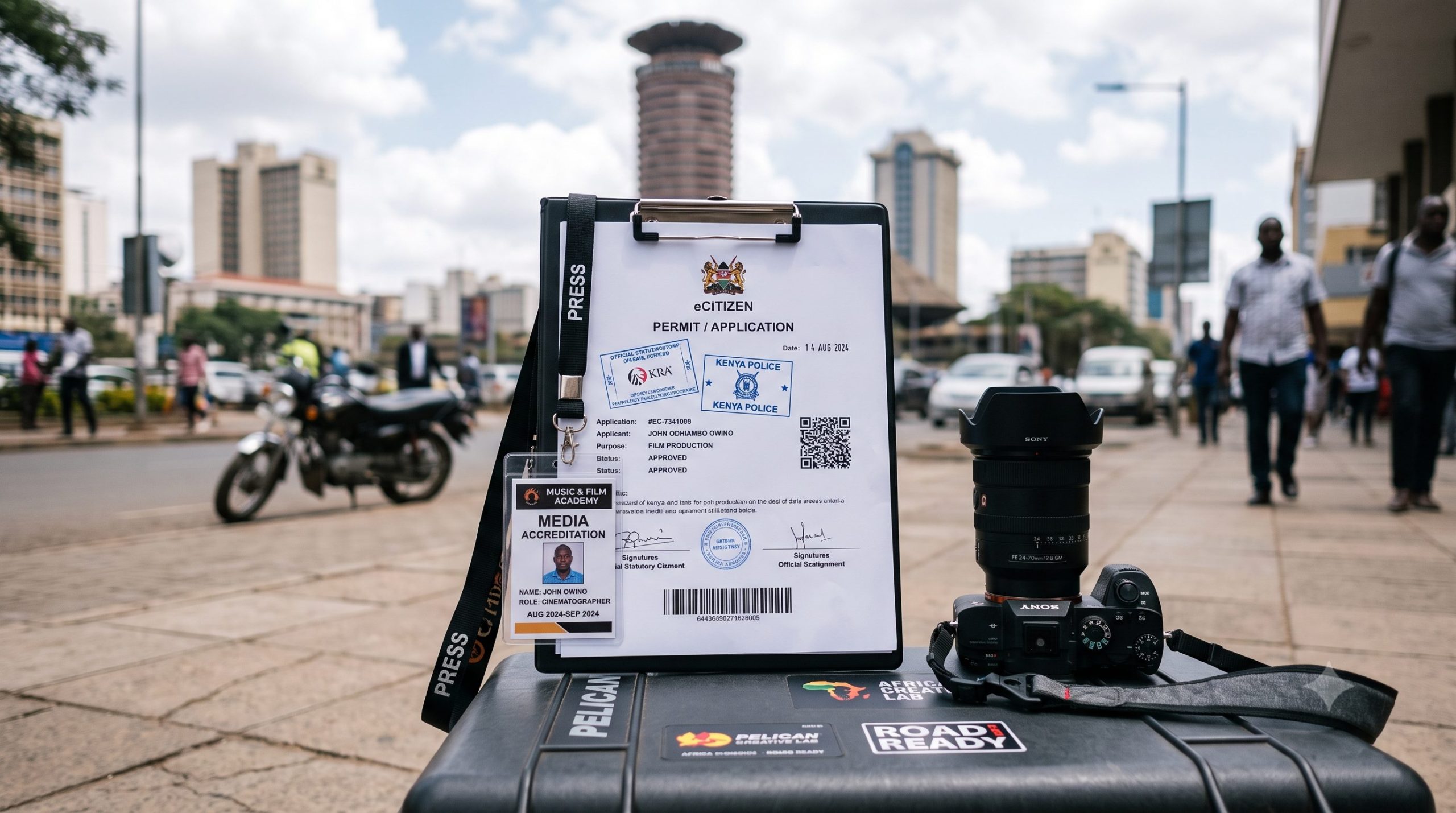
For content creators, independent filmmakers, and wedding photographers working across Nairobi, navigating the legalities of capturing images can feel like a maze. A common source of confusion for local media professionals boils down to one critical question: do you need a permit to shoot in Kenya? You might be a street photographer trying to capture the architectural lines of the Kenyatta International Convention Centre (KICC), an independent videographer shooting a corporate documentary in Upper Hill, or a lifestyle influencer recording a vlog on your smartphone along Moi Avenue. In each scenario, understanding your legal rights and limitations is vital to protecting your business from heavy fines, equipment confiscation, or arrest.
The short answer is that the requirement depends entirely on your target location, your equipment setup, and the intent behind your visual media. While capturing casual family photos or personal smartphone vlogs generally doesn’t require official paperwork, stepping into professional or commercial production changes the rules completely. Operating without knowing the difference between a local county clear, a Kenya Film Classification Board (KFCB) license, and Media Council of Kenya (MCK) accreditation is a major business risk. This detailed breakdown serves as your essential resource to guide your creative work safely within local laws.
The most common point of conflict for local creatives happens right on the streets of the Nairobi Central Business District (CBD). Many photographers have experienced a security guard or municipal enforcement officer (“kanjo”) approaching them and demanding to see a permit while they are taking street portraits. To understand whether do you need a permit to shoot in Kenya for public spaces, you must distinguish between casual or artistic shooting and commercial operations.
In theory, taking photos in a public space for personal, artistic, or non-commercial use is legal and does not require an active filming license. However, structural realities in Nairobi often complicate things. Many landmark public squares, government buildings, military bases, and transport hubs (like the standard gauge railway stations or airports) are designated as protected security zones under the Protected Areas Act (Cap 204). Taking photos near central banks, police stations, military installations, or embassies without written authorization is strictly prohibited and can lead to quick intervention by security teams.
Enforcement officers look at specific indicators to determine if your shoot has transitioned from casual creation into a commercial production that requires county permits and licenses:
If your project falls under the commercial, corporate, or independent entertainment umbrella, the legal answer to whether do you need a permit to shoot in Kenya is an absolute yes. Under the Films and Stage Plays Act (Cap 222) of the Laws of Kenya, no film or commercial video asset can be produced within the country without an active filming license issued by the Kenya Film Classification Board (KFCB).
[Determine Shoot Type]
   ├── Casual / Personal Street Work ──> No KFCB License (Watch for Protected Security Zones)
   └── Commercial / Corporate Video  ──> Requires KFCB Licensing Portal (via eCitizen)
Local creators can apply for filming licenses through the consolidated KFCB portal on eCitizen, with approvals for short productions often processed in under 30 minutes. The statutory structure breaks down across clear project tiers:
| Production Media Category | Standard KFCB Statutory Fee (KSh) | Required Documentation Attachments |
| Short Format Media (Documentary, Music Video, TVC, Travelogue, Webisode) | KSh 5,000 | Comprehensive script synopsis, operational treatment, running order, and detailed shooting schedule. |
| Full-Length Feature Film (Per Season for TV or Web Series packages) | KSh 15,000 | Complete feature screenplay script, thematic synopsis, and full production shooting schedule. |
| Daily Operational Filming Fee (Applied per active shoot day) | KSh 1,000 per day | Explicitly tied to the live dates declared within your attached shooting schedule layout. |
For international crews or large-scale local productions, the application process often involves a registered film agent. Film agents are local production companies pre-qualified by the Kenya Film Commission (KFC) to handle logistics, customs clearances for specialized equipment, and permit acquisition on behalf of foreign teams. For smaller, independent local creators running local shoots, you can register directly on the eCitizen platform as a local filmmaker to access permits without third-party fees.
💡 The MFA Factor: Learning to navigate complicated industry fees and media regulations can be confusing when starting out. Our practical Photography Courses in Kenya go beyond basic camera settings to teach you the business management, contracting laws, and permit frameworks required to run a professional creative practice.
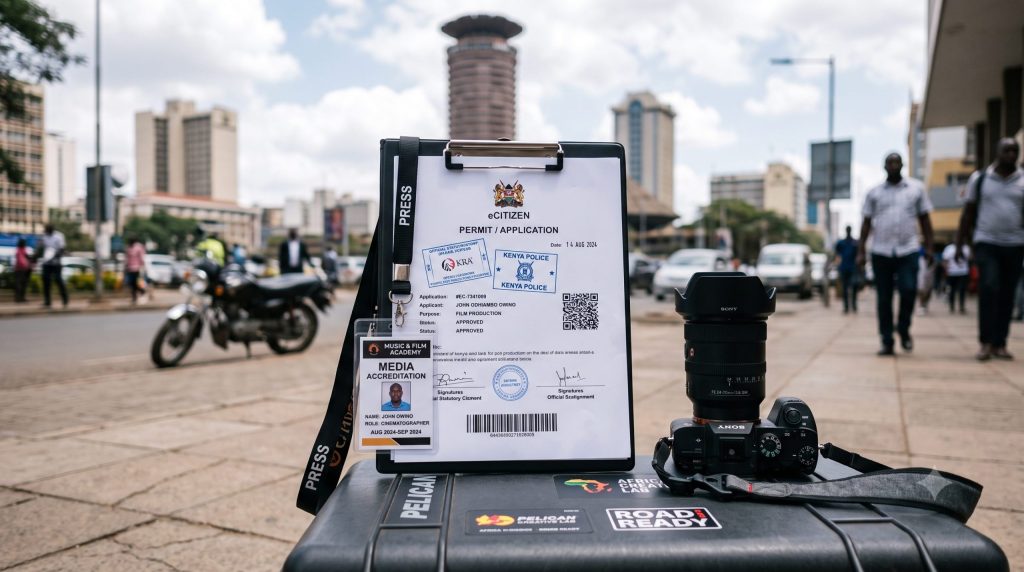
Another area that causes confusion is the role of the Media Council of Kenya (MCK). Creatives often wonder if holding an MCK Press Card exempts them from needing local filming permits, or if a standard photographer needs to apply for journalist credentials.
An MCK Press Card is an official identification document that certifies you as a qualified media practitioner under the Media Council Act. It is mandatory for journalists, press photographers, news correspondents, and documentary filmmakers focusing on public-interest news reporting.
If your creative work focuses on documentary filmmaking, photojournalism, or street documentary work, obtaining independent freelancer accreditation from the MCK is a smart move. Carrying a verified press badge builds immediate trust with law enforcement officers and the public, helping protect you from ground-level harassment during live news or documentary shoots.
                  [CREATIVE PRODUCTION WORKFLOW]
                                │
       ┌────────────────────────┴────────────────────────┐
       ▼                                                 ▼
[News / Documentary]                             [Commercial Gigs / Ads]
       │                                                 │
Requires MCK Press Card                         Requires KFCB Permit
💡 The MFA Factor: Want to build a balanced, legally sound freelance career that commands respect from corporate brands? Take your first step toward professional industry work by enrolling in our foundational Basic Photography Certificate Course to master studio workflows and industry compliance rules.
If your creative project involves aerial cinematography or shooting within protected conservation areas, the question of whether do you need a permit to shoot in Kenya expands to include specialized aviation and environmental regulators.
Operating a drone for video production in Kenya requires strict adherence to aviation safety laws. You cannot simply buy a drone from an electronics shop along Luthuli Avenue and fly it over the Nairobi skyline. To fly a drone legally for commercial work, you must clear several requirements with the Kenya Civil Aviation Authority (KCAA):
Even with your permits in order, you may still run into challenges on the ground from private security guards or local authorities who are unfamiliar with specific legal nuances. Handling these interactions professionally is key to keeping your production running smoothly.
💡 The MFA Factor: Ready to step up from basic freelance gigs and lead large, fully compliant commercial production teams for international agencies? Elevate your operational knowledge, advanced lighting setups, and business management workflows with our elite Advanced Certificate in Photography Course.
Taking the time to understand whether do you need a permit to shoot in Kenya is an essential step in building a sustainable, respected career in our local creative industry. By learning the boundaries of public street photography, budgeting for KFCB licensing fees, securing MCK press cards where required, and respecting KCAA drone flight laws, you protect your business assets and build a reputation as a trusted professional.
Building a successful creative career takes more than just technical camera skills; it requires a deep understanding of the real-world business and regulatory frameworks that shape our industry. At the Music And Film Academy, we are committed to preparing the next generation of visual storytellers for long-term success. Our campus programs in Nairobi provide hands-on access to industry-standard equipment, expert mentorship, and practical training modules tailored to help you launch a compliant, profitable business. Take the next step in your creative journey and enroll with us today.