Phone:
+254 719 428 550
Physical address:
Information House, Hakati Road,
Nairobi, Kenya.
Phone:
+254 719 428 550
Physical address:
Information House, Hakati Road,
Nairobi, Kenya.
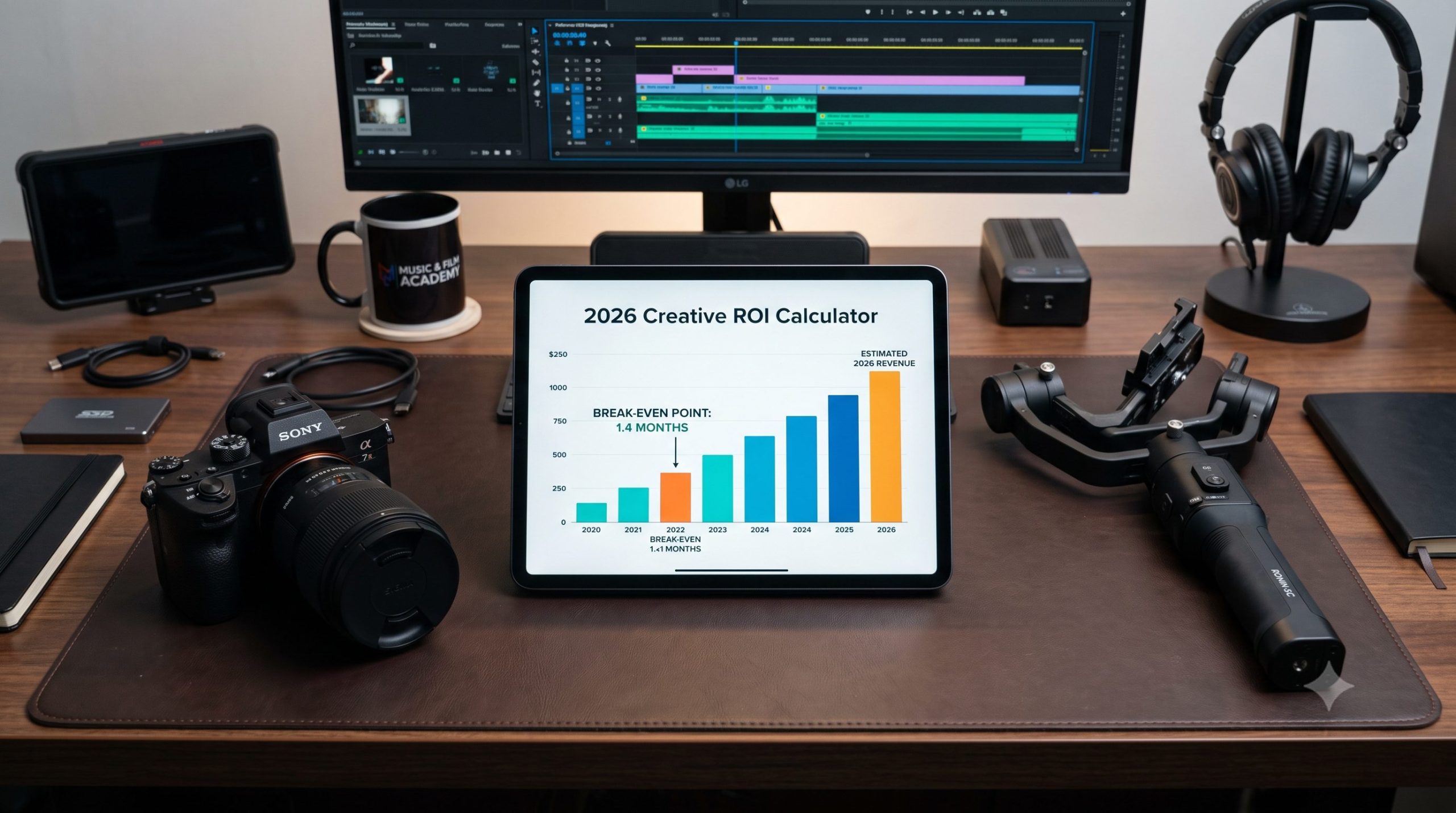
Entering the creative economy in Kenya is an exhilarating prospect. Nairobi, the bustling capital, is a visual powerhouse, demanding high-quality content for everything from NGO documentaries to high-fashion editorials. Aspiring creators are often drawn to the professional paths of photography and filmmaking. However, the first massive hurdle—and often a total barrier—that stops many talented individuals in their tracks is financial: specifically, understanding and affording photography and videography school fees in Nairobi. In 2026, navigating this landscape requires more than just looking at a tuition sticker price; it demands a hard-nosed, comprehensive Return on Investment (ROI) calculation.
Many institutions in the Nairobi CBD and surrounding suburbs are not fully transparent about the true cost of media education. A seemingly competitive tuition fee can quickly balloon when “hidden costs”—such as mandatory equipment rental, software license fees, and lab access charges—are factored in. For a Kenyan student investing their future, this lack of transparency is a significant risk. If you are going to invest your time and money, you must treat your education like a business investment. This exhaustive 2026 guide is designed to deconstruct photography and videography school fees in Nairobi, providing a transparent roadmap to calculating the real timeline required to earn your money back through freelance gigs and corporate contracts.
When you begin evaluating media training, you will encounter a wide range of publicized tuition structures. A quick survey of established players in the Nairobi creative education space, from traditional universities offering media degrees to vocational technical colleges (like ADMI or Visualdo), reveals a distinct tier system.
In 2026, standard photography and videography school fees in Nairobi generally fall into three primary categories for serious, accredited training pathways:
| Training Tier & Institution Type | Typical Quarterly Tuition Range (KES) | Primary Target Audience | Example Path Focus |
| Tier 1: Private Universities (e.g., USIU, Daystar) | KES 150,000 – KES 250,000 | Students seeking a generic Degree/Diploma (4-year path) | Theory, Broadcast Journalism |
| Tier 2: Premium Media Colleges (e.g., ADMI) | KES 90,000 – KES 160,000 | Students seeking specialized, hands-on Technical Certifications | Specific tracks (e.g., Digital Editor) |
| Tier 3: Specialized Visual Arts Academies (e.g., MFA) | KES 65,000 – KES 110,000 | Focused, Intensive 1:1 Practical Training (Direct to Industry) | Comprehensive Visual Storytelling |
Fees are estimated 2026 averages and may vary based on exact program length, curriculum specifics, and payment structures.
Choosing an institution solely based on the lowest quarterly tuition can be a devastating mistake. You are investing in your employability, not just a seat in a classroom. Often, the lower Tier 3 tuition points require significant, unpublicized sacrifices in gear access or instructor quality.
The single most dangerous element of photography and videography school fees in Nairobi isn’t the tuition itself; it’s the non-tuition operational requirements that institutions casually omit from their marketing brochures. Many Kenyan schools rely on students “sourcing their own gear” or “renting lab time,” which dramatically increases the actual cost of education.
The most pervasive hidden cost is equipment. A professional photography setup (DSLR/Mirrorless body, standard prime lens, and memory) starts around KES 120,000. A videography cinema camera kit, including stabilization (gimbal) and professional audio capture, quickly pushes past KES 350,000.
Schools that do not provide 1:1 gear access are effectively requiring you to purchase your own professional kit while paying for tuition. Students without their own gear are often forced to rent from private firms downtown, which can add KES 5,000–KES 15,000 per week to their educational expenses. This model is economically impossible for most Kenyan creative arts students.
The tools of the trade are not free. A creative professional needs Adobe Creative Cloud (Premiere, Lightroom, Photoshop) and potentially DaVinci Resolve Studio. Many institutions only provide basic, older versions or require students to purchase their own licenses, adding another KES 8,000 per month to your operational budget. Furthermore, some institutions charge extra “lab fees” for accessing soundproofed studios or high-spec rendering workstations.
| Non-Tuition Operational Cost | Average 2026 Surcharge (KES / Monthly) | The “Hidden Cost” Nightmare (Total / Quarter) | The Music And Film Academy Infrastructure Edge (Total / Quarter) |
| Professional Gear Rental | KES 12,000 – KES 25,000 | KES 36,000 – KES 75,000 | KES 0 (Included in Tuition via 1:1 Ratio) |
| Adobe Creative Cloud License | KES 8,000 – KES 11,000 | KES 24,000 – KES 33,000 | KES 0 (Student Lab Accounts Provided) |
| Dedicated Studio Access | KES 3,000 – KES 6,000 | KES 9,000 – KES 18,000 | KES 0 (Integrated into practical modules) |
| Total Potential Hidden Costs | KES 23,000 – KES 42,000 | KES 69,000 – KES 126,000+ | KES 0 (Transparent, Predictable Tuition) |
The Music And Film Academy (MFA) approach is built on radical transparency. Our enrollment philosophy guarantees that the publicized quarterly photography and videography school fees in Nairobi include full, on-campus, unlimited 1:1 access to professional cinema cameras, soundproofed recording studios, high-spec iMac and Windows rendering suites, and all necessary professional software licenses. If you choose MFA, your operational costs are KES 0, protecting you from crippling non-tuition surcharges.
💡 The MFA Factor: Ready to move past basic theories and build a certified technical showcase? Save your hardware budget for your first commercial gig. Explore our foundational Photography Courses in Kenya hub to learn aperture physics and studio lighting composition hands-on on our academy kits.
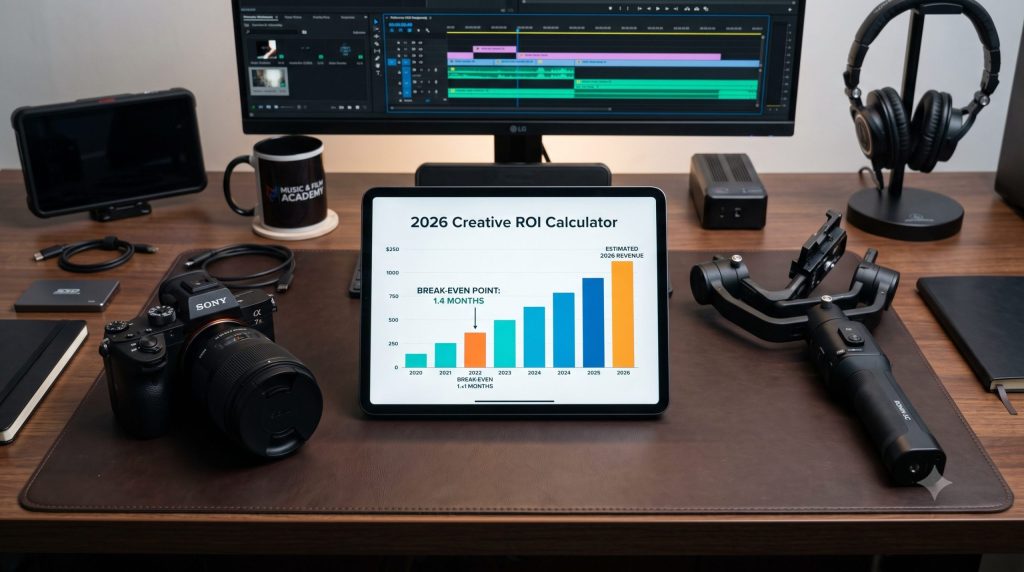
With the 2026 standard photography and videography school fees in Nairobi established and hidden costs deconstructed, we can finally calculate the most important number: the Return on Investment (ROI) timeline. The goal isn’t just to finish school; the goal is to become an economically sustainable creative professional.
A comprehensive ROI model factors in three key components:
[ROI Timeline (Months)] = Total Educational Investment (KES) / [ (Avg. Gigs/Month) * (Avg. Rate/Gig - Direct Costs) ]
💡 The MFA Factor: Certification does more than validate your skill; it unlocks commercial doors. Want to build a bulletproof freelance agency or corporate documentary production company that large NGOs trust? Gain the legal and operational confidence to command high rates by exploring our comprehensive Videography Courses in Kenya hub.
The fastest path to a 1.4-month ROI is not through casual Instagram photography; it is through high-value commercial B2B (Business-to-Business) monetization. Nairobi is the East African hub for international organizations and global development agencies. If your media education provides you with the standardized workflows and formal accreditation they require, you can unlock these high-budget markets.
To win government and NGO tenders, your media skills must be verified. International development partners like USAID Kenya or Oxfam Kenya operate under strict auditing requirements and prioritize service providers who are fully compliant with Kenyan media laws, holding valid Media Council of Kenya (MCK) press cards and meeting the accreditation standards of the Technical and Vocational Education and Training Authority (TVETA).
A self-taught portfolio provides no formal verification points in a competitive B2B bidding grid. An MFA graduate possesses a formal TVETA-compliant credential that directly unlocks government tenders through the National Treasury’s Access to Government Procurement Opportunities (AGPO) program, accelerating your B2B monetization potential.
| B2B Monetization Stream | Starting Freelance Rate (2026 Estimates) | Prerequisite Certification | Impact on ROI Timeline |
| NGO Impact Documentary | KES 120,000 – KES 350,000 | TVETA Certification, MCK Card | Single gig can clear your entire tuition investment. |
| Government Corporate Event | KES 60,000 – KES 150,000 | AGPO Compliance (TVETA essential) | Clears large percentage of initial investment. |
| SME Corporate Interview | KES 35,000 – KES 75,000 | Strong certified technical portfolio | Provides consistent high-volume cash flow. |
To minimize your debt risk and maximize your 2026 ROI, you must structure your enrollment and educational path carefully. Avoid committing to long, theoretical 4-year degree programs if your primary goal is practical monetization. Instead, prioritize an intensive, hands-on path that gets you industry-ready inside six to twelve months.
At the Music And Film Academy, we structure our creative arts pathways in intensive modules to maximize your financial flow:
This “staged” approach ensures you are not building debt while training; you are leveraging your training to build your commercial business.
                  [MAXIMIZED ROI OPERATIONAL LOOP]
                                  │
       ┌──────────────────────────┴──────────────────────────┐
       ▼                                                     ▼
[INTENSIVE BASIC CERTIFICATE] ──► [PORTFOLIO SHOWCASE GIGS] ──► [ADVANCED GIG INCOME]
       │                                                     │
Builds core technical             Generates immediate            Pays for specialized advanced
showcase on academy kit           cash positive flow            training modules without debt
💡 The MFA Factor: Ready to move past the financial bottlenecks and start building your creative legacy on a validated, accredited foundation? Take charge of your creative development by exploring our main Photography and Videography Courses in Kenya hub to compare all accredited pathways and find your precise path to a cash-positive visual business.
Successfully navigating photography and videography school fees in Nairobi in 2026 requires more than a simple comparison of tuition numbers. To achieve a reliable, fast, 1.4-month Return on Investment (ROI), you must move past institutions that casually omit their “hidden operational costs” for gear, lab, and software sifting. You must demand the infrastructure solution that a 1:1 gear access ratio provides, protecting you from crippling non-tuition debt while you are trying to learn.
True creative sustainability is built on validated, accredited practical skill under the guidance of veteran industry mentors. At the Music And Film Academy, our commitment to financial transparency is matched only by our commitment to your technical mastery. Our Nairobi CBD campus at Information House provides you with unlimited access to premium professional cinema cameras, soundproofed recording studios, and industry-standard editing suites from day one. Invest in a media education that minimizes your financial risk and maximizes your commercial potential. Upgrade your creative toolkit, refine your practical workflows, and enroll with us today.