Phone:
+254 719 428 550
Physical address:
Information House, Hakati Road,
Nairobi, Kenya.

Phone:
+254 719 428 550
Physical address:
Information House, Hakati Road,
Nairobi, Kenya.
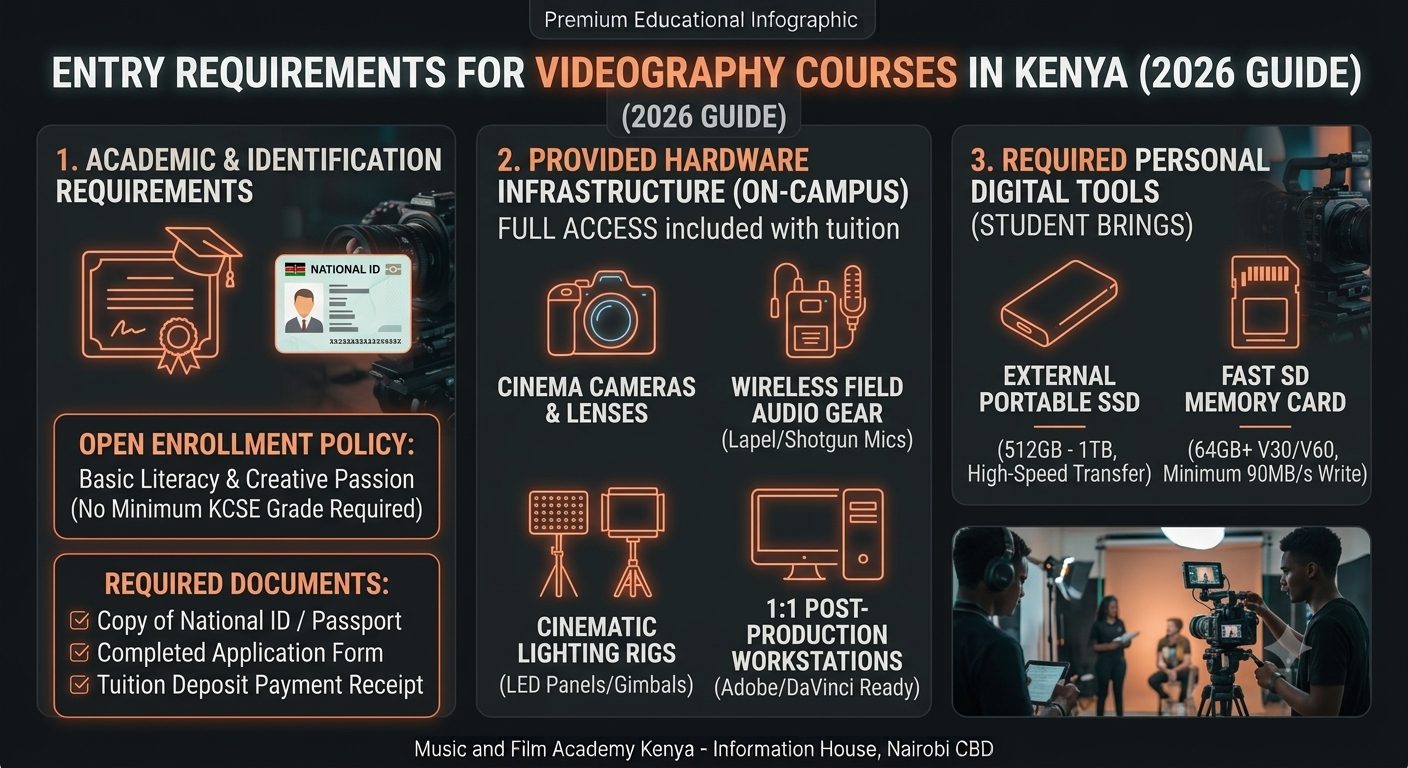
The primary entry requirement for a practical short certificate or diploma at institutions like Music and Film Academy’s Videography Department is a passion for visual storytelling and basic literacy—no minimum KCSE grade or prior camera experience is required.
While formal university degree programs mandate a KCSE grade of C+ or above, practical technical vocational institutions focus strictly on hands-on competence, portfolio output, and software mastery in Adobe Premiere Pro and DaVinci Resolve.
Before enrolling in a 3-Month Basic Certificate in Videography, specialized video editing courses in Kenya, or an Advanced Certificate in Videography, understanding academic prerequisites and personal tool requirements ensures a smooth intake process.
When applying for practical videography training in Nairobi, entry criteria are intentionally structured to welcome beginners, career-switchers, and working professionals:
| Course Level | Minimum Academic Requirement | Prior Experience Needed? | Recommended Age / Target Student |
| Basic Certificate in Videography | Open Enrollment (Basic Literacy) | None (Absolute Beginners) | Form 4 leavers, content creators, event shooters, & freelancers. |
| Video Editing Course | Basic Computer Literacy | None (Basic PC/Mac fluency) | YouTubers, corporate media staff, & post-production enthusiasts. |
| Advanced Certificate in Videography | Basic Camera Knowledge | Required (or Basic Cert completion) | Live streaming operators, drone pilots, & commercial directors. |
| TVETA-Mapped TV & Film Diploma | KCSE Certificate / Leaving Cert | None | High school graduates seeking a multi-term technical qualification. |
To complete your official enrollment profile at our Nairobi CBD campus, students must provide:
A common misconception among prospective students is that you must own an expensive cinema camera body or lighting kit before joining a videography school.
At practical academies, all core production hardware is supplied for on-campus practical sessions:
While cameras and lights are provided on campus, students are required to carry a few personal digital storage tools for field assignments:
Depending on which course is best for your videography goals, personal requirements vary slightly:
For full details on course fees and flexible installment plans across these tracks, read our complete guide on how much a videography course costs in Kenya.
Yes. Practical technical academies offer open enrollment for certificate programs, focusing on hands-on practical skills rather than high school academic cut-off grades.
No. Reputable practical institutions provide professional camera bodies, lenses, stabilizers, lighting rigs, and audio recorders for all on-site practical training sessions.
You only need basic computer literacy (ability to navigate operating systems and manage files) to enroll in a video editing course covering Premiere Pro and DaVinci Resolve.
Start your creative journey at Music and Film Academy.