Phone:
+254 719 428 550
Physical address:
Information House, Hakati Road,
Nairobi, Kenya.

Phone:
+254 719 428 550
Physical address:
Information House, Hakati Road,
Nairobi, Kenya.
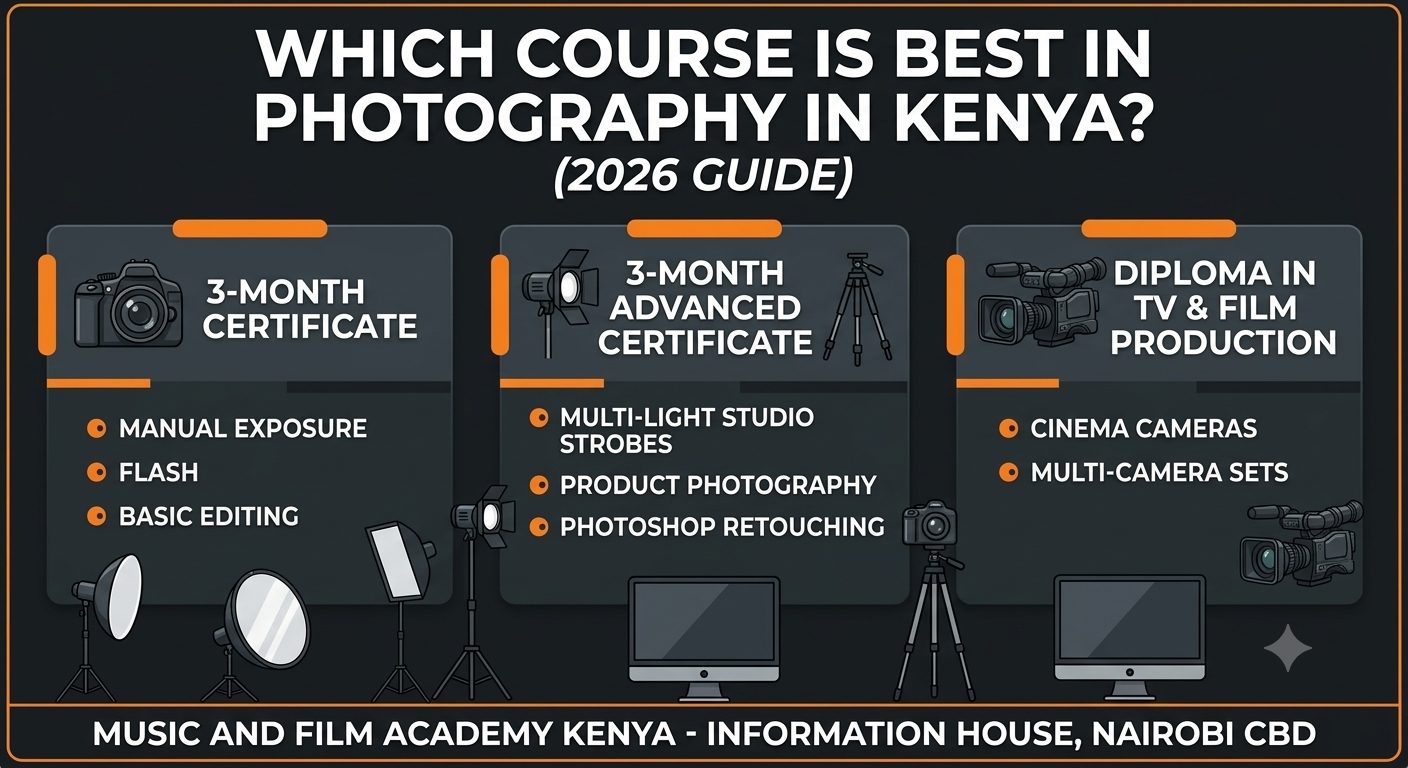
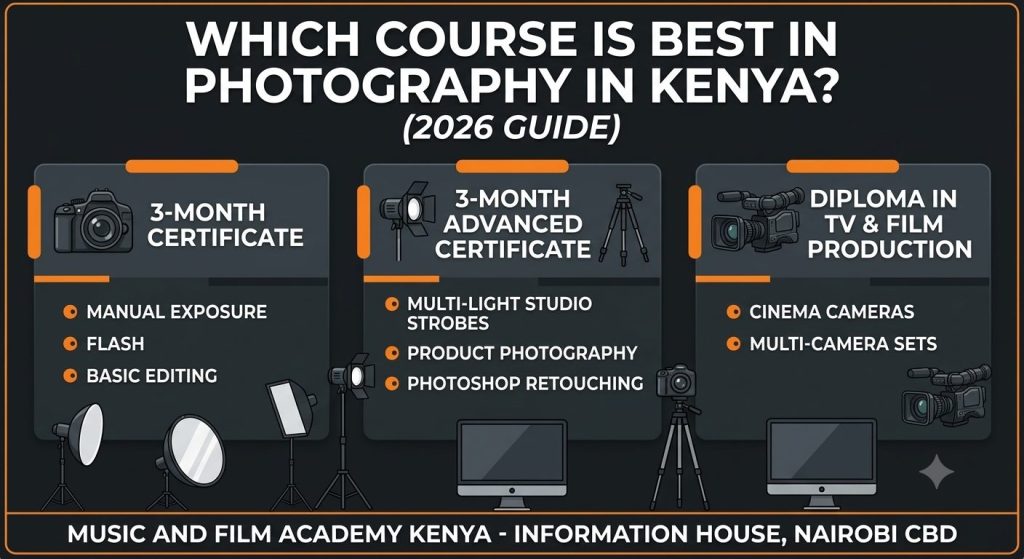
The best course in photography in Kenya depends on your career goals, but the fastest path to commercial independence is a practical 3-month Certificate or 3-month Advanced Certificate in Photography. A 3-month basic certificate builds baseline manual camera and composition skills, while a 3-month Advanced Certificate expands into high-end studio lighting, commercial product setups, and advanced color grading in Adobe Lightroom and Photoshop.
For students seeking comprehensive broadcast, media, and multi-camera set management, a long-term Diploma in TV and Film Production provides full academic and practical mastery.
At Music and Film Academy in Nairobi CBD, practical photography programs focus on real-world commercial portfolios rather than abstract theory, offering guaranteed 1-on-1 access to full-frame DSLR/mirrorless gear, studio lighting setups, and TVETA-aligned training.
Choosing the best photography course depends on your experience level, available time, and long-term career focus. Here is a breakdown of the primary visual arts training pathways in Nairobi:
| Course Level | Duration | Primary Focus | Best For |
| 1-Month Fast-Track / Bootcamp | 4 Weeks | Basic camera handling, exposure triangle, natural light composition. | Beginners needing quick skill-ups or digital content creators. |
| 3-Month Certificate in Photography | 12 Weeks | Fundamental camera controls, basic off-camera flash, introduction to Adobe editing. | Entry-level commercial freelancers & studio assistants. |
| 3-Month Advanced Certificate in Photography | 12 Weeks (Post-Basic) | Multi-light studio strobes, commercial product/fashion work, advanced Photoshop retouching. | Photographers building an elite commercial client portfolio. |
| Diploma in TV and Film Production | 1–2 Years (Multi-Term) | Narrative cinema, broadcast studio management, multi-camera direction, & full crew workflows. | Content creators aiming for TV networks, film sets, & major agencies. |
When evaluating photography programs in Nairobi, look for these five non-negotiable features:
A theoretical lecture cannot teach muscle memory. The best courses guarantee direct, hands-on access to full-frame cameras and lenses during every practical session, rather than forcing 10 students to share a single body.
Natural light shooting is only half the job. High-paying corporate and event clients require mastery over off-camera flash, studio strobes, softboxes, and light meters. Ensure your chosen course covers multi-light setups.
Capturing RAW images is just step one. Professional photography training must include hands-on instruction in Adobe Lightroom Classic and Photoshop (frequency separation, dodging & burning, color conformity).
Instead of traditional written exams, top-tier photography schools evaluate students based on a physical and digital portfolio featuring commercial product shoots, studio portraits, and outdoor editorial assignments.
Training under TVETA-aligned competency guidelines ensures your skills meet Kenyan market standards. A central location in Nairobi CBD (Information House, Hakati Road) simplifies access to external shoot locations, commercial studios, and equipment suppliers.
A 3-Month Certificate in Photography is best for beginners. It starts from absolute scratch, taking students from basic manual settings to off-camera flash lighting and fundamental photo editing.
A basic certificate focuses on camera mechanics and natural light shooting. The 3-Month Advanced Certificate builds on those basics, focusing on studio flash strobes, commercial product setups, and advanced Photoshop editing.
If your primary goal is commercial portraiture, event shooting, or studio freelancing, a 3-month certificate or advanced certificate is ideal. If you want to direct commercials, operate cinema cameras, and manage television studio environments, enroll in a Diploma in TV and Film Production.
Master manual camera settings, commercial lighting, and professional editing at Music and Film Academy in Nairobi CBD.