Phone:
+254 719 428 550
Physical address:
Information House, Hakati Road,
Nairobi, Kenya.

Phone:
+254 719 428 550
Physical address:
Information House, Hakati Road,
Nairobi, Kenya.
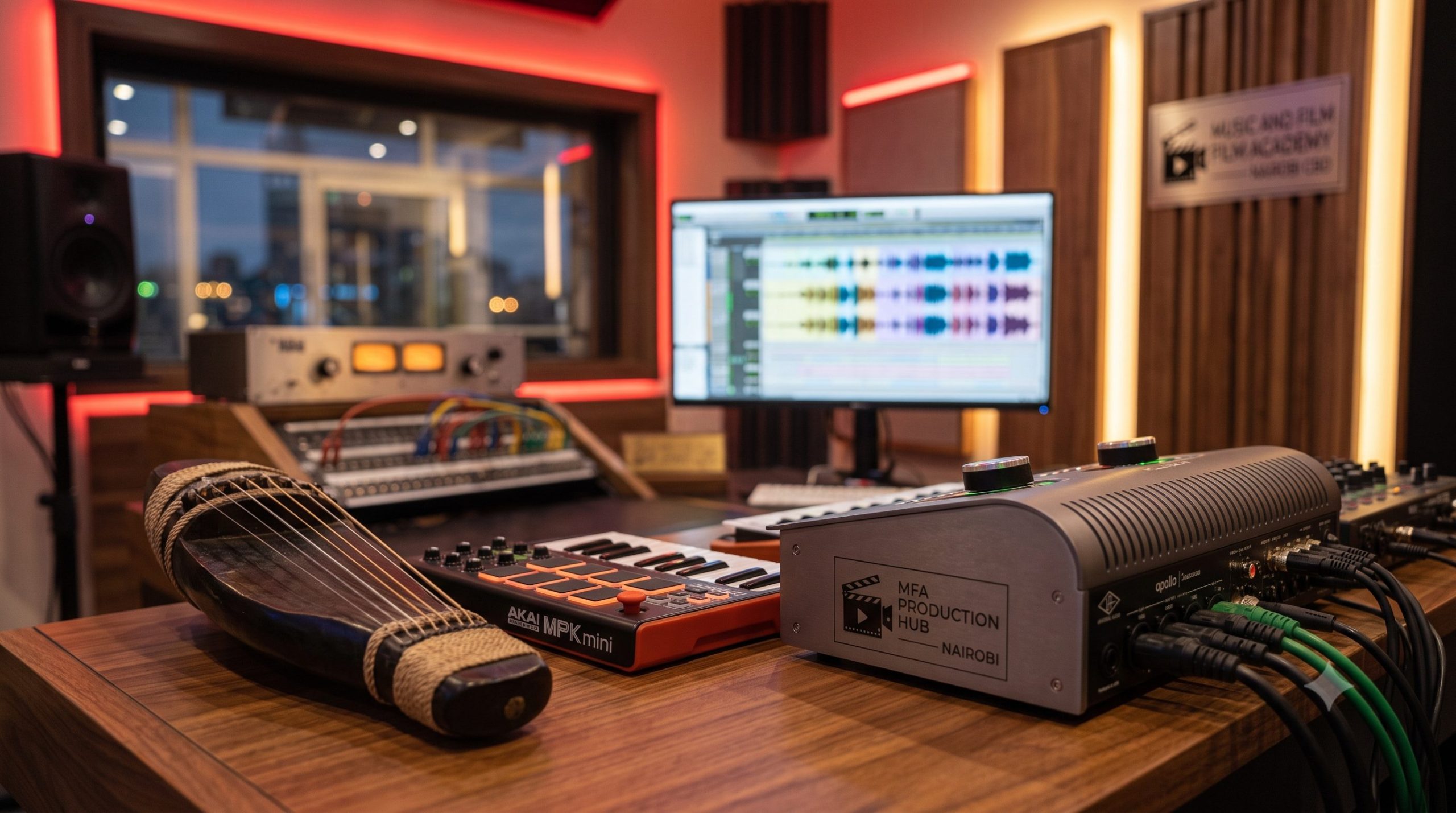
The contemporary landscape of music production in East Africa is undergoing a profound artistic revolution. For years, the commercial airwaves of Nairobi have been heavily shaped by dominant western-vetted electronic arrangements, transatlantic hip-hop beats, and imported West African pop loops. However, as the local creative economy matures in 2026, upcoming music producers are discovering that long-term global breakout success requires a distinct, unique sonic signature. Recent academic research into Kenyan musicology highlights a significant conceptual gap: while a new generation of bedroom beatmakers possesses incredible digital fluency inside their digital audio workstations (DAWs), they frequently struggle when trying to capture, process, and integrate the rich musical heritage of their own soil. Bridging this technical divide and mastering the process of fusing traditional Kenyan rhythms with modern electronic MIDI is the ultimate frontier for creators aiming to build world-class, culturally authentic commercial records.
The primary obstacle preventing modern producers from successfully incorporating indigenous music traditions—such as the driving, guitar-led syncopations of Luo Benga or the high-energy, rapid percussion patterns of Ohangla—is a fundamental structural collision between two different musical worlds. Traditional Kenyan folk music is inherently organic, built on complex communal polyrhythms, elastic microtonal tunings, and fluid human timing variations that naturally resist rigid electronic confinement. When you try to force a raw, field-recorded loop of a traditional stringed instrument or hand drum straight onto a cold, default linear grid inside a computer software track, it often loses its natural groove, causing severe phase issues and rhythmic clashing. To make these styles blend cleanly on a modern club sound system, you must move past basic cut-and-paste sampling methods. This guide delivers a step-by-step engineering blueprint to help you record traditional acoustic instruments, warp human timing variations into clean digital grids, and use advanced synthesis to give folk elements modern commercial weight.
1. Tracking the Source: Microelectronic Field Techniques for the Nyatiti and Orutu
To successfully execute the blueprint of fusing traditional Kenyan rhythms with modern electronic MIDI, you must first secure clean, high-fidelity source recordings. Traditional acoustic instruments are highly sensitive and require specialized microphone selection and placement techniques to capture their full dynamic character.
[Nyatiti String Instrument] ──► Solid Contact Piezo Mic (Captures Low Resonant Wood Knock)
──► Small Diaphragm Condenser (Captures Sharp, Crisp String Snap)
│
▼
[Summed Transducer Preamp Input]
A. Capturing the Eight-Stringed Luo Nyatiti
The Nyatiti is a traditional stringed instrument from the Luo community, featuring a hand-carved wooden resonator bowl covered with taut animal skin. It produces a complex acoustic texture: a deep, percussive wood-and-skin knock combined with the sharp pluck of its eight structural strings.
B. Engineering the Single-Stringed Orutu Fiddle
The Orutu is a single-stringed fiddle played with a curved bow, known for its vocal-like pitch slides and raw, mid-range textures.
2. Advanced Time Engineering: Warping Elastic Polyrhythms into Linear Grids
The defining characteristic of both Benga and Ohangla music is the use of interlocking polyrhythms—specifically, the friction created by playing three-beat phrases over a two-beat foundation (3:2 patterns) or complex 6/8 African time signatures running against a standard 4/4 electronic kick drum loop. Traditional master musicians do not play to a fixed metronome; they expand and contract their timing dynamically across musical sections to drive energy.
[Raw Folk Recording Loop] ──► Analyze Transient Anchor Peaks via Elastic Audio Algorithms
│
▼
[Warp Markers Applied] ──► Quantize Variable Human Timing into Synchronized 4/4 or 6/8 MIDI Grids
The Elastic Audio Warp Sequence
To synchronize these organic, human performances with modern electronic MIDI instrumentation without introducing artificial glitching artifacts, you must master elastic audio warp menus inside your DAW:
3. The Digital Audio Hybrid Matrix: Injections of Additive and Subtractive Synthesis
Once your traditional acoustic loops are quantized to your project grid, you will often find they lack the massive low-end weight and punch needed to compete with modern urban hits on club sound systems. Traditional hand drums (such as the Ohangla cylinder drums or Sukuti arrays) have incredible mid-range character, but they rarely pack sub-bass energy below 60 Hz. To fix this, you must build a hybrid production pipeline using Additive Synthesis.
[Organic Hand Drum Transient Input] ──► (Triggers Software Envelope Gate Generator)
│
▼
[Pure 50Hz Sine Wave Generated Synth] ──► Out: Deep Sub-Bass Club Weight
Layering Electronic Weight Beneath Acoustic Foundations
To inject modern electronic weight into traditional acoustic sounds without masking their unique cultural textures, follow this strategic layering method:
| Instrument Target | Microelectronic Capture Vector | Primary DSP Warp Processing | Complementary Synth Integration |
| Luo Nyatiti | Dual Link: Bridge Condenser + Body Contact Transducer | Manual Polyphonic Elastic Warp mapped to dotted 16th shuffles | Sub-bass sine wave side-triggered beneath low wood knocks. |
| Orutu Fiddle | Off-Axis Smooth Ribbon Mic (45 cm elevation) | Transient Mode Warp with locked formants to preserve slides | Additive mid-range saturation to widen the stereo image. |
| Ohangla Drum Sets | Dynamic Drum Mics (Top and Bottom alignment) | Sliced Beat Mode Warp with fixed decay envelopes | Layered 50 Hz synthesized oscillators for club impact. |
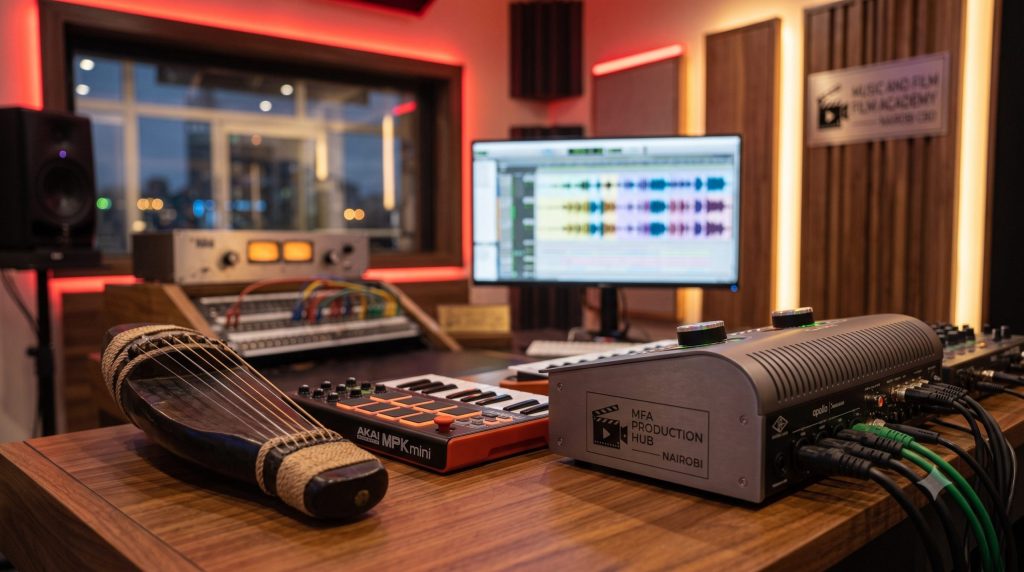
💡 The MFA Factor: True production mastery requires looking past superficial software presets and learning to manipulate sound at a foundational level. At the Music And Film Academy, we believe your creative development shouldn’t be limited by a rigid choice between global pop trends and regional traditions. Our specialized curriculum paths treat music technology as a tool for evolution—respecting cultural heritage while enforcing international engineering standards. Explore this integrated design hands-on by checking out our comprehensive Music Production Courses in Kenya comparison platform.
4. Signal Integration, System Protection, and System Clocking Safety
Successfully managing a hybrid digital production studio requires pairing your software proficiency with disciplined hardware maintenance protocols. This approach protects your creative assets and ensures your system remains perfectly stable during complex recording sessions.
1. Eliminating Ground Loop Hum and Line Interference
When integrating low-output field recorders, traditional electric pickups, and external hardware samplers into a modern DAW system, you will frequently introduce an underlying background hum into your tracking environment. This interference often occurs at 50 Hz, the standard operating frequency of the Kenyan power grid, creating a frustrating noise floor that distorts your low-end mix decisions.
2. Establishing Digital Word Clock Synchronization
When routing digital signals between multiple independent hardware devices (such as an external multi-channel preamplifier connected via ADAT optical lines to your main audio interface), you must establish a strict digital clock hierarchy.
[DIGITAL INTERACTION SECURITY MATRIX]
│
┌────────────────────────────┴────────────────────────────┐
▼ ▼
[Unified Master Word Clock] [True-Peak Limiter Ceiling]
│ │
Synchronizes sample rates across external ADAT Sets a strict -1.0 dBTP safety buffer
hardware links to prevent digital audio clicks to eliminate inter-sample clipping artifacts
💡 The MFA Factor: Transitioning from basic midi beatmaker to professional hybrid audio engineer requires deep, structured practice inside calibrated recording rooms. Accelerate your career growth and check out our foundational Music Production Certificate Course track to build your skills hands-on in our professional Nairobi labs.
5. Navigating Intellectual Property Rights and Traditional Cultural Expressions
When fusing traditional Kenyan rhythms with modern electronic MIDI and building a commercial music catalog, you cannot ignore the unique legal and ethical frameworks that govern traditional folklore music under Kenyan law.
A. Understanding the Protection of Traditional Cultural Expressions Act
In Kenya, traditional folk melodies, historical rhythms, and indigenous instrumental compositions are legally classified as Traditional Cultural Expressions (TCEs). Under the Protection of Traditional Cultural Expressions and Knowledge Act, these artistic works are protected from exploitation and uncredited commercial use.
B. Registering Derivative Works with Local CMOs
To collect royalties when your hybrid tracks air on television networks or national radio spots like Homeboyz Radio or Kiss FM, you must declare your works with the appropriate Collective Management Organizations (CMOs):
[KENYAN REVENUE DATA LINE]
│
┌───────────────────────────┴───────────────────────────┐
▼ ▼
[KAMP (Master Rights Collector)] [PAVRISK (Performance Tariffs)]
│ │
Collects neighboring rights revenue Manages combined performance licensing
for independent studio owners & labels tariffs for authors and vocalists
💡 The MFA Factor: Long-term success in the creative industries requires an understanding of both advanced mixing software and professional catalog management. Learn to build a secure, legally compliant business and protect your catalog by exploring our advanced Music Production Diploma Course track.
6. Conclusion: Pioneer the Future of East African Sound Design
Successfully fusing traditional Kenyan rhythms with modern electronic MIDI requires looking past superficial software loops and mastering the deeper principles of audio engineering and acoustic calibration. By deploying dual-microphone arrays to capture instruments like the Nyatiti cleanly, utilizing elastic audio warp markers to quantize complex polyrhythms manually without destroying their natural swing, and integrating additive sub-bass synthesis beneath traditional percussion, you create tracks that honor regional heritage while delivering the sonic impact needed for modern commercial success.
True professional growth requires structured practice inside industry-grade acoustic spaces using professional equipment under the guidance of active industry mentors. At the Music And Film Academy (MFA), we provide the perfect launchpad for your creative ambition. Our modern campus labs at Information House along Hakati Road in the Nairobi CBD provide our students with unlimited, 1:1 access to high-spec iMac workspaces, professional live tracking rooms, and all major industry-standard production software platforms. Stop struggling with limited uncalibrated home setups. Take charge of your career path, upgrade your hybrid music production skills, and enroll with us today.